BRUNO
The surname Bruno is firmly rooted in Italian heritage, where it is traditionally associated with the medieval given name Bruno. The personal name itself derives from the Latinised form Brunus and, in Italian, is understood to mean “brown” or “dark‑haired”. It was widely employed as a descriptive sobriquet, reflecting the bearers’ physical attributes or habitual attire.
Tracing its etymology further back, the word brun belongs to the Old Germanic root that denotes the colour brown. Through the migration of peoples across Europe, this element entered the French, Dutch, and Scandinavian tongues, producing variants such as Brun, Brune, and Brunet. The name had already gained popularity as a given name in continental Europe during the Middle Ages, before it was adopted as a hereditary surname in the twelfth century.
The early documentary record of the surname is diverse. In England, the earliest known use appears in the Pipe Rolls of 1169, where a man listed as William le Brun is recorded in the county of Northumberland. The surname continues to appear in medieval chronicles across the British Isles, Germany, and Italy, in examples such as Hugh Bron of Stafford (1274) and Hugo Brun of Erfurt (1407). In Ireland, the name entered via Norman settlers in the twelfth century, and the family branch known as the Brownes of Galway is documented in contemporary annals.
During the Spanish and Portuguese expansion of the fifteenth and sixteenth centuries, the surname Bruno was carried to the Americas, as well as to Brazil and Argentina, by Italian immigrants. In the English‑speaking New World, an early settler named Christopher Browne is recorded among the initial colonists of Virginia in 1623, illustrating the surname’s endurance in the colonies.
Several distinguished individuals throughout history have borne the surname. The Italian philosopher Giordano Bruno left a lasting legacy in Renaissance thought, while contemporary figures such as Frank Bruno achieved renown in the field of boxing. These examples underscore the surname’s continued relevance across diverse cultural spheres.
In the present day, the surname Bruno remains widespread within Italy, particularly in the central and southern regions where it is most common. Its presence is also notable in communities of Italian descent worldwide, including in the United States, Australia, and continental Europe. Variants such as Brunelli, Brunetti, and Brunello demonstrate the linguistic adaptability of the name across different dialects and languages.
Typical given names associated with the Bruno surname
Male
- Alan
- Antonio
- Christopher
- Daniel
- David
- Francesco
- Frank
- Giovanni
- Giuseppe
- John
- Martin
- Roberto
Female
- Angela
- Carmen
- Elizabeth
- Francesca
- Giovanna
- Helen
- Joanna
- Lucia
- Maria
- Marie
- Melissa
- Natalina
- Sarah
- Susan
Similar and related surnames
- Broun
- Bron
- Bren
- Bronn
- Brown
- Brenn
- Briano
- Browne
- Breun
- Broune
- Burno
- Brun
- Bruna
- Baehren
- Bahrain
- Bahraini
- Bahrani
- Bahreini
- Bairn
- Bairne
- Baran
- Barana
- Barani
- Baraona
- Bareen
- Baren
- Barene
- Bargna
- Bariana
- Barin
- Barina
- Barini
- Barion
- Barn
- Barna
- Barnau
- Barne
- Barnea
- Barni
- Barnie
- Barno
- Baron
- Barona
- Barone
- Baroni
- Baronne
- Baroun
- Barouni
- Barran
- Barren
- Barrena
- Barreno
- Barrin
- Barrion
- Barrn
- Barron
- Barrone
- Baruani
- Barun
- Baruni
- Baurn
- Bearan
- Bearen
- Bearn
- Bearne
- Bearon
- Beaurain
- Beeren
- Behran
- Beirn
- Beirne
- Berain
- Beran
- Beren
- Bergna
- Bergne
- Berin
- Berina
- Berini
- Bern
- Berna
- Bernau
- Berne
- Berneau
- Berni
- Bernia
- Bernie
- Berno
- Beron
- Berran
- Berreen
- Berren
- Berrian
- Berrien
- Berrin
- Berrini
- Berron
- Berrouane
- Berwyn
- Beuran
- Beuroni
- Bierne
- Biorn
- Biran
- Biren
- Birn
- Birne
- Birnie
- Biron
- Birrane
- Birron
- Boarne
- Boaron
- Boerne
- Bohren
- Bohrn
- Boiron
- Boorn
- Boorne
- Boran
- Boren
- Borgna
- Borgne
- Boriani
- Borin
- Borina
- Borini
- Borino
- Borione
- Born
- Borna
- Borne
- Bornea
- Borneo
- Bornia
- Borno
- Boron
- Borran
- Borren
- Borrini
- Borrino
- Borrione
- Borron
- Borroni
- Borun
- Boryn
- Bouran
- Boureanu
- Bouren
- Bourienne
- Bourin
- Bourn
- Bourne
- Bouron
- Bowran
- Bowren
- Bowrin
- Bowrn
- Bowrne
- Bowron
- Boyren
- Braan
- Braen
- Brain
- Braine
- Bran
- Brana
- Brane
- Branea
- Brani
- Brania
- Branie
- Brann
- Branna
- Brano
- Braun
- Braune
- Brawn
- Brawne
- Brayn
- Brayne
- Breahna
- Brean
- Breane
- Breen
- Breene
- Brein
- Brena
- Brene
- Brenna
- Brenne
- Brenni
- Brenno
- Breon
- Brewn
- Breyne
- Brian
- Briana
- Briane
- Brien
- Brienne
- Brin
- Brina
- Brine
- Brini
- Brinn
- Brinnie
- Brino
- Brion
- Brione
- Brionne
- Brna
- Broan
- Broawn
- Broen
- Brogna
- Brohn
- Broin
- Brone
- Broni
- Bronne
- Bronyn
- Broon
- Broone
- Brouns
- Brownee
- Brownie
- Browniee
- Bruan
- Bruen
- Bruens
- Bruhn
- Bruhns
- Bruin
- Bruines
- Bruins
- Brunas
- Brund
- Brune
- Bruneau
- Brunen
- Brunes
- Bruney
- Bruni
- Brunie
- Brunk
- Brunn
- Brunne
- Brunney
- Brunni
- Brunnon
- Brunny
- Brunot
- Brunow
- Bruns
- Brunt
- Bruun
- Bruuns
- Bruyn
- Brwn
- Bryn
- Bryna
- Bryne
- Brynn
- Bryrne
- Bryron
- Buhren
- Buirne
- Buorne
- Buran
- Burani
- Buren
- Burian
- Buriani
- Burin
- Burini
- Burion
- Burn
- Burna
- Burne
- Burnea
- Burnie
- Burnn
- Buroine
- Buron
- Buroni
- Burran
- Burren
- Burrin
- Burron
- Burrone
- Buruiana
- Byburn
- Byran
- Byrane
- Byren
- Byrene
- Byrine
- Byrn
- Byrna
- Byrne
- Byrnie
- Byrnne
- Byron
- Byrone
- Whyborn
- Whyborne
- Whybourn
- Whybourne
- Whybron
- Whyburn
- Wybaurn
- Wyborn
- Wyborne
- Wybourn
- Wybourne
- Wybron
- Wybrone
- Wyburn
- Wyburne
Related and similar names are generated algorithmically based on the spelling, and may not necessarily share an etymology.
How to communicate the surname Bruno in...
Braille
⠃⠗⠥⠝⠕
Morse
-....-...--.---
Semaphore
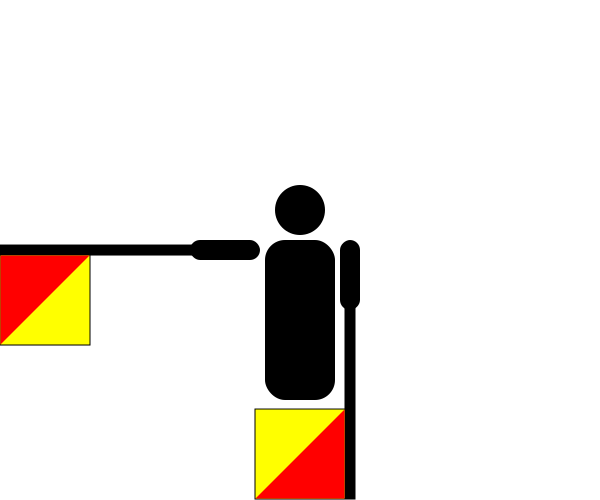
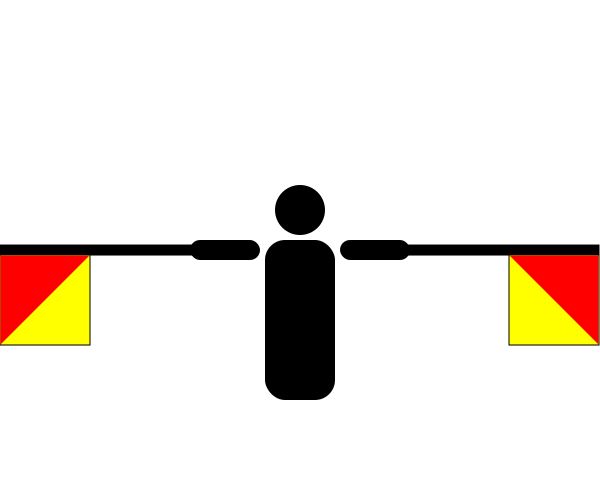

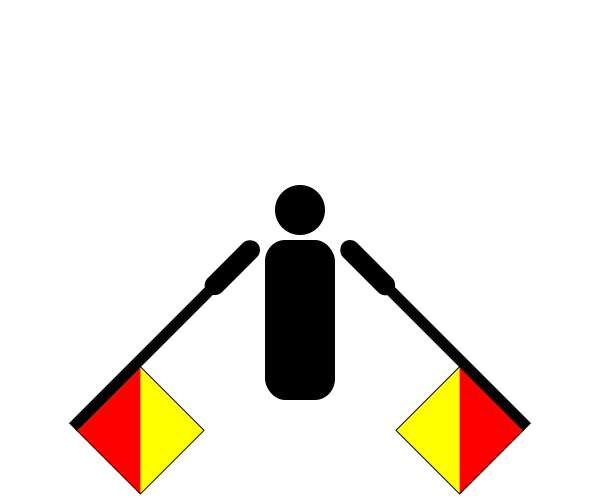
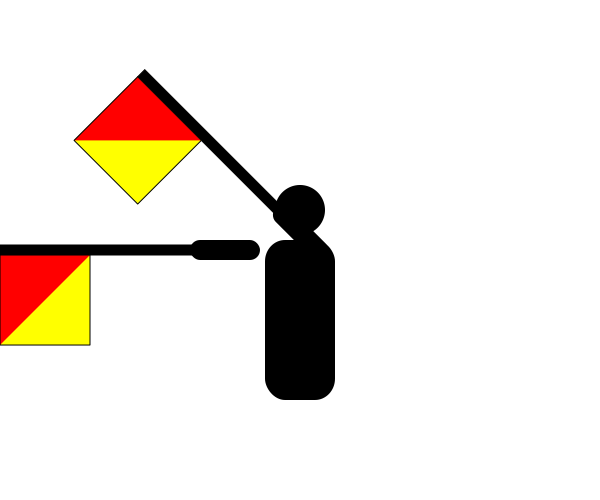
There are approximately 845 people named Bruno in the UK. That makes it roughly the 8,434th most common surname in Britain. Around 13 in a million people in Britain are named Bruno.
Region of origin: Europe
Country of origin: Italy
Language of origin: Italian

Famous people named Bruno
- Frank Bruno - Boxer
Names and descriptions courtesy of Wikipedia, and may contain errors. This is not intended to be an exhaustive list of every famous person with this name.