BRUIN
Bruin is a surname of Dutch origin, historically used as a descriptive nickname for a person with brown features or for one who displayed bear-like qualities. The name is derived from the Dutch word bruin, meaning “brown,” and has cognates in Old High German brun and Old Norse Bruni.
The earliest recorded instance of the name is that of William Bruin, dated 1209 in the Pleas before the King and his Justices 1198 - 1212 of Norfolk, during the reign of King John (1199 - 1216). The name appears again in 1269 in the Assize Court Rolls of Northumberland, where a person named Patrick le Bruin is mentioned. In 1330, William Bruyn is recorded in the Calendar of Inquisitiones post mortem for Wiltshire. These early records confirm the surname’s presence in England from the early thirteenth century.
In Dutch, the word bruin also referred to the native bear; thus the surname can be understood as a nickname for someone thought to possess bear-like strength, force or courage. Over time, the name was adopted by families and became a permanent surname, with subsequent bearers being associated in modern contexts with determination, fortitude and quiet intensity.
The surname is most common in the Netherlands, where it is ranked approximately 82nd in overall popularity. It is also found in Belgium, Germany, France and in English-speaking countries, particularly in the United Kingdom and the United States. In the United States, the name is more often encountered as a first name than a surname, though it is still recognised in states such as California, Oregon, Washington, the East Coast, the Midwest and the South.
The name has many spelling variants, reflecting changes in language and migration. Common forms include Bruijn, Bruyn, Broun, Bruyne, Brüning, Breunig and Brueninger; it is sometimes combined with prefixes such as de Bruin, van Bruin or Vander Bruin to indicate origin or lineage.
A coat of arms granted to a Bruin family depicts a silver lion rampant, guttee de sang, on a blue field. This heraldic device symbolises courage and strength, attributes traditionally associated with the bear and, by extension, with the surname.
Today, Bruin remains a distinctive surname that reflects both linguistic heritage and cultural symbolism. Its continued use in various countries underscores the historical movements of people from the Low Countries and the enduring resonance of its original meaning.
Typical given names associated with the Bruin surname
Male
- Charles
- Christopher
- Daniel
- David
- George
- John
- Kenneth
- Lee
- Mark
- Michael
- Nicholas
- Peter
- Thomas
Female
- Elizabeth
- Ellen
- Erna
- Hannah
- Helen
- Jean
- Joan
- Josephine
- Karen
- Lesley
- Margaret
- Mary
- Rosemarie
- Samantha
Similar and related surnames
- Barone
- Birnie
- Birrane
- Bourne
- Brain
- Braine
- Bran
- Bren
- Brenn
- Breun
- Brewn
- Brien
- Brino
- Brion
- Bron
- Bronn
- Brons
- Broone
- Broun
- Broune
- Brouns
- Brown
- Browne
- Bruan
- Bruen
- Bruhin
- Bruhn
- Bruhns
- Bruines
- Bruins
- Bruis
- Brun
- Bruna
- Brunas
- Brund
- Brune
- Bruneau
- Brunes
- Bruney
- Bruni
- Brunie
- Brunins
- Brunk
- Brunke
- Brunn
- Brunne
- Brunney
- Brunneye
- Brunni
- Brunny
- Bruno
- Brunow
- Bruns
- Brunt
- Brunts
- Bruntz
- Bruun
- Bruuns
- Burin
- Burn
- Burne
- Byron
Related and similar names are generated algorithmically based on the spelling, and may not necessarily share an etymology.
How to communicate the surname Bruin in...
Braille
⠃⠗⠥⠊⠝
Morse
-....-...-..-.
Semaphore
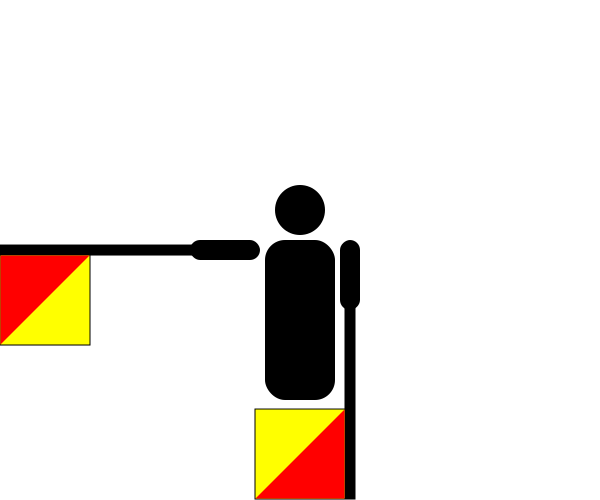
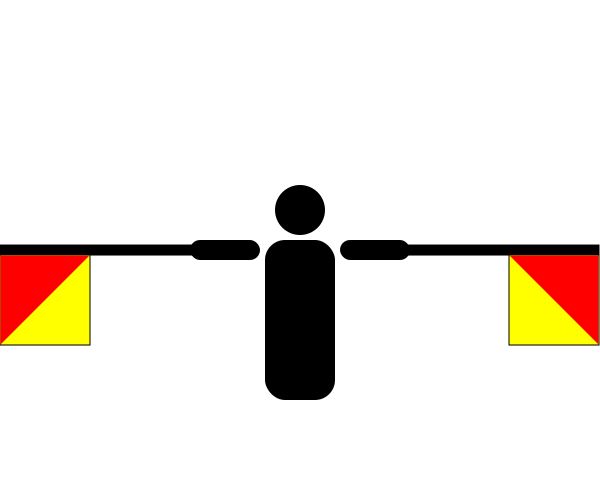

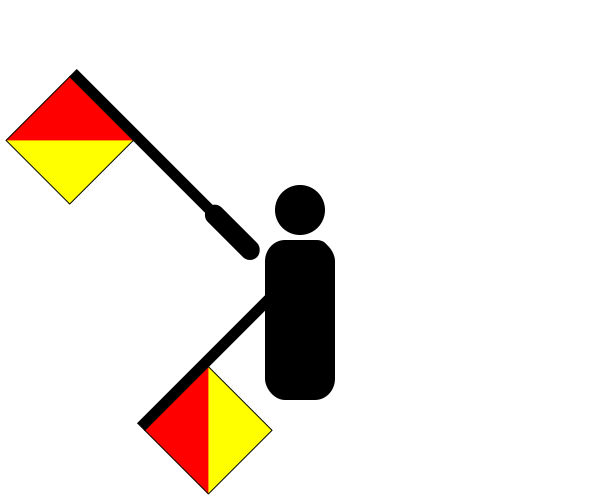
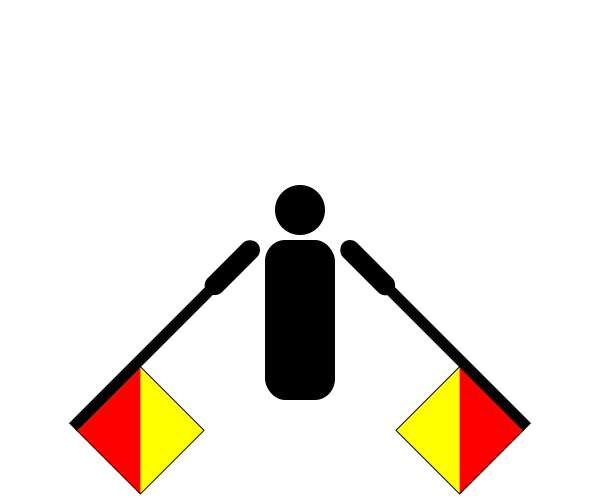
There are approximately 347 people named Bruin in the UK. That makes it one of Britain's least common surnames. Only around five in a million people in Britain are named Bruin.
Origin: English
Region of origin: British Isles
Country of origin: England
Religion of origin: Christian
Language of origin: English
