GRIME
Grime is an English surname that bears evidence of both Anglo‑Saxon and Old Norse origins. The name is first identified in the British Isles, specifically England, and the earliest surviving references appear in the early thirteenth century.
One proposed derivation links the name to the Old English word grima, meaning “mask” or “helmet.” This association suggests that the surname may have originally been applied to a person who made, wore or was known for disguising himself behind a mask or protective headgear – a custom increasingly common in medieval theatrical or ceremonial contexts.
Alternatively, the surname may descend from the Old Norse personal name grimr, which translates as “fierce” or “grim.” In the Middle Ages Grime was sometimes employed as a patronymic (“the son of Grimm”) and, due to its connotation of a vigorous or stern appearance, it was regarded as a compliment rather than an insult.
The earliest documented spelling is that of Roger Grymet, recorded as a witness in the Yorkshire Assize Courts in 1251. Subsequent early entries include Richard le Greme of Lancashire in 1284, Adam Gryme of Suffolk in 1524, and christenings recorded at St. Martin Ludgate in London in 1600.
Throughout the medieval period the surname appears in a variety of spellings: Grimes, Gryme, Grim, Grimm, Grimme, among others. Variations such as Grimley or Grimston may also reflect a locational origin, derived from places in Worcestershire or Leicestershire where the name of the locality itself incorporated the root grim.
After the Norman Conquest of 1066, surnames began to be passed down hereditarily, which allowed the name to persist through successive generations. Although it has never reached the frequency of more common English surnames, Grime remains in use across the United Kingdom and can now be found in the United States and Australia, largely as a result of migration and the passage of time.
While modern usage often associates the word “grime” with dirt or filth, the surname holds a distinct historical significance that reflects the linguistic and cultural tapestry of early medieval England. Its repeated appearance in legal, tax, and church records points to a family name that, whether descriptive of occupation, temperament, or locality, has maintained a continuous presence within the English surname register for centuries.
Typical given names associated with the Grime surname
Male
- Andrew
- Christopher
- David
- Ian
- John
- Michael
- Paul
- Peter
- Richard
- Robert
- Stephen
Female
- Carol
- Deborah
- Elizabeth
- Helen
- Hilary
- Jean
- Joanne
- Kathleen
- Laura
- Louise
- Margaret
- Mary
- Sandra
- Sarah
- Susan
Similar and related surnames
- Grim
- Grima
- Gries
- Ghrimes
- Caram
- Caramma
- Careem
- Careme
- Carim
- Carm
- Carme
- Carmi
- Carmo
- Carrim
- Coram
- Coriam
- Corm
- Corma
- Cormie
- Corram
- Correm
- Corum
- Craim
- Cram
- Crama
- Cramb
- Crame
- Cramm
- Cream
- Crema
- Creme
- Crim
- Crime
- Crimi
- Crom
- Cromb
- Crome
- Cromie
- Crommie
- Croom
- Croome
- Crum
- Crumb
- Crume
- Crumie
- Crumm
- Crummie
- Cryme
- Curme
- Curmi
- Curram
- Currim
- Curum
- Garame
- Garami
- Garim
- Garm
- Garma
- Garmo
- Garmoe
- Garram
- Ghirmai
- Goram
- Gorm
- Gorma
- Gorme
- Gorrum
- Gorum
- Gourm
- Graeme
- Grahm
- Grahma
- Grahme
- Gram
- Grama
- Grame
- Grami
- Gramm
- Gramme
- Gream
- Greame
- Greem
- Greim
- Grem
- Gremi
- Gremo
- Gri
- Grie
- Griem
- Grien
- Grimell
- Grimer
- Grimers
- Grimes
- Grimett
- Grimley
- Grimm
- Grimme
- Grimmen
- Grimmer
- Grimmet
- Grimms
- Grims
- Grimsey
- Grimyer
- Grine
- Groeme
- Grom
- Grome
- Gromme
- Gromo
- Groom
- Groome
- Grum
- Grumi
- Grym
- Grymes
- Guram
- Gurim
- Gurm
- Gurmu
- Karam
- Karama
- Karame
- Karami
- Kareem
- Kareemi
- Karem
- Karema
- Karemi
- Karemo
- Kariem
- Karim
- Karima
- Karime
- Karimi
- Karimu
- Karm
- Karma
- Karmi
- Karmo
- Karomo
- Karram
- Karriem
- Karrim
- Karuma
- Karume
- Kerem
- Kerim
- Kerma
- Kerum
- Kirima
- Kirimi
- Kiriom
- Kirma
- Koram
- Koramoa
- Korem
- Korim
- Korm
- Kormi
- Korom
- Koroma
- Kouroma
- Kourouma
- Kram
- Kramb
- Krame
- Kramm
- Kramo
- Kreimeia
- Kremm
- Krim
- Krime
- Krimm
- Krom
- Kroma
- Kromm
- Krum
- Krume
- Krumm
- Krym
- Kuram
- Kurm
- Kurma
- Kurmi
- Kurum
- Qerimi
- Quarm
- Quarme
- Quiram
Related and similar names are generated algorithmically based on the spelling, and may not necessarily share an etymology.
How to communicate the surname Grime in...
Braille
⠛⠗⠊⠍⠑
Morse
--..-...--.
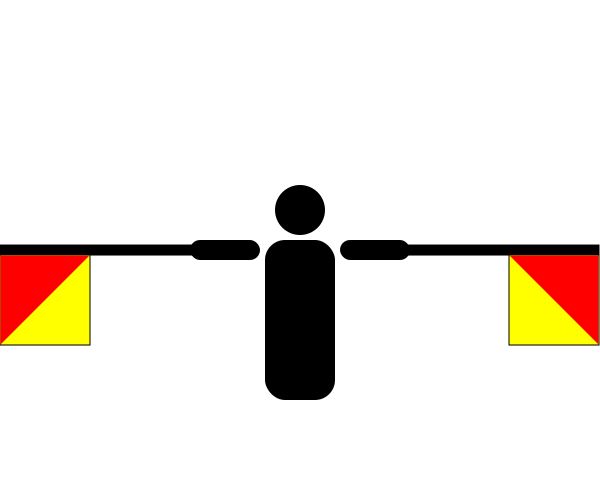
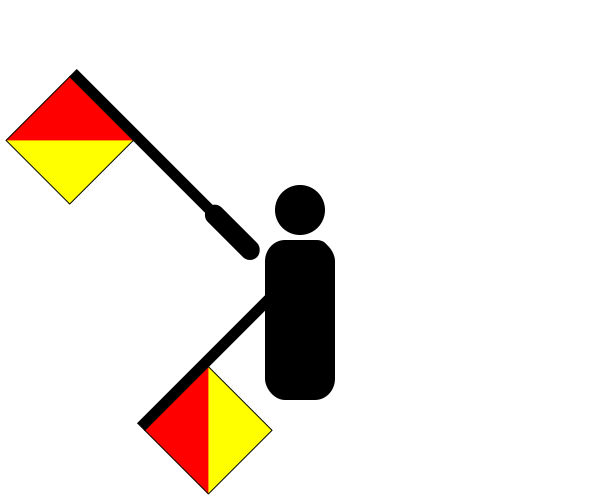
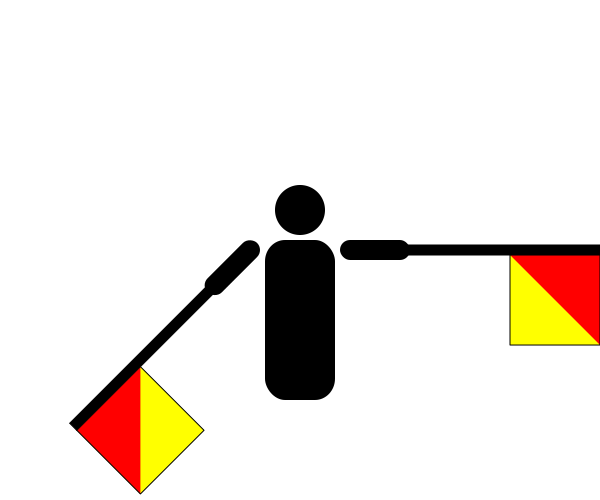
Semaphore


There are approximately 1,384 people named Grime in the UK. That makes it roughly the 5,719th most common surname in Britain. Around 21 in a million people in Britain are named Grime.
Origin: English
Region of origin: British Isles
Country of origin: England
Religion of origin: Christian
Language of origin: English