GRIMM
Grimm is a surname of German origin, deriving from the Middle High German word grim, which conveys the sense of fierce or severe. The term was frequently employed as a nickname for individuals whose temperament was stern or intense, and it may also have described a person presenting a grim or forbidding appearance.
The surname can also be understood as occupational in certain contexts. In Old German, grim referred not only to a harsh demeanour but also to a messenger, as in a town crier or herald. Consequently, a person who performed such a role could be identified as Grimm. In other instances it may have indicated a mask‑maker or performer in medieval pageants, where the construction and use of masks were significant.
Documentary evidence shows that the surname was in use as early as the 12th century. The earliest surviving charter from the town of Ursberg in Germany, dated 1171, records a person named Hugo Grim. Later medieval records include Mako Grim of Hamburg in 1266, William Grym of Suffolk in 1327, and Alexander Krymelsen of Marbach in 1492. These examples demonstrate that the name was common in both continental Europe and in England following the Norman conquest of 1066.
Over time a variety of spellings have appeared, influenced by regional dialects, transliteration practices and clerical transcription. Common variants include Grim, Grimm, Grimme, Grimek, Grimbach, Grimar, the German dialectal Crim and the patronymics such as Grimmelsen and Grimel. The Old Norse Viking personal name Grimr—meaning “the fierce one”—is also recognisable in the surname’s early history and underpins the widespread use of the name across Northern Europe during the Dark Ages.
In the 19th century the surname gained worldwide recognition through the literary achievements of Jacob and Wilhelm Grimm, the German brothers who compiled and published a celebrated collection of folk tales. Although their work is unrelated to the etymological sense of the name, theirs remains the most prominent association in popular consciousness.
Following waves of migration, the surname has spread to other parts of the world. In the United Kingdom, a substantial number of bearers can be found, as can residents of the United States, Australia and Canada, many of whom descend from German emigrants. Despite this international dispersion, the name remains common in Germany to the present day.
Typical given names associated with the Grimm surname
Male
- Andrew
- Anthony
- Charles
- Christopher
- Daniel
- Frank
- Hans
- John
- Matthew
- Michael
- Nicholas
- Peter
- Piet
- Robert
- Roland
Female
- Alexandra
- Amanda
- Anna
- Anne
- Caroline
- Christine
- Jean
- Juliet
- Katherine
- Kelly
- Lesley
- Margaret
- Marion
- Natalie
Similar and related surnames
Related and similar names are generated algorithmically based on the spelling, and may not necessarily share an etymology.
How to communicate the surname Grimm in...
Braille
⠛⠗⠊⠍⠍
Morse
--..-...----
Semaphore

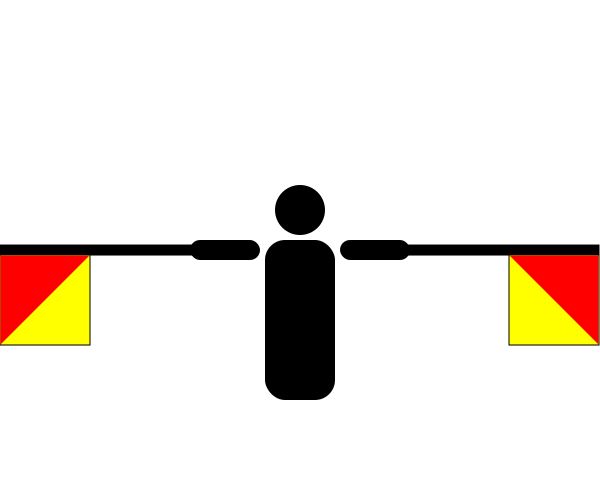
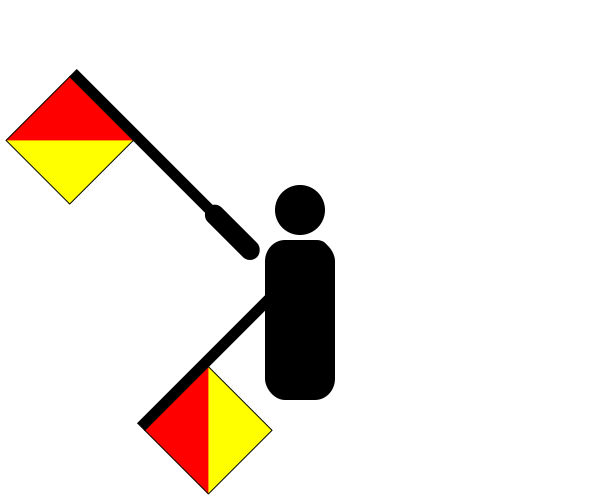
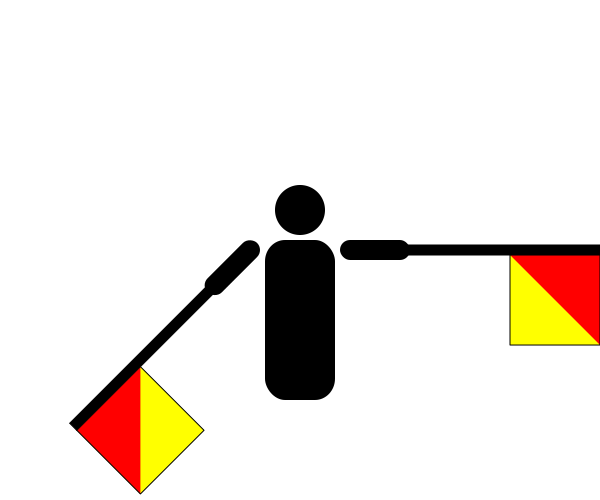
There are approximately 186 people named Grimm in the UK. That makes it one of Britain's least common surnames. Only around three in a million people in Britain are named Grimm.
Region of origin: Europe
Country of origin: Germany
Language of origin: German
