CRAINE
Craine is a surname of British Isles origin, with evidence indicating both English and Old Norse roots that came into use during the early medieval period.
In England the name derives from the Old English cran, meaning “crane,” a bird noted for its tall stature and long legs. It was employed as a nickname for a person who was tall and slender, or whose manner resembled that of a crane. In the North of England and especially on the Isle of Man the name is also recorded from the Old Norse word krani, the same term for the crane. Both derivations point to a common practice of using animal characteristics to form personal nicknames that later became hereditary surnames.
The earliest documented appearance of the surname in the Manx records is in 1408, when a John McCroyn is listed in the “Manx Name Register.” By 1586 the spelling had settled into the form Craine. Other early forms included Karran (1625), Carine (1643) and Carren (1650). Scottish and Irish linguistic influences can also be seen in variants such as Caren (1778).
On the Isle of Man a separate line of the name arose from the Gaelic Mac Ciarain, which translates as “the son of Little Kieran.” The personal name Kieran itself means “the dark coloured one.” This Gaelic origin is distinct from the Anglo‑Saxon or Norse derivations; the Mac prefix was removed in the reign of Elizabeth I (1558‑1603), giving rise to the single‑word Craine which appears in many contemporary documents.
In Ireland the name is an anglicisation of certain Gaelic surnames such as Mac Gráinne, meaning “son of Gráinne.” From the 19th century onwards unrelated migrations – particularly due to the Great Famine and the Industrial Revolution – carried the surname beyond the British Isles, establishing it in the United States, Canada and Australia while it remained common in the Isle of Man and in parts of Northern England.
Alternative spellings recorded in historical documents include Crane, Crayn, Crayne, Krayne and Krane. These differences reflect regional pronunciation and orthographic practices rather than distinct etymologies.
Throughout its history, the surname Craine has generated interest because it appears to have arisen independently in several linguistic contexts. Nonetheless, every form recognises its common ancestral reference to the crane bird – a symbol of grace, height and long‑legged elegance – and its application as a descriptive nickname that ultimately became a family name.
Typical given names associated with the Craine surname
Male
- Alan
- David
- Jack
- John
- Mark
- Michael
- Paul
- Robert
- Stephen
- Stuart
- Thomas
- William
Female
- Amanda
- Ann
- Carole
- Emma
- Heather
- Helen
- Kathleen
- Laura
- Liz
- Margaret
- Mary
- Rachel
- Sarah
- Susan
Similar and related surnames
- Cranie
- Carine
- Crain
- Cairn
- Cairne
- Cairnie
- Cairone
- Caraan
- Caraian
- Caran
- Carani
- Carano
- Caraon
- Careen
- Caren
- Carena
- Carian
- Carin
- Carina
- Carini
- Carino
- Carion
- Carioni
- Carn
- Carna
- Carne
- Carneau
- Carnie
- Carno
- Caroen
- Caron
- Carone
- Caronna
- Carono
- Caroon
- Carran
- Carrana
- Carrane
- Carrano
- Carren
- Carrena
- Carreno
- Carreon
- Carrien
- Carrin
- Carrino
- Carrion
- Carron
- Carrone
- Carrooin
- Carroon
- Carroun
- Caruana
- Carun
- Caruna
- Coahran
- Cohran
- Cohrane
- Corain
- Coran
- Corani
- Coreen
- Coren
- Coreni
- Corewyn
- Corin
- Corina
- Corine
- Corinne
- Corino
- Corion
- Corn
- Corna
- Corne
- Cornea
- Corneau
- Cornie
- Corno
- Cornu
- Cornuau
- Cornyn
- Coron
- Corona
- Coroneo
- Coronna
- Corooin
- Coroon
- Corran
- Corren
- Corrign
- Corrin
- Corron
- Corrooin
- Corroon
- Corwran
- Coryn
- Couran
- Courn
- Courne
- Couron
- Cowran
- Craen
- Crai
- Craien
- Crainer
- Crainey
- Craing
- Crainie
- Crainnie
- Cran
- Crance
- Crand
- Crane
- Cranen
- Craner
- Cranes
- Craney
- Crang
- Crange
- Cranies
- Cranin
- Cranis
- Crank
- Cranke
- Crann
- Cranna
- Cranney
- Crannie
- Crannis
- Cranny
- Crans
- Crant
- Crany
- Cranz
- Craun
- Crawn
- Crayne
- Crean
- Creane
- Creaney
- Creany
- Creen
- Creene
- Creeney
- Cren
- Crene
- Creney
- Crenn
- Crenna
- Crenney
- Crennie
- Crien
- Crin
- Crine
- Croan
- Crohn
- Croin
- Croine
- Cron
- Crona
- Crone
- Cronie
- Cronn
- Cronne
- Cronnie
- Cronyn
- Croon
- Croone
- Crouan
- Crouin
- Croune
- Crown
- Crowne
- Croyne
- Crrainse
- Cruian
- Crun
- Crune
- Crunn
- Cryne
- Curan
- Curen
- Curin
- Curine
- Curioni
- Curn
- Curne
- Curnie
- Curno
- Curnoe
- Curnyn
- Currain
- Curran
- Currane
- Curreen
- Curren
- Currien
- Currin
- Currinn
- Currion
- Currn
- Curron
- Curroun
- Currun
- Cuwran
- Gahran
- Gairn
- Garan
- Garana
- Garane
- Garen
- Gariano
- Garin
- Garine
- Garino
- Garioni
- Garn
- Garna
- Garne
- Garni
- Garnie
- Garon
- Garone
- Garran
- Garrean
- Garren
- Garrin
- Garrini
- Garrion
- Garron
- Garrone
- Gauron
- Gawron
- Gharani
- Ghariani
- Gheriani
- Ghoorun
- Ghorani
- Goeren
- Goran
- Gorana
- Gorani
- Gorania
- Goren
- Gorin
- Gorina
- Gorini
- Gorn
- Gorna
- Gorne
- Gorni
- Gornn
- Gorno
- Goron
- Gorran
- Gorren
- Gorrian
- Gorrin
- Gorun
- Gorwyn
- Goryn
- Gouran
- Gourin
- Gourine
- Gowran
- Graan
- Grahn
- Grain
- Graine
- Gran
- Grana
- Granai
- Grane
- Granea
- Graneau
- Grann
- Granne
- Grano
- Grean
- Greane
- Greeen
- Green
- Greena
- Greene
- Greeno
- Grein
- Greine
- Gren
- Grena
- Grene
- Grenn
- Greon
- Grian
- Grien
- Griene
- Grin
- Grina
- Grine
- Grineau
- Grini
- Grinn
- Groan
- Groen
- Groene
- Grohn
- Grohne
- Gron
- Gronau
- Grone
- Gronn
- Gronne
- Grono
- Groon
- Grown
- Groynne
- Gruen
- Gruhn
- Grun
- Grunau
- Grune
- Grunna
- Gryn
- Gryne
- Guarin
- Guarini
- Guarino
- Guarna
- Guarno
- Gueran
- Guerin
- Guerineau
- Guerini
- Guerna
- Guernaoui
- Guerrin
- Guerrini
- Guerune
- Guirron
- Guran
- Guren
- Gurin
- Gurina
- Gurini
- Gurion
- Gurn
- Gurne
- Guron
- Gurran
- Gurren
- Gurrin
- Gurron
- Gurun
- Gurynne
- Karaian
- Karan
- Karani
- Karania
- Kareen
- Karen
- Karena
- Karian
- Karin
- Karina
- Karini
- Karn
- Karna
- Karne
- Karni
- Karno
- Karon
- Karoni
- Karoon
- Karouni
- Karowna
- Karran
- Karren
- Karrin
- Karun
- Karuna
- Kayran
- Kearen
- Kearin
- Kearn
- Kearne
- Kearnie
- Kearon
- Keeran
- Kehrein
- Kehren
- Keiran
- Keiron
- Keran
- Kerane
- Keren
- Kerin
- Kerioin
- Kern
- Kernaie
- Kerne
- Kernie
- Kerno
- Keron
- Kerran
- Kerrane
- Kerren
- Kerrian
- Kerrien
- Kerrin
- Kerron
- Kerrone
- Kieran
- Kieren
- Kiernia
- Kieron
- Kiran
- Kirane
- Kiren
- Kirin
- Kirn
- Kirran
- Kirrane
- Koran
- Korana
- Koranne
- Koreen
- Koren
- Korin
- Korine
- Korn
- Korna
- Korona
- Koroni
- Kourani
- Kraan
- Kragnes
- Krahn
- Krain
- Kraina
- Kraines
- Krainz
- Kran
- Krane
- Krans
- Kranz
- Krein
- Kren
- Krene
- Krenn
- Kriehn
- Krien
- Krohn
- Krohne
- Kron
- Krone
- Kronn
- Kroon
- Kryn
- Kurain
- Kuran
- Kurana
- Kurani
- Kureen
- Kuren
- Kurian
- Kurien
- Kurin
- Kurn
- Kuron
- Kurran
- Kurrein
- Qarni
- Quarin
- Quarn
- Quaroni
- Querin
- Querino
- Querne
- Quierin
- Quirin
- Quirini
- Quirino
- Quirion
- Quirn
- Quoirin
- Quorn
Related and similar names are generated algorithmically based on the spelling, and may not necessarily share an etymology.
How to communicate the surname Craine in...
Braille
⠉⠗⠁⠊⠝⠑
Morse
-.-..-..-..-..
Semaphore

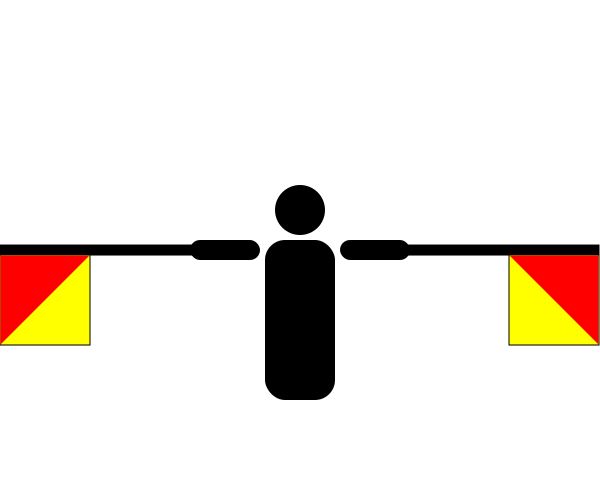

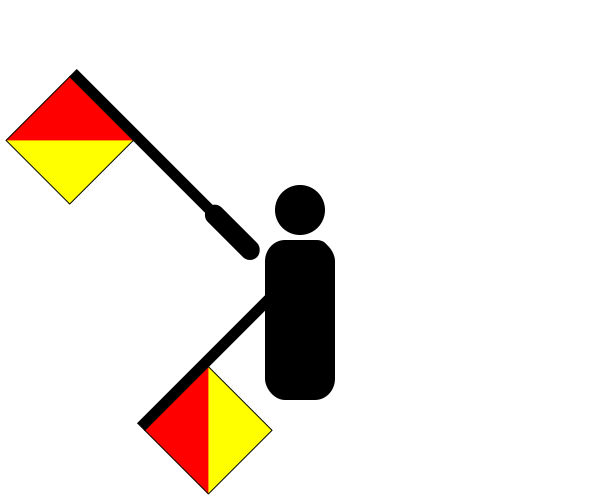
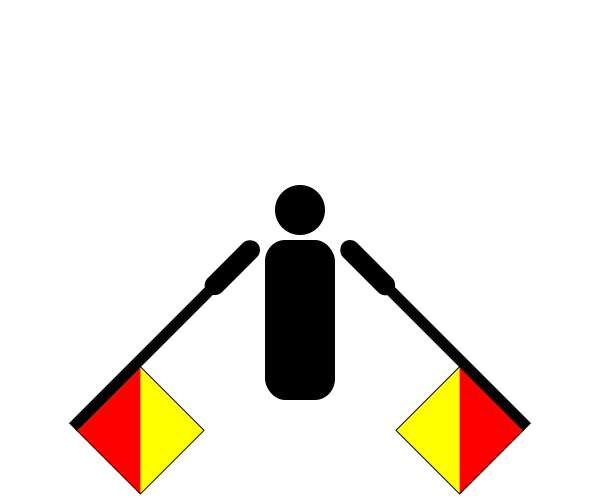

There are approximately 500 people named Craine in the UK. That makes it one of Britain's least common surnames. Only around eight in a million people in Britain are named Craine.
Origin: English
Region of origin: British Isles
Country of origin: England
Religion of origin: Christian
Language of origin: English
