BRACK
Brack is a surname with a multifaceted provenance and a presence across several European regions. Its history reflects a confluence of linguistic roots and social roles that evolved over centuries.
The earliest attestation of the name appears in the 13th‑century Subsidy Rolls of Sussex, where a Relicta le Brak is recorded in 1296. This early example illustrates the English use of the surname during the reign of King Edward I. A later mention occurs in the 1327 Hundred Rolls of Sussex, listing a William Brak, and in the 1484 Friary Rolls of Yorkshire, where a Thomas Brakke is named. These documents confirm that the surname was established in England in the medieval period.
According to linguistic research, Brack originates from Germanic sources. In Middle High German, the word brac means “trouble” or “disturbance,” suggesting that the original nickname described a person who was disruptive or caused mischief. This nickname then became hereditary in certain families.
Another line of evidence points to a Middle High German term bracke, which referred to a type of hunting dog. In this context, the surname would have denoted either a keeper of such dogs or a hunter notable for working with them. The Old French influence appears in the pre‑10th‑century roots brache or brachet, meaning a hunting dog that was trained to hunt by scent. Scholars associate this variant with the arrival of the name in England with William the Conqueror in 1066, where it described a specialised occupation that conferred social status.
Low German also offers a topographic explanation: the word brack means “swamp” or “marsh.” In regions where such landscapes were prominent, the surname could have been adopted by individuals dwelling near these wetlands, thereby highlighting a geographical origin.
In addition to its Germanic and French roots, the surname has variants that reflect regional pronunciation and spelling changes. Common derivatives include Bracks, Brake, Brach, Bracke, Brock, Bracke, Bracke, and, in some areas, Brackt. The form Brack is also found in Austria, Canada, Australia, and the United States, where German immigration has spread the name. In England, additional variants such as Broke, Brook, and Brookes appear, while in Ireland the name may appear as Bracken, derived from the Anglicised form of the Gaelic O'Breacain.
Despite its relative rarity, the surname Brack demonstrates a rich historical tapestry, encompassing linguistic evolution, occupational distinction, and geographical identification. Its documented presence from medieval England to present‑day countries underscores its enduring relevance in genealogical and cultural studies.
Typical given names associated with the Brack surname
Male
- Alan
- Andrew
- Christopher
- David
- Edward
- George
- James
- John
- Michael
- Paul
- Peter
- Timothy
Female
- Alison
- Catherine
- Claire
- Elizabeth
- Gillian
- Irene
- Margaret
- Mary
- Michelle
- Samantha
- Sarah
- Susan
Similar and related surnames
- Braak
- Braca
- Bracco
- Bracci
- Bracey
- Barack
- Brace
- Barrack
- Barck
- Bracke
- Bracki
- Baark
- Barac
- Baraca
- Baracco
- Barak
- Baraka
- Barake
- Baraki
- Baraku
- Barc
- Barca
- Barco
- Barcoe
- Barek
- Barg
- Barga
- Bargh
- Bargu
- Baric
- Barick
- Barik
- Bark
- Barka
- Barkai
- Barke
- Barki
- Barkie
- Barko
- Barku
- Barok
- Barough
- Barouki
- Barraco
- Barrago
- Barrak
- Barreca
- Barrek
- Barrick
- Barriga
- Barroca
- Barroccu
- Barrock
- Barroga
- Barrough
- Barugh
- Barycki
- Bauerek
- Baureek
- Bayrak
- Bearock
- Berack
- Berak
- Beraki
- Berck
- Bercu
- Berek
- Berg
- Berga
- Bergaoui
- Bergau
- Bergg
- Bergh
- Berghe
- Bergo
- Beric
- Berick
- Berik
- Berk
- Berka
- Berkaoui
- Berke
- Berki
- Berko
- Berrick
- Biraghi
- Birago
- Birak
- Birca
- Birck
- Birecki
- Birek
- Birg
- Birgh
- Birk
- Birke
- Birok
- Boarke
- Borak
- Borca
- Borck
- Borecki
- Boreiko
- Borek
- Borg
- Borga
- Borgh
- Borghei
- Borghi
- Borgo
- Borick
- Boricke
- Borig
- Borik
- Bork
- Borke
- Borko
- Borok
- Borough
- Borque
- Borrack
- Borrega
- Borrego
- Borrick
- Borrough
- Boruc
- Borucka
- Borucki
- Borucu
- Boruk
- Borycka
- Borycki
- Bourg
- Bourgh
- Bourike
- Bourk
- Bourke
- Bourough
- Bourque
- Bourqui
- Bourrough
- Bowrick
- Bra
- Bracek
- Bracken
- Bracker
- Bracket
- Brackey
- Brackie
- Brackin
- Brackly
- Bracks
- Brackup
- Brackway
- Brackx
- Braco
- Bracq
- Bracy
- Brag
- Braga
- Bragg
- Bragge
- Braggio
- Brague
- Braig
- Braik
- Brak
- Braka
- Brake
- Brakes
- Brakey
- Brakha
- Brako
- Braock
- Brasco
- Braugh
- Brauka
- Break
- Breakes
- Breakey
- Breakie
- Breaks
- Breca
- Breck
- Brecka
- Brecke
- Brecks
- Breek
- Breeks
- Breg
- Brega
- Bregg
- Bregu
- Breik
- Brek
- Breke
- Brekke
- Brewka
- Bric
- Brick
- Bricka
- Brig
- Briga
- Brigg
- Brigh
- Brighi
- Brigo
- Brigue
- Brigui
- Brik
- Brika
- Brike
- Brique
- Broack
- Broak
- Broc
- Brocca
- Brock
- Brocke
- Brocki
- Brockie
- Brocq
- Broeg
- Broek
- Brog
- Broga
- Brogg
- Brogge
- Broggi
- Broggio
- Brogh
- Brok
- Broka
- Broke
- Brokie
- Broock
- Brook
- Brooke
- Brookie
- Broug
- Brough
- Brouk
- Bruck
- Brucki
- Brueck
- Bruegge
- Brug
- Brugg
- Brugge
- Brugh
- Brugha
- Bruk
- Bruka
- Bruke
- Bryck
- Brycki
- Bryg
- Bryk
- Bryke
- Buerk
- Buerke
- Buirk
- Burack
- Buraga
- Burak
- Burca
- Burck
- Burcu
- Burek
- Burg
- Burga
- Burgg
- Burgh
- Burghe
- Burgo
- Burgoo
- Burgui
- Buriak
- Buric
- Burigo
- Burik
- Burk
- Burka
- Burke
- Burki
- Burkie
- Burko
- Burough
- Burrack
- Burrogh
- Burrough
- Burucoa
- Burugu
- Byrke
- Wyberg
- Wybergh
- Wyburgh
Related and similar names are generated algorithmically based on the spelling, and may not necessarily share an etymology.
How to communicate the surname Brack in...
Braille
⠃⠗⠁⠉⠅
Morse
-....-..--.-.-.-
Semaphore
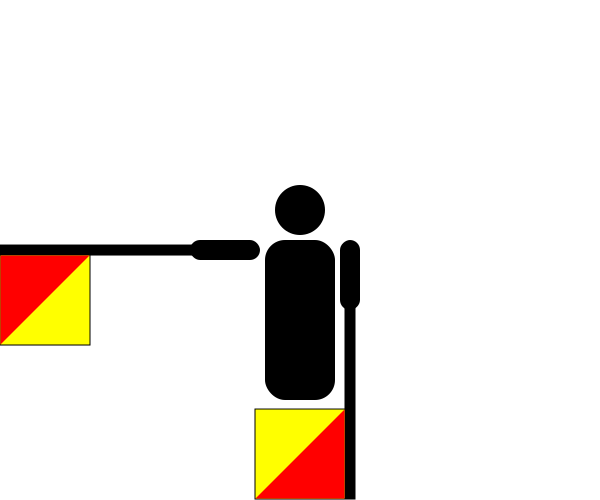
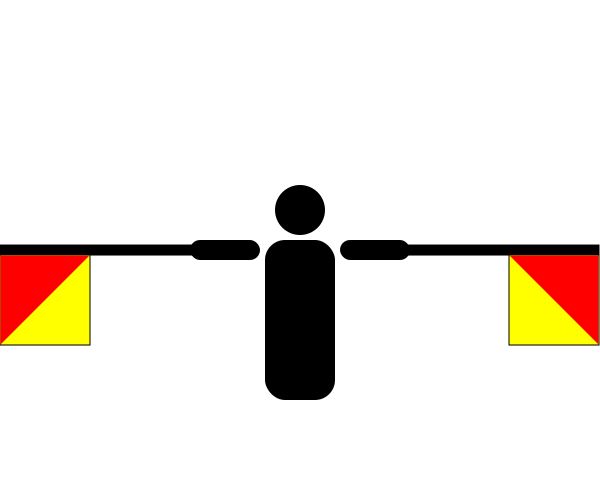


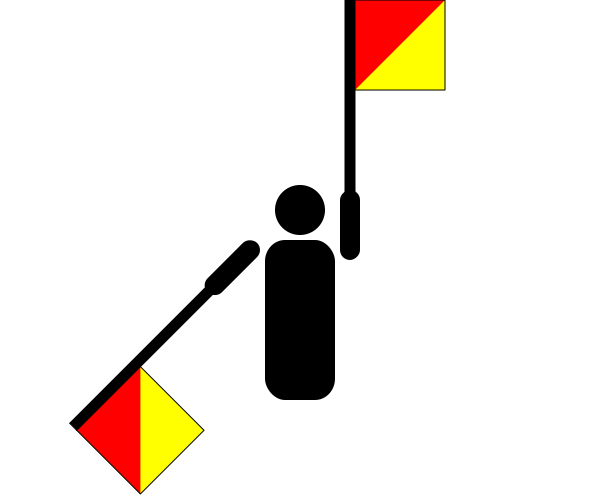
There are approximately 699 people named Brack in the UK. That makes it roughly the 9,710th most common surname in Britain. Around 11 in a million people in Britain are named Brack.
Origin: Scandinavian
Region of origin: Europe
Country of origin: Norway
Religion of origin: Christian
Language of origin: Norwegian
