BURK
Burk is a surname of Germanic origin. It is derived from the Middle High German word burc or burk, meaning “fortress” or “castle”. The name was originally a topographic surname, given to a person who lived near a castle or worked at a fortified place, or as a nickname for someone whose character resembled the solidity and protection of a fortress.
The surname also incorporates an Old English element. The pre–7th century word burh, or its Anglo‑Saxon form burg, denoted a fortified settlement or a town on a hill. Villages such as Burgh in Suffolk and Burgh in Lincolnshire are typical origins for early individuals who adopted the name.
The earliest surviving record of the name is Ailricus de Burc, dated to 1086 in the Domesday Book of Suffolk. Subsequent early entries include Geoffrey de Burk of Herefordshire in 1272 and Hubert de Burk of Somerset in 1273, which illustrate the persistence of the spelling throughout the Middle Ages.
During the Anglo‑Norman invasion of Ireland (1169–1170), William de Burgo, a resident of Burgh, Suffolk, travelled to the island with Strongbow, the Earl of Pembroke. He later became Chief Governor of Ireland under King Henry XI and was rewarded with significant estates. His presence marked the introduction of the surname into Ireland, where it was subsequently borne by the original Earls of Ulster and the Clanricarde of Galway. The name was recorded in various forms such as Burgh, Burk, Burke and Bourke.
Other spellings found during the medieval period include Burkgramm, Burkard and variants influenced by regional orthographic practices. In France the name appears as Bourque, while in the United States it is commonly spelt Burke, reflecting Anglicisation.
In addition to its topographic meaning, the surname has occasionally been associated with occupational or descriptive origins. In Middle English the word burke could refer to a cloth dealer, and in some contexts it was a nickname for a person who tended or fattened swine, or for one whose appearance was considered foul‑smelling. These usages are comparatively rare in the historical record.
In contemporary distributions, the surname is most prevalent in North America. In the United States it is most common in Wisconsin, North Dakota, South Dakota and Minnesota, ranking as the 4,987th most common surname according to Social Security Administration data. In Canada it is most frequent in Ontario, Alberta, Quebec, New Brunswick, Nova Scotia and British Columbia, ranking 2,799th in popularity according to Statistics Canada. The name can also be found in Australia, New Zealand, Austria, Switzerland, Germany, and other European countries.
Related surnames that share etymological roots with Burk include Burkhardt, Burkhalter, Burkes, Burket and the Germanic Berg‑names such as Berger and Burkhard. These variants reflect the broader linguistic and cultural connections among Germanic and Anglo‑Norman peoples.
Typical given names associated with the Burk surname
Male
Female
Similar and related surnames
- Burke
- Bruk
- Bur
- Bura
- Burka
- Burki
- Burko
- Baark
- Barc
- Barck
- Barek
- Bark
- Barka
- Barke
- Barki
- Barko
- Barks
- Bauck
- Bauks
- Baulk
- Berck
- Berk
- Berka
- Berke
- Berki
- Berko
- Berks
- Birck
- Birk
- Birke
- Birks
- Boarke
- Borck
- Borek
- Bork
- Borke
- Borko
- Borks
- Borque
- Bourk
- Bourke
- Buerk
- Burca
- Burck
- Burcu
- Burg
- Burkay
- Burkes
- Burkey
- Burkie
- Burkis
- Burks
- Burkus
- Burky
- Barkes
- Barrack
- Barrick
- Borg
- Bourque
- Brack
- Bragg
- Brigg
- Brook
- Brooke
- Burgh
- Burkly
Related and similar names are generated algorithmically based on the spelling, and may not necessarily share an etymology.
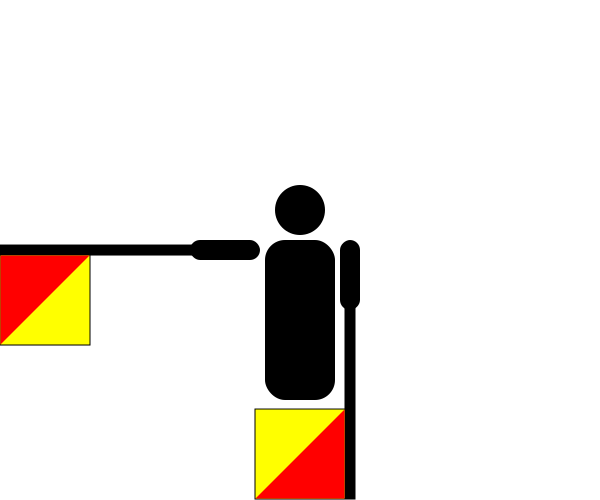
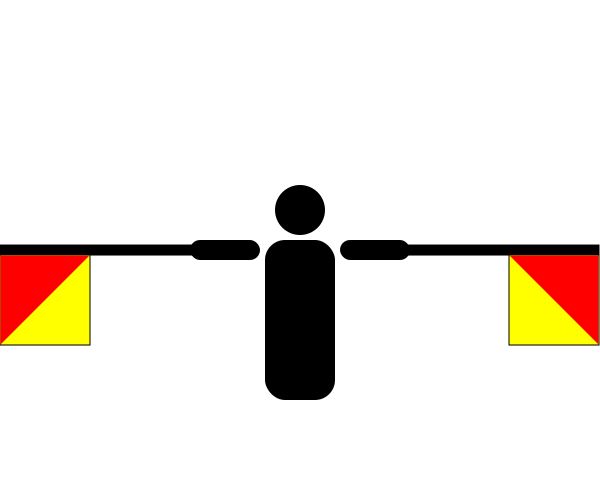
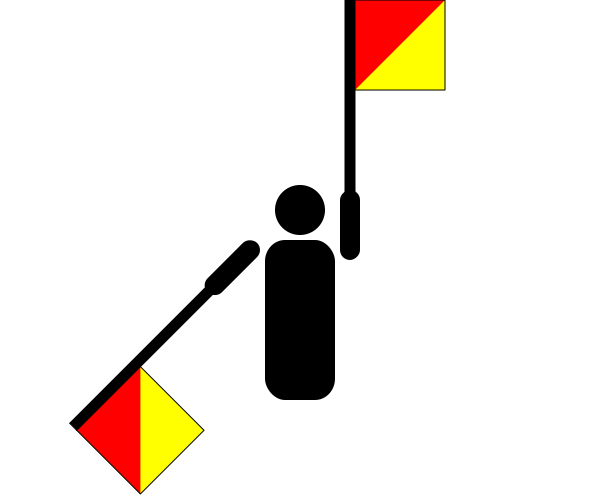
How to communicate the surname Burk in...
Braille
⠃⠥⠗⠅
Morse
-.....-.-.-.-
Semaphore

There are approximately 77 people named Burk in the UK. That makes it one of Britain's least common surnames. Only around one in a million people in Britain are named Burk.
