MORT
Recorded variant spellings include M Or T
Mort is a surname of both English and French provenance, the combination of two distinct historical pathways that converge in the British Isles. Its earliest attestations are found in medieval English parish registers and in French civil documents, suggesting that the name was borne by families who crossed the Channel in the post‑Conquest era.
The primary derivation of Mort is the medieval given name Mort, a shortened form of Mortimer. The name Mortimer itself originates from the Old French words mort, meaning “dead”, and mer, meaning “fame” or “renown”. Consequently, the surname can be interpreted as “renowned for death” or “famous for being dead”, a nickname that may have reflected either a person’s morbid sense of humour or a profession connected with death, such as a gravedigger or undertaker.
In England, three plausible origins for the name are frequently cited. One is the nickname route described above, whereby a person known for playing the part of death in travelling theatres or for possessing a pallid, ill‑looking appearance was labelled Mort. A second possibility is the derivation from the ancient pre‑7th century personal name Morta, the etymology of which is unknown, but which is echoed in the place name ```Mortlake``` in Surrey. The third hypothesis points to a locational suffix, with the name arising from any of several places called Morte Bank in Lancashire, Mortagne in France, or Mortola in Italy. The concentration of the surname in Lancashire, where it is well documented from at least the Elizabethan period, supports the locational theory.
Historical records exhibit the many permutations of the surname. It has been recorded as Mort, Morte, Mortel, Mortell (in England); Mort, Morte, Mortaux, Mortell, Mortin (in France); Mortale, Mortara, Mortato, Morteo (in Italy); and other variants. Examples of early church documentation include Edward Morte, a christening witness at Winwick, Lancashire, on 18 October 1565, Catherine Mort christened at Aizanville, Haute‑Marne, France, on 11 August 1715, and Emanuele Monteo, who married Giovanna Risso in Genova, Italy, on 17 February 1867.
Today, the surname remains relatively uncommon but continues to appear in genealogical and civil records throughout the United Kingdom, particularly in the North West, and in former French communities with historic ties to the Channel. Its etymological roots in both Anglo‑Saxon and Norman French heritage render it a noteworthy example of the linguistic blending that characterises many British surnames.
Typical given names associated with the Mort surname
Male
- Andrew
- Christopher
- David
- James
- John
- Peter
- Philip
- Robert
- Stephen
- Steven
- William
Female
- Catherine
- Elizabeth
- Freda
- Helen
- Janet
- Jennifer
- Linda
- Lisa
- Margaret
- Marie
- Mary
- Sarah
- Susan
- Victoria
Similar and related surnames
- Mart
- Mahrt
- Marte
- Maret
- Marett
- Marta
- Maertz
- Martes
- Marette
- Mor
- Mora
- Morta
- Morte
- Morti
- Mairet
- Maradia
- Marat
- Marata
- Maratea
- Maratt
- Maratta
- Mard
- Marda
- Marde
- Mardi
- Mardia
- Mardie
- Mardo
- Mared
- Maredia
- Maretti
- Mariat
- Marid
- Mariet
- Marietta
- Mariette
- Mariot
- Mariott
- Mariotte
- Mariotti
- Mariotto
- Marit
- Marita
- Mariti
- Maritt
- Mariuta
- Mariutto
- Marot
- Marote
- Maroto
- Marott
- Marotta
- Marotte
- Marotti
- Marotto
- Marrat
- Marratt
- Marraud
- Marret
- Marrett
- Marretta
- Marriat
- Marriatt
- Marriet
- Marriett
- Marrietta
- Marriette
- Marriot
- Marriott
- Marriotte
- Marrit
- Marritt
- Marrod
- Marroitt
- Marrot
- Marrott
- Marteau
- Martey
- Marth
- Marthe
- Marti
- Martia
- Martie
- Marto
- Marts
- Martt
- Marty
- Martye
- Martz
- Marut
- Maruta
- Maruti
- Maurat
- Maurd
- Maurette
- Mayert
- Meard
- Meert
- Merad
- Merat
- Merati
- Meredydd
- Merett
- Merid
- Merida
- Meriett
- Meriot
- Meriott
- Merit
- Meritt
- Merot
- Merotto
- Merrad
- Merrat
- Merratt
- Merret
- Merrett
- Merridue
- Merriet
- Merriett
- Merriot
- Merriott
- Merrit
- Merrito
- Merritt
- Merrot
- Merrott
- Mert
- Merta
- Mertes
- Merth
- Mertz
- Meyrat
- Meyrite
- Miard
- Mirat
- Mirata
- Miraut
- Miret
- Mirota
- Mirrett
- Mirritt
- Mirt
- Mirth
- Mirto
- Moar
- Moirt
- Moor
- Moorad
- Moorat
- Moord
- Moorti
- Morad
- Morada
- Moradi
- Morado
- Morait
- Morat
- Morata
- Morato
- Moratti
- Moratto
- Mord
- Mordi
- Mordie
- Mordo
- Mordt
- Mordue
- More
- Mored
- Moreda
- Moret
- Moreta
- Morete
- Moreth
- Moreto
- Moretta
- Morette
- Moretti
- Moretto
- Moretz
- Moriat
- Morita
- Morito
- Moritt
- Morote
- Morotti
- Morrad
- Morrat
- Morratt
- Morret
- Morrett
- Morretti
- Morriett
- Morrit
- Morritt
- Morrod
- Morrott
- Mortal
- Mortan
- Mortar
- Mortas
- Mortby
- Morteis
- Morteo
- Mortes
- Mortey
- Morth
- Mortha
- Morthey
- Morthy
- Mortieau
- Morties
- Mortis
- Mortiz
- Mortl
- Mortn
- Morts
- Mortt
- Mortu
- Morty
- Moryto
- Mourad
- Mouradi
- Mourat
- Mourd
- Mourdi
- Mouret
- Mourot
- Mrad
- Murad
- Muradi
- Murat
- Murata
- Murati
- Murd
- Murdie
- Murdo
- Murdue
- Muret
- Muretti
- Murrad
- Murrat
- Murratt
- Murrett
- Murritt
- Murt
- Murta
- Murte
- Murti
- Murtie
- Murto
- Murty
- Murueta
- Myrda
- Myrett
- Myrta
- Myrto
- Mortaz
- Mortoo
- Morten
- Morton
Related and similar names are generated algorithmically based on the spelling, and may not necessarily share an etymology.
How to communicate the surname Mort in...
Braille
⠍⠕⠗⠞
Morse
-----.-.-
Semaphore
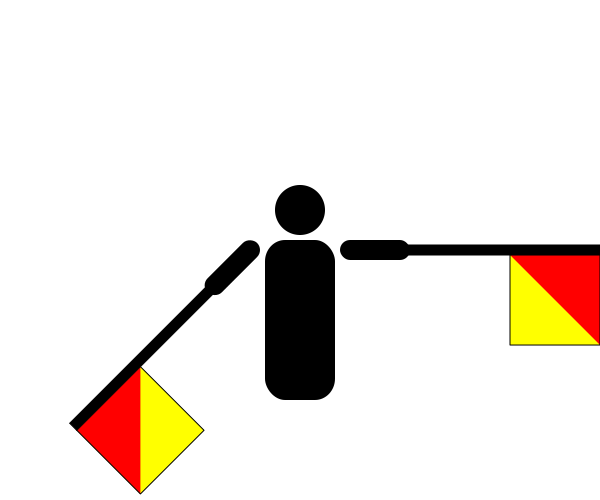
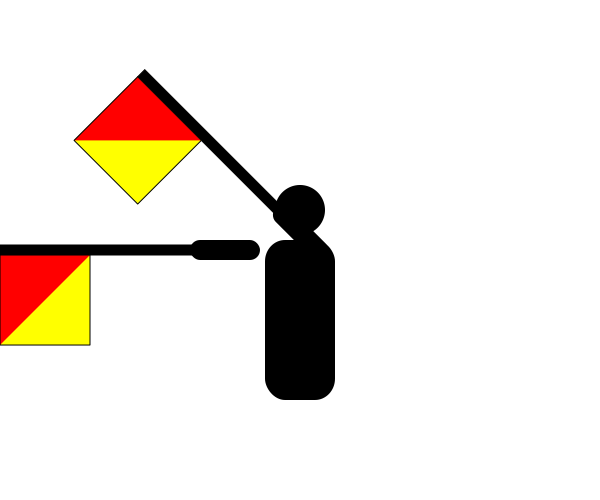
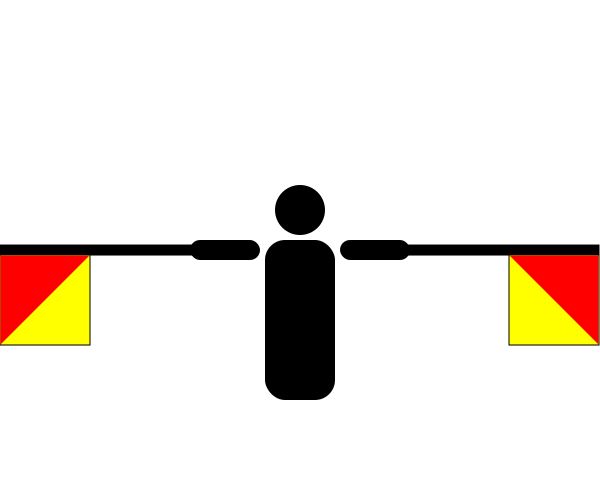
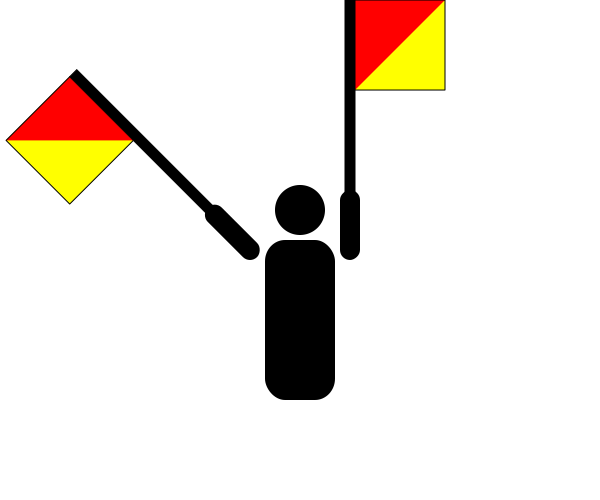
There are approximately 2,492 people named Mort in the UK. That makes it roughly the 3,523rd most common surname in Britain. Around 38 in a million people in Britain are named Mort.
Origin: English
Region of origin: British Isles
Country of origin: England
Religion of origin: Christian
Language of origin: English

Famous people named Mort
- Enoch Mort - Football player (1912 to 1)
- David Mort - Politician (1888 to 1963)
- Sophia Mort - (1807 to 1882)
- Henry Mort - Politician in Queensland and New South Wales (1818 to 1900)
Names and descriptions courtesy of Wikipedia, and may contain errors. This is not intended to be an exhaustive list of every famous person with this name.