MORE
More is a family name that can be traced to several linguistic and geographical traditions within the United Kingdom, including English, Gaelic and Scottish origins. The surname has survived from the early medieval period to the present day, and its spelling has diversified across different regions and cultures.
In the Anglo‑Saxon period the name derives from the Old English word mor, meaning a marsh or fen. Individuals who lived on or worked within such wetland environments were often identified by this topographical marker, which later became a hereditary surname. The same element appears in place‑names such as the moors of Cheshire and the fenland of Shropshire, demonstrating how the name reflected a person’s surroundings.
In Gaelic contexts the surname is linked to the word mór, meaning “big” or “great”. It was frequently used as a nickname for persons of large stature or notable importance. A parallel Welsh use of mowr produced a similar descriptive surname. Additionally, the Old French word more gave rise to a nickname for those with a dark or swarthy complexion, providing an alternative French‑based origin for the name in continental Europe.
The earliest documentary evidence of the name is found in the Domesday Book of 1086 when a William de More is recorded in Suffolk. Subsequent entries include a William Mor noted in the Essex Feet of Fines in 1198 and a Matthew del More listed in the Court Rolls of Wakefield, Yorkshire, in 1275. These records show that the name was well established in the late twelfth and early thirteenth centuries.
Many orthographic variants have appeared over the centuries, including Moor, Moors, Moores, Mores and the composite Moorhouse. The broad spectrum of spellings reflects regional pronunciation differences and the fluidity of medieval orthography.
In Ireland the surname was adopted as an anglicised form of the Gaelic O’Mordha, translated as “descendant of Mordha”. The element Mordha conveys meanings such as “great”, “proud” or “stately”, linking the name with a sense of dignity or high status in Irish tradition.
Scottish and Welsh usage often involved the nickname meaning “large man”, stemming from the same Gaelic mór or Welsh mowr root. These references emphasise the descriptive nature of the surname in these cultures, indicating a person’s physical presence or social importance.
Beyond the British Isles, “More” has appeared in continental Europe where it descends from the French personal name More (derived from *Maur*, meaning “Moorish” or “dark‑skinned”). In India, particularly in the state of Maharashtra, the surname is found among Maratha and Brahmin communities, where it may originate from a regional term related to a peacock or to a local dialectal word. In North America, the surname is the sixteenth most common in the United States; its presence in Australia, Canada and New Zealand reflects patterns of British emigration. In the 17th century, for example, a Leonard Moore is recorded as a settler in Virginia in 1624, demonstrating the name’s early transatlantic reach.
Overall the surname More exemplifies a multifaceted heritage, with roots in place‑based identities, physical descriptors and cultural exchanges across several nations. Its numerous spelling variants and widespread geographic distribution attest to its resilience and adaptability throughout history.
Typical given names associated with the More surname
Male
- Andrew
- Christopher
- David
- George
- James
- John
- Kenneth
- Robert
- Thomas
- William
Female
- Alison
- Averil
- Caroline
- Catherine
- Elizabeth
- Fiona
- Helen
- Jacqueline
- Janet
- Janice
- Jean
- Margaret
- Mary
- Sarah
Similar and related surnames
- Atmore
- Mure
- Moor
- Moore
- Muir
- Mare
- Maire
- Maree
- Marre
- Mar
- Mares
- Mair
- Mahr
- Marr
- Marie
- Marei
- Maroe
- Maires
- Marree
- Moer
- Mor
- Mora
- Morea
- Moree
- Maure
- Mayr
- Mayre
- Mear
- Meare
- Meer
- Meere
- Mehr
- Mehre
- Meir
- Meire
- Mer
- Mere
- Meres
- Mereu
- Merr
- Merre
- Meyre
- Miar
- Michael
- Michaell
- Michall
- Michel
- Michele
- Michell
- Mier
- Mior
- Mir
- Mire
- Mirea
- Miree
- Mires
- Mirr
- Mitchael
- Mitchall
- Mitchel
- Mitchell
- Moar
- Moara
- Moare
- Moares
- Moors
- Moreau
- Mored
- Moreea
- Moreis
- Morek
- Mores
- Moret
- Moreu
- Morey
- Morez
- Mori
- Morie
- Morii
- Moro
- Morou
- Morr
- Morre
- Mors
- Moru
- Mory
- Mour
- Moura
- Moure
- Moureau
- Mourey
- Mouri
- Mourie
- Mouro
- Mourre
- Mours
- Mower
- Mowers
- Mur
- Muree
- Mures
- Muroe
- Murr
- Murre
- Marae
- Marey
- Marres
- Mauree
- Mayres
- Meares
- Meeres
- Meires
- Merew
- Merey
- Merie
- Mieres
- Mirey
- Moir
- Moire
- Moores
- Morah
- Moray
- Morce
- Moreaux
- Morecz
- Morel
- Morell
- Moren
- Morer
- Morese
- Moress
- Morete
- Moretz
- Moreve
- Morge
- Mories
- Morke
- Morne
- Morow
- Morpe
- Morres
- Morrey
- Morrie
- Morse
- Morte
- Moury
- Moyre
- Mureau
- Murey
- Murie
- Myer
- Maier
- Mara
- Mohr
- Mort
- Murrie
- Myers
- Myrie
Related and similar names are generated algorithmically based on the spelling, and may not necessarily share an etymology.
How to communicate the surname More in...
Braille
⠍⠕⠗⠑
Morse
-----.-..
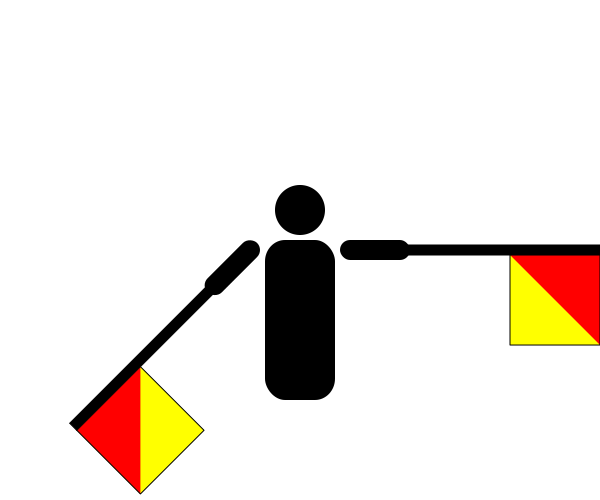
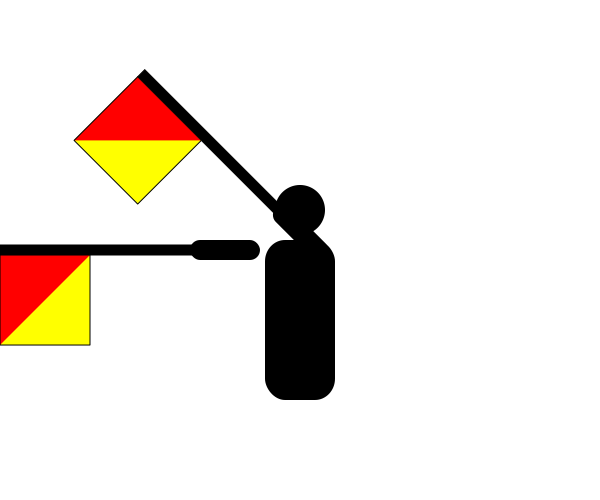
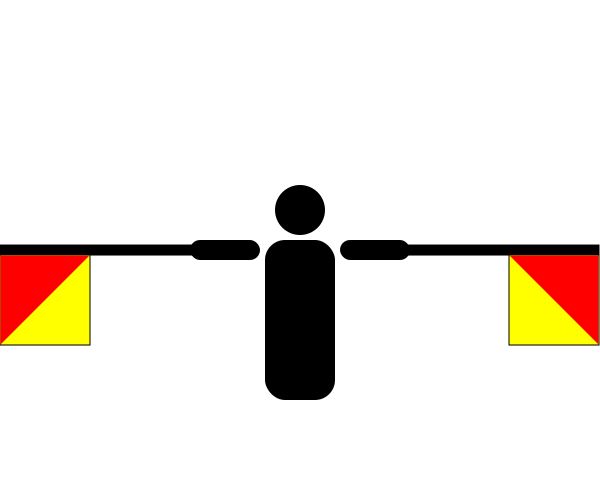
Semaphore

There are approximately 2,405 people named More in the UK. That makes it roughly the 3,616th most common surname in Britain. Around 37 in a million people in Britain are named More.
Origin: Iberian
Region of origin: Europe
Country of origin: Spain
Religion of origin: Christian
Language of origin: Spanish

Famous people named More
- Kenneth More - Film and stage actor (1914 to 1982)
- Rebecca More - Actress
- Thomas More - Renaissance humanist (1478 to 1535)
- Camilla and Carey More - Actress
- Hannah More - Religious writer, poet, playwright, philanthropist (1745 to 1833)
- James More - Magician
- Henry More - Philosopher (1614 to 1687)
- Carey More - Actress
- Colin More - Scottish football player
- Richard More - Cricketer (1879 to 1936)
- Hamish More - Cricketer
- Johnny More - Impressionist and entertainer (1934 to 2015)
Names and descriptions courtesy of Wikipedia, and may contain errors. This is not intended to be an exhaustive list of every famous person with this name.