MORTEN
Morten is a surname of English origin, primarily derived from the given name Morton. The name Morton itself is extracted from Old English elements: mor meaning “marsh” and tun meaning “settlement” or “enclosure”. Consequently, the surname Morten originated as a locational identifier for an individual who lived near or within a marshy settlement.
The surname has been recorded in several variant forms, including Morten, Morton, Moorton, Mourton, Moreton, Mairtoun and Mirton. While these forms appear in English, Scottish and Irish registers, the fundamental meaning and derivation remain consistent across all regions. In the Scottish context, the name arises from localities such as the village of Morton in Dumfriesshire or formerly Mryrton (now Morton) in Fife. Within England, the surname can be traced to more than twenty places known as either Moreton or Morton, situated in counties including Berkshire, Cheshire, Devonshire, Dorset, Gloucestershire, Northamptonshire, Shropshire and Staffordshire. These places are recorded in the medieval Domesday Book of 1086. In Ireland, bearers of the surname are considered to be descendants of early English settlers, and their name likewise reflects the mor‑tun derivation.
Early surviving records provide concrete evidence of the surname’s antiquity. The first recorded spelling is likely that of Robert de Mortone, dated to 1130 in the Pipe Rolls of Wiltshire, during the reign of King Henry I, known as “the Lion of Justice” (1100–1135). Subsequent attestations include Hugh de Mortun, noted as the prior of May in Scotland in 1204, Robert de Morton of Nottingham shown in the Hundred Rolls of 1273, and Master Thomas Mirton, who served as chaplain to the king of Scotland in 1422. These entries underline the surname’s long-standing presence across the British Isles.
In conclusion, the surname Morten is firmly rooted in English history, derived from a locational descriptor tied to marshlands and settlements. Its variation across the British Isles reflects common medieval naming practices, while its continuous documentation from the early twelfth century onwards underscores its enduring heritage. The name’s linguistic composition, its association with specific geographic locations, and the documented historical figures bearing the name collectively affirm its significance within the genealogical records of the United Kingdom.
Typical given names associated with the Morten surname
Male
- Andrew
- David
- John
- Matthew
- Michael
- Paul
- Peter
- Richard
- Robert
- Simon
- Stephen
- Steven
Female
- Anita
- Bethan
- Carol
- Helen
- Jane
- Linda
- Mary
- Pauline
- Rebecca
- Sarah
- Sharon
- Sheila
- Susan
- Tina
Similar and related surnames
- Mortan
- Marten
- Maerten
- Martens
- Marton
- Maertens
- Martin
- Martine
- Marden
- Martien
- Maartens
- Marrton
- Mareton
- Morte
- Martoun
- Martun
- Mearton
- Meerten
- Meertens
- Mehrtens
- Merten
- Mertens
- Merton
- Mertons
- Merttens
- Mirton
- Moraton
- Moreton
- Moriton
- Mortime
- Mortn
- Morton
- Mortons
- Mortton
- Mourton
- Murten
- Murton
- Marteno
- Marthen
- Martyn
- Moerton
- Morden
- Moren
- Moret
- Morete
- Moreto
- Morhen
- Mort
- Mortain
- Mortes
- Mortimes
- Mortin
- Mortu
- Mortyn
- Murthen
- Mardon
- Martini
Related and similar names are generated algorithmically based on the spelling, and may not necessarily share an etymology.
How to communicate the surname Morten in...
Braille
⠍⠕⠗⠞⠑⠝
Morse
-----.-.-.-.
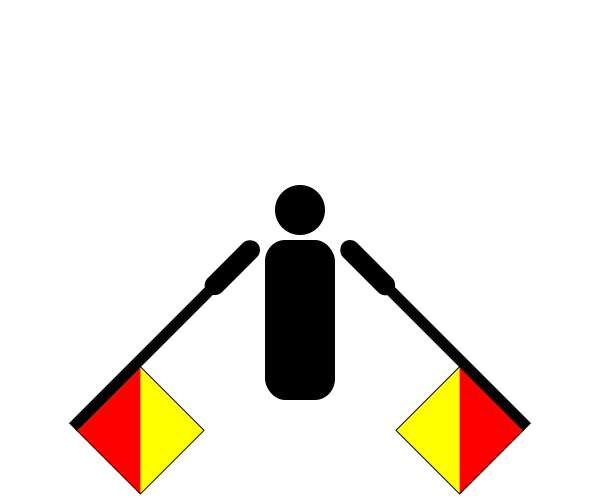
Semaphore
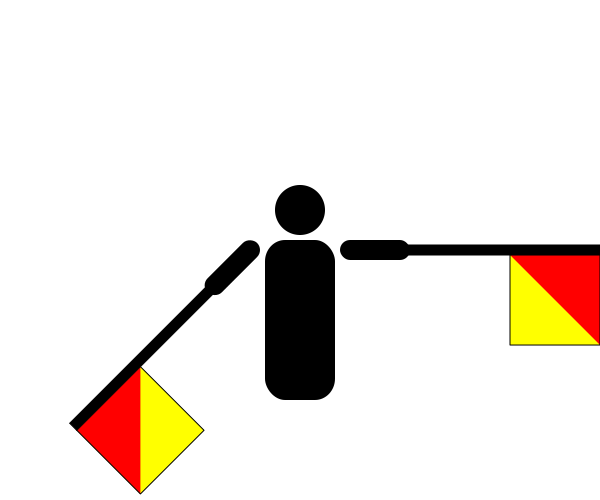
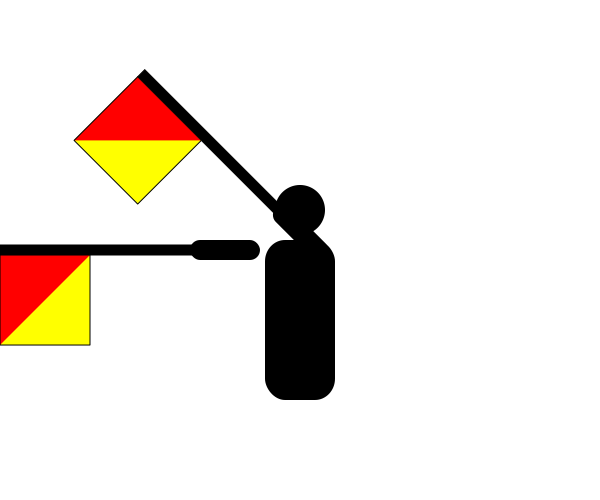
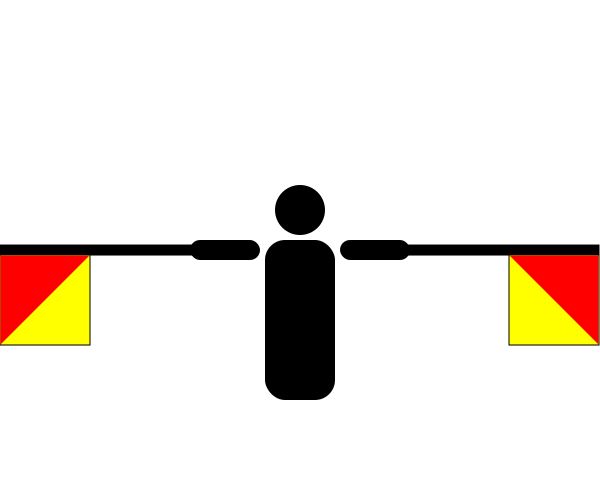
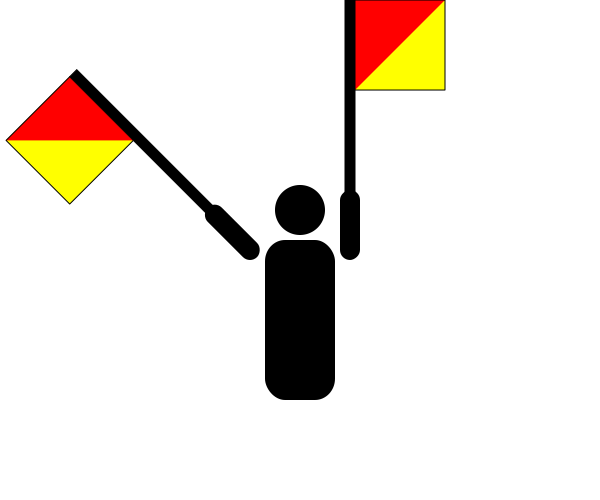

There are approximately 561 people named Morten in the UK. That makes it one of Britain's least common surnames. Only around nine in a million people in Britain are named Morten.
Surname type: From given name or forename
Origin: English
Region of origin: British Isles
Country of origin: England
Religion of origin: Christian
Language of origin: English
