MOREY
Morey is a surname of both English and French provenance, situated within the broader tapestry of the British Isles and Norman heritage. Its earliest documented use appears in the London Close Rolls of 1385, where it is recorded as Myrey in the despatches of King Richard II.
The English component of the name derives from the Old English words mor, meaning a marsh or swamp, and leah, denoting a fenced enclosure or farm. As a topographical surname, it originally identified a household or field situated near a marshland. In contrast, the French element stems from the Old French word *more* or *maurier*, which was used to describe a person of Moorish descent or one who had contact with the Moors of North‑Africa. The dual linguistic roots reflect the mingling of Anglo‑Saxon and Norman cultures following the Conquest of 1066.
Records from the medieval period also show the surname taking various spellings: Morey, Morry, Moorhay, and the later form Moure. Prominent early holders included Joseph Mory, who in 1635 emigrated from London aboard the ship Blending to the Virginia colony of New‑England. Later, parish registers in London document individuals such as Mary Moorey, daughter of John Moorey, christened at St. Mary Aldermary in 1738, and Mary Morey, who married William Coleman at St. George’s Chapel in 1747. These entries trace the name through successive generations within the capital.
The surname spread beyond England, becoming common in parts of the United Kingdom and North‑American colonies, especially within New‑England and the state of Maine where it now ranks as the 267th most common name. In the early twentieth century, it also appeared among Sephardic Jewish families who emigrated from Spain, Portugal, and North‑Africa following the Holocaust. Furthermore, Morey has been recorded in Scandinavia—particularly Norway, Denmark and Sweden—as well as in Africa and Australia, each variant adapting to local linguistic norms.
Over time the name has acquired numerous derivatives. Among the most widely occurring are Moreey, Mory, Morry, Morice, Moorey, Mowry and Mouray. Pronunciations vary with geography: in French it is most often voiced Mo‑ray, whereas in Italian contexts the form Mowry tends to be pronounced Moor‑ee. These variations are generally recognisable due to their common etymological foundation.
Although modern scholarship emphasizes the importance of genealogical evidence over conjecture about personality characteristics, it is notable that families bearing the surname have historically been associated with resilience, determination, and a sense of duty. Such traits have allowed the name to endure across centuries and continents, illustrating a legacy of perseverance intertwined with a diverse cultural heritage.
Typical given names associated with the Morey surname
Male
- Andrew
- Christopher
- David
- John
- Michael
- Neil
- Paul
- Peter
- Richard
- Robert
- Thomas
Female
- Alison
- Angela
- Christine
- Claire
- Deborah
- Elizabeth
- Helen
- Joanna
- Joanne
- Julie
- Margaret
- Pamela
- Sarah
- Susan
Similar and related surnames
- Maurey
- Mary
- Marry
- Marie
- Maury
- Marrie
- Mare
- Marey
- Mairey
- Marrey
- Mareya
- More
- Morea
- Marei
- Meary
- Merey
- Merrey
- Merry
- Mery
- Mirey
- Mirrey
- Mirry
- Miry
- Moare
- Mor
- Moray
- Moree
- Moreis
- Mores
- Morez
- Mori
- Morie
- Mories
- Morii
- Moriya
- Morrey
- Morry
- Mory
- Moryc
- Morys
- Moure
- Mourey
- Mouri
- Mourie
- Moury
- Murey
- Murie
- Murrey
- Murruy
- Murry
- Mury
- Marya
- Marys
- Maurie
- Mawrey
- Meeri
- Mehri
- Meiri
- Mere
- Merie
- Merrie
- Mire
- Mirrie
- Moar
- Moares
- Moor
- Morein
- Moreu
- Moria
- Morice
- Moris
- Morisey
- Morr
- Morre
- Morrie
- Mour
- Moyre
- Mure
- Murrie
- Moorey
Related and similar names are generated algorithmically based on the spelling, and may not necessarily share an etymology.
How to communicate the surname Morey in...
Braille
⠍⠕⠗⠑⠽
Morse
-----.-..-.--
Semaphore
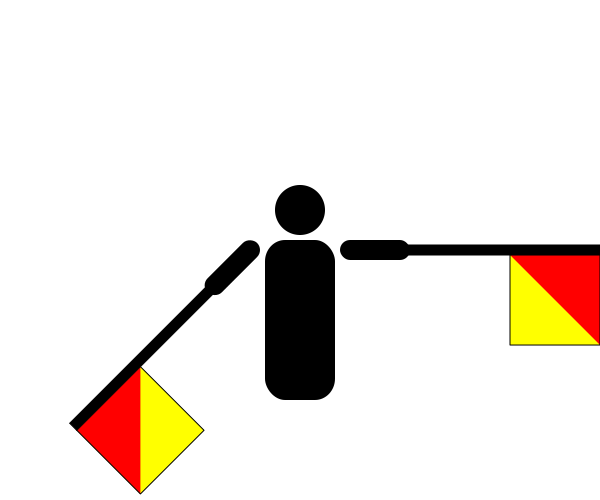
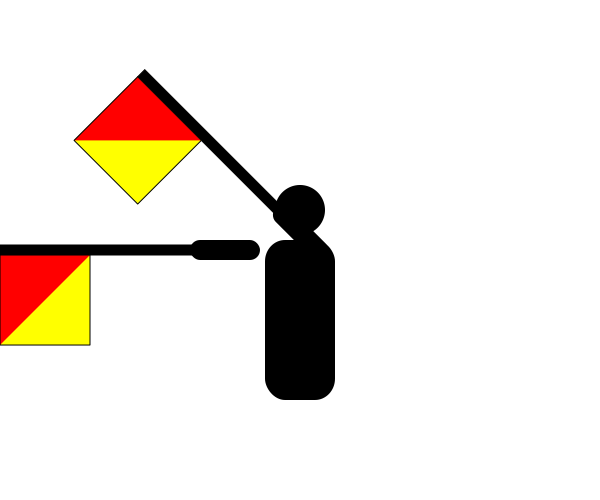
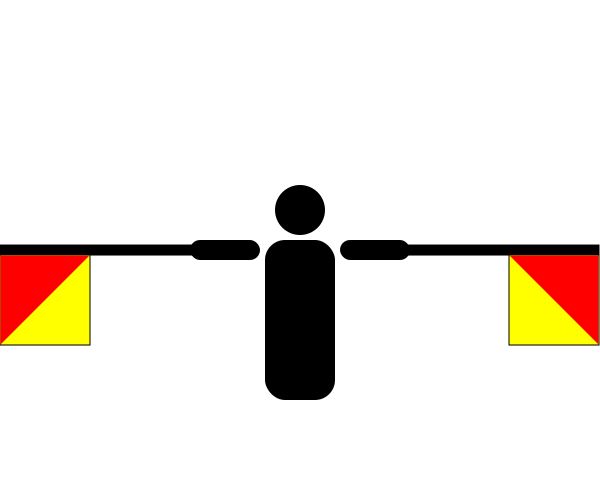

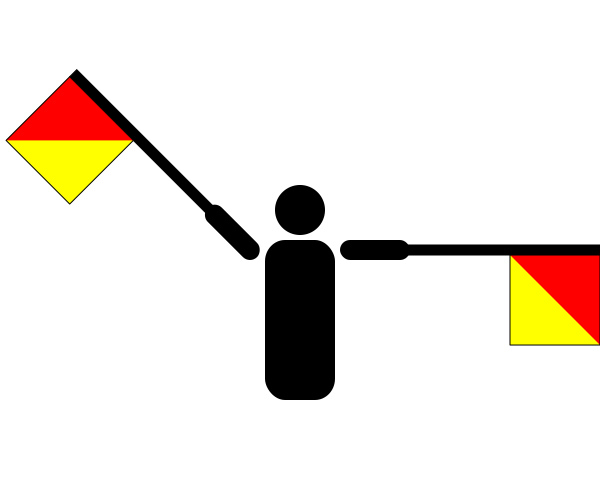
There are approximately 1,834 people named Morey in the UK. That makes it roughly the 4,516th most common surname in Britain. Around 28 in a million people in Britain are named Morey.
Origin: English
Region of origin: British Isles
Country of origin: England
Religion of origin: Christian
Language of origin: English
