DUIGNAN
Duignan is a surname of Irish origin, derived from the Gaelic patronymic Ó Duibhginnáin. The prefix Ó indicates a descendant of a progenitor, while the root Dubh- translates as "black" or "dark", and -ginnáin is a diminutive form of a personal name that may have conveyed the sense of a “little dark one” or a man of dark hair. Consequently, the name has been interpreted to mean "descendant of the dark one". It is particularly widespread in the province of Connacht, with a marked concentration in the counties of Leitrim and Roscommon.
In medieval Ireland the Duignan families were well known for their learned occupations. They served as bards and ollavhs to the leading septs of Leitrim, Roscommon, and Longford. The principal seat of the clan was at Kilronan in Co. Roscommon, where they held the role of erenagh – a lay lord of the Church responsible for the management of ecclesiastical lands.
One of the earliest recorded bearers of the name is Maelpeadar Ó Duigéan, whose death was recorded in 1290 in the “Book of Magauran” during the reign of Edward I of England. The entry chronicled his status as a man of holy reputation, a peer of saints who "surpassed even Paul". This early mention confirms the antiquity of the surname in the Gammachta ceramic region.
During the fifteenth and sixteenth centuries several Duignan scholars gained renown for their contributions to Irish literature. Magnus O'Duigenan is noted as the chief compiler of the Book of Ballymote around 1415, and Dubhthas og O'Duibhgeannain is credited with annotating the original Book of O'Hara compiled in 1597. Their meticulous work preserved a wealth of medieval Irish legal, genealogical, and poetic material.
The name appears again in the early modern period in reference to the presence of the Duignan at Castle Fore in Co. Leitrim in 1636, where they maintained a bardic school that continued the family’s traditional role as custodians of knowledge. The most celebrated of this generation was Peregrine O'Duigenan, whose death in 1664 is recorded in the annals of the time.
In the nineteenth century marriages within the family are documented at several parish registers: on 31 January 1861, David Duignan married Brigittam Beirne at Ballinameen in Co. Roscommon; and on 18 May 1862, Richard Duignan married Anne Coffey at Kinnegad in Co. Westmeath. These entries illustrate the continued use of the surname into the modern era and its geographical spread within Ireland.
The Irish Great Famine of the mid‑nineteenth century prompted extensive emigration, and many bearers of the name settled abroad. Today the surname is still most common in the Irish counties of Roscommon and Leitrim, but it can also be found in diaspora communities in England, Australia, the United States and Canada. Due to its complex orthography, it has persisted as a recognised, though not predominant, surname in these regions.
Variations of the name have arisen from the anglicisation of Gaelic forms and the absence of standardised spelling in earlier centuries. Alternative spellings include Deignan, Dignan, Dignam, Duigman, Dugnan, Duegnan, Duingnan, Duignam and Dunigan. In some cases the prefixes Mac and Ó were omitted, yielding such surnames as Dugan and Doogan. Despite these differences, all reflect the same original patronymic lineage.
The surname Duignan therefore encapsulates a rich heritage of Irish scholarship and cultural stewardship, coupling its etymological roots in darkness and hair with a legacy of intellectual contribution that has endured from the twelfth to the twenty‑first century.
Typical given names associated with the Duignan surname
Male
- Anthony
- Eamonn
- James
- John
- Kevin
- Mark
- Michael
- Patrick
- Sean
- Stephen
- Thomas
Female
- Angela
- Ann
- Brenda
- Caroline
- Catherine
- Della
- Elizabeth
- Helen
- Kathleen
- Margaret
- Nichola
- Patricia
- Sarah
- Tracey
Similar and related surnames
- Dignan
- Deignan
- Dignam
- Degnan
- Dagnan
- Dorgan
- Dougan
- Doogan
- Doonan
- Duignam
- Duigenan
- Diegnan
- Dugnan
- Dounan
- Downan
- Daenen
- Dagnin
- Dagnino
- Dagnon
- Daineanu
- Danan
- Danana
- Danin
- Danino
- Danion
- Dannan
- Danon
- Danoon
- Daunan
- Deanin
- Deannan
- Deanon
- Deenan
- Degnen
- Degnin
- Degnnan
- Degnon
- Dehnen
- Deignon
- Denain
- Denan
- Denean
- Deneen
- Denen
- Denian
- Denin
- Denine
- Dennan
- Denneen
- Dennen
- Dennien
- Dennin
- Dennon
- Denon
- Denoon
- Deunant
- Deynan
- Deynon
- Dignen
- Dignin
- Dignon
- Dignun
- Dinan
- Dinane
- Dinani
- Dinanno
- Dineen
- Dinen
- Dingnan
- Dininno
- Dinino
- Dinnan
- Dinneen
- Dinnen
- Dinnin
- Dinnon
- Dinon
- Dinonno
- Dinunno
- Dognin
- Dognini
- Dohnan
- Donan
- Donen
- Donian
- Donin
- Donini
- Donnan
- Donnini
- Donnon
- Donoon
- Doonin
- Downen
- Downin
- Downine
- Duna
- Dunan
- Dunand
- Dunans
- Dunant
- Dunean
- Dunen
- Dunin
- Dunion
- Dunnan
- Dunnant
- Dunnen
- Dunnin
- Dunnion
- Dunnon
- Dunon
- Dunoon
- Dynan
- Dynen
- Dynon
- Tanan
- Tanana
- Tanen
- Tanin
- Tannan
- Tannen
- Tannian
- Tannon
- Tanon
- Tanona
- Teenan
- Tenan
- Tenen
- Tennan
- Tennen
- Tennion
- Tennon
- Teunen
- Teunion
- Teunon
- Tewnion
- Tiainen
- Tianan
- Tinan
- Tinion
- Tinnian
- Tinnin
- Tinnion
- Tinnon
- Tognini
- Tonan
- Tonen
- Tonin
- Tonini
- Tonon
- Toonen
- Townen
- Tunan
- Tunnan
- Tunnon
- Tunon
- Twynan
- Tynan
- Tynen
- Tynon
- Dewnani
Related and similar names are generated algorithmically based on the spelling, and may not necessarily share an etymology.
How to communicate the surname Duignan in...
Braille
⠙⠥⠊⠛⠝⠁⠝
Morse
-....-..--.-..--.
Semaphore


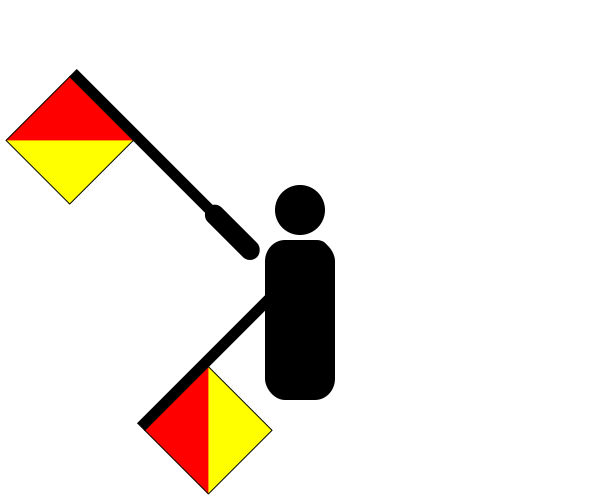

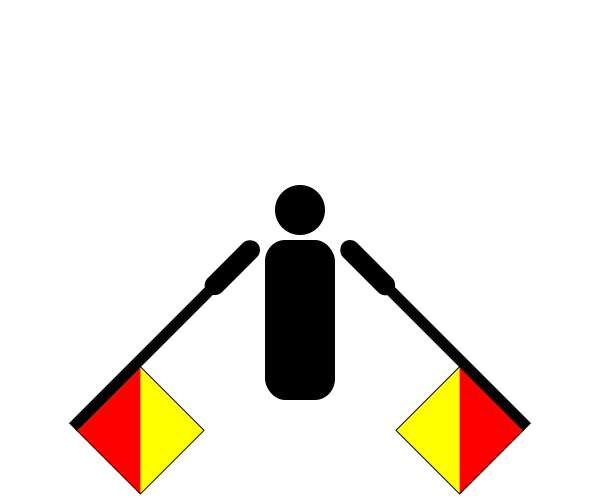

There are approximately 559 people named Duignan in the UK. That makes it one of Britain's least common surnames. Only around nine in a million people in Britain are named Duignan.
Origin: Celtic
Region of origin: British Isles
Country of origin: Ireland
Religion of origin: Christian
Language of origin: Gaelic

Famous people named Duignan
- John Duignan - (1946 to 2019)
- William Henry Duignan - Antiquarian (1824 to 1914)
Names and descriptions courtesy of Wikipedia, and may contain errors. This is not intended to be an exhaustive list of every famous person with this name.