DEY
Origin
The surname Dey is originally Arabic and is commonly found in North Africa and the Middle East. It is derived from the Arabic word dayy or daya, which means “nurse” or “wet nurse”. Historically the name was used to denote a person’s occupation as a wet nurse or someone associated with nursing and childcare. Over time it became a hereditary surname, passed down through successive generations, indicating an ancestral connection to that profession.
Occupational Roots
In the earliest Arabic contexts the surname referred directly to the role of a wet nurse. This occupation was respected, and the title became a family identifier. It signifies that the bearer’s forebears were entrusted with the care of infants, a duty of notable importance in many societies.
Early Western Records
The earliest recorded instances of the name in England appear in the 12th and subsequent centuries. One such early recording is Aluric Dai of Berkshire, dated 1196, and another is Ralph Deie of Leicestershire, dated 1211. In 1095 a document from the Abbey of Bury St. Edmunds cites the name Godina Daia, which marks the first known appearance of a related form. These entries demonstrate that the surname had reached the British Isles by the late 11th or early 12th century.
Biblical and Old‑English Influences
There are two principal avenues by which the surname may have entered English usage. One is as a derivative of the biblical personal name David, introduced into Europe by Crusaders in the 12th century. Another is from the Old‑English pre‑7th century personal name Daei, derived from the word daeg meaning “day”. This latter origin could also be a short form of compound names such as Daegberht and Daegmund, meaning “day‑bright” or “day‑protection” respectively. The surname has appeared in many spellings, including Day, Daye, Dayes, Days, Daie, Dais, Deas, Deays, Deis, Dey, Deye, and the less common D’Eye.
French and Middle‑English Connections
In France the surname is a variation of Dei or Deye, derived from Middle‑English dai, meaning “servant” or “attendant”, or from Old French deye meaning “day‑keeper”. Alternative derivations include the Old French dieu (God), the Germanic Theoda (people or tribe), the Old English dag (day), and the Latin datus (given or granted). The surname is also linked, albeit more distantly, to the Hebrew adan, meaning “ornament”, via the given name Aida. The earliest European records indicate its presence in England and Romania around the 12th century, and later in India and France.
Indian and Bangladeshi Distribution
Today the most frequent use of Dey is found in India, specifically in the state of West Bengal and in Bangladesh. The name is thought to derive from a Bengali word meaning an “honourable title” and serves as an occupational name for those who served in royal courts, administered estates, or held other positions of public service. It is particularly common among Bengali Baidyas and Kayasthas, who traditionally held high‑caste roles. Diocretically, Deys of Bangladeshi and Indian descent live throughout the United Kingdom, United States and Canada. In the United Kingdom the majority of Dey families trace their history to Tower Hamlets in east London, while in the United States significant populations exist in California, New York and Texas. Within India the surname is dispersed across many states but is most concentrated in West Bengal’s North 24 Parganas district; across the border in Bangladesh, the Khulna division has a high concentration.
Variations and Spelling
The name appears in many spellings. The most common is Dey, followed by variants such as Dei, Dai, Dea, Deh, Deya, Deys, Deysy, Dee, Day, Dae, Deer, Deere and Dees. Other, less frequent forms include Daye, Deay, Deh and the ornate D’Ey.
Heraldry and Reputation
The Dey family crest, featuring a red curved line rising from a white background, is believed to symbolize the family’s steadfastness and reliability. Those bearing the surname are often described as hardworking, intelligent and knowledgeable, with a dependable sense of humour. Their reputation for reliability and loyalty in friendships and community life is noted in historical accounts spanning Europe, Asia and the Americas.
Typical given names associated with the Dey surname
Male
- Andrew
- Christopher
- David
- Ian
- James
- John
- Mark
- Michael
- Paul
- Richard
- Robert
- William
Female
- Anita
- Catherine
- Elizabeth
- Jean
- Joan
- Joyce
- Karen
- Madeline
- Margaret
- Mary
- Patricia
- Rebecca
- Sandra
- Sangita
- Sharon
Similar and related surnames
- Daay
- Dahy
- Dahya
- Daiya
- Dauya
- Daw
- Dawy
- Day
- Daya
- Dayao
- Daye
- Dayi
- Dayo
- Days
- De
- Dea
- Deay
- Deehy
- Deey
- Dei
- Dewy
- Dewye
- Deya
- Deye
- Deyo
- Die
- Dies
- Dieye
- Diy
- Diya
- Doey
- Dooay
- Dooey
- Douay
- Douey
- Dowy
- Doy
- Doye
- Duay
- Duey
- Duhy
- Duy
- Duys
- Dy
- Dye
- Dyes
- Dys
- Edy
- Tahy
- Tay
- Taya
- Tayao
- Taye
- Tayo
- Teuy
- Tey
- Teye
- Toay
- Toey
- Tooey
- Tooy
- Touey
- Touhy
- Touya
- Towy
- Toy
- Toya
- Toye
- Toyo
- Tuey
- Tuhy
- Tuohy
- Tuoyo
- Tuyau
- Ty
- Tye
- Tyo
- Whtye
Related and similar names are generated algorithmically based on the spelling, and may not necessarily share an etymology.
How to communicate the surname Dey in...
Braille
⠙⠑⠽
Morse
-...-.--
Semaphore


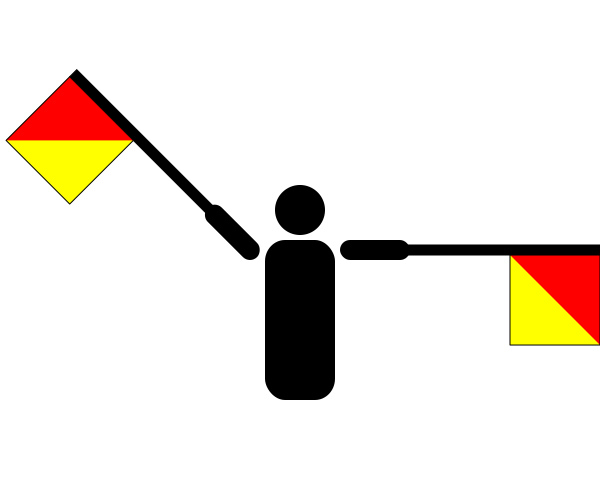
There are approximately 2,704 people named Dey in the UK. That makes it roughly the 3,301st most common surname in Britain. Around 42 in a million people in Britain are named Dey.
Region of origin: Asia

Famous people named Dey
- Mukul Dey - Indian artist (1895 to 1989)
- Rajeeb Dey - Entrepreneur
- Geoff Dey - Football player
Names and descriptions courtesy of Wikipedia, and may contain errors. This is not intended to be an exhaustive list of every famous person with this name.