ANDRESS
Andress is a surname with a multifaceted origin that reflects a confluence of linguistic and cultural influences across Europe. The earliest attestations of the name appear in the English Isles, where it is associated with the Christian populace of England, yet the name itself is derived from the Greek personal name Andreas, the form of Andrew that became common in the medieval period. The Greek Andreas is rooted in andros, meaning “man” or “warrior”, suggesting that bearers of the surname may have been linked, either literally or symbolically, to such qualities.
In its earliest usage, Andress is identified as a patronymic surname, signifying “descendant of Andreas” or “son of Andrew”. The suffix ‑ess in English place surnames is often understood to act as a territorial marker or a form of belonging, rendering the surname as possibly meaning “belonging to the area of Andrew” or, less literally, “son of Andrew” within a community that honoured the Saint Andrew tradition. This patronymic function is mirrored in other variants such as Andrewes and Andrus, which are found in English, Scottish and continental records.
The name also carries a Germanic element, as the surname is recorded in the early 13th century in the “Calendar of the Close Rolls” held in the reign of King Henry. The spelling Josep Andree dated 1229 demonstrates the Germanic influence that later merged with the English linguistic environment. Subsequent documented forms in London, including Geoffrey Andre in the 1279 “Calendar of Plea and Memoranda Rolls”, and later the Huguenot-born families bearing the spelling Andre and Andreu, further illustrate the surname’s adaptability and geographic spread.
Following the Revocation of the Edict of Nantes in 1685, French Huguenots fled to England, bringing with them the spelling Andre with an acute accent over the final e. Church registers in London attest to the christening of Anne, daughter of Pierre and Marianne Andre, in 1754, and the marriage of Charlotte Andre to Samuel Taylor in 1784, underscoring the enduring presence of the Huguenot variation in English society. Despite the acute accent, the spelling generally simplifies to Andres within British usage, aligning with the tradition of anglicising foreign names.
In Scotland, the personal name Andrew holds special significance as the patron saint of the nation. It was common for sons to be described as “son of Andrew”, a form that over time contracted to Andress as a surname. Scottish migration patterns during the 18th and 19th centuries disseminated the name to North America, where it remains most prevalent in the United States, particularly in California, though it is also represented in Canada and other European countries. While the name is relatively uncommon globally, its distribution reflects the broader diasporic movements of Scottish and English families.
Variant spellings have developed according to regional dialects and linguistic influences. These include Andree, Andrey, Andriss, Andri, Anders, Andre, Andrea, On, Andrus, Andresson, Andrewes, Andrünes, Anderson, Andreessen, Andresen, and Andriessen, among others. Several of these are indicative of Scandinavian patronymic traditions, in which the suffix ‑sen or ‑son denotes “son of”, as seen in the parallel names Anderson and Andersson. In Eastern European contexts, forms such as Andreev and Andreescu appear, further evidencing the name’s wide-reaching adaptations.
Conclusively, the surname Andress exemplifies a shared linguistic heritage that originates in the Greek term for a man or warrior, migrates through Germanic patronymic customs, and is cemented within English and Scottish naming practices. Its variants, shaped by language, migration and religious exile, attest to the dynamic history of surnames in the British Isles and beyond.
Typical given names associated with the Andress surname
Male
- Edward
- James
- John
- Jonathan
- Keith
- Luke
- Mark
- Michael
- Peter
- Robert
- Simon
- Stephen
- William
Female
- Anne
- Barbara
- Elizabeth
- Helen
- Jane
- Jean
- Joyce
- Judith
- Margaret
- Mary
- Risa
- Ruth
- Sarah
- Shelia
- Tina
Similar and related surnames
- Anderes
- Anders
- Andres
- Anderews
- Andra
- Andrade
- Andrades
- Andrae
- Andraos
- Andraous
- Andras
- Andrasi
- Andrasik
- Andrasko
- Andrassy
- Andrasz
- Andrawes
- Andraws
- Andre
- Andrea
- Andreac
- Andreades
- Andreadis
- Andreae
- Andreakos
- Andrean
- Andreas
- Andreasen
- Andreasian
- Andreason
- Andreassen
- Andreasson
- Andreazzi
- Andrece
- Andrede
- Andree
- Andreescu
- Andreesen
- Andreev
- Andrei
- Andreis
- Andrej
- Andrejs
- Andrell
- Andrens
- Andreo
- Andreos
- Andreou
- Andreozzi
- Andresen
- Andresier
- Andreski
- Andreson
- Andresova
- Andressen
- Andreus
- Andrewes
- Andrews
- Andrez
- Andrici
- Andries
- Andriescu
- Andriese
- Andriessen
- Andriesz
- Andris
- Andriss
- Andrius
- Andrle
- Andros
- Andross
- Androus
- Andrus
- Andrws
- Andrys
- Andurs
- Andreias
- Andreiu
- Andriesei
Related and similar names are generated algorithmically based on the spelling, and may not necessarily share an etymology.
How to communicate the surname Andress in...
Braille
⠁⠝⠙⠗⠑⠎⠎
Morse
.--.-...-........
Semaphore

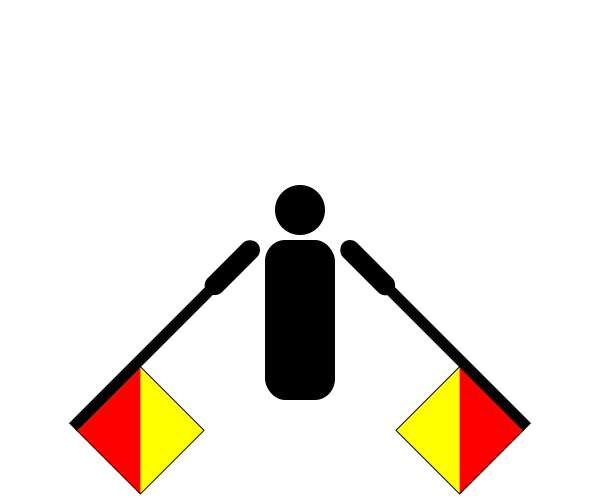

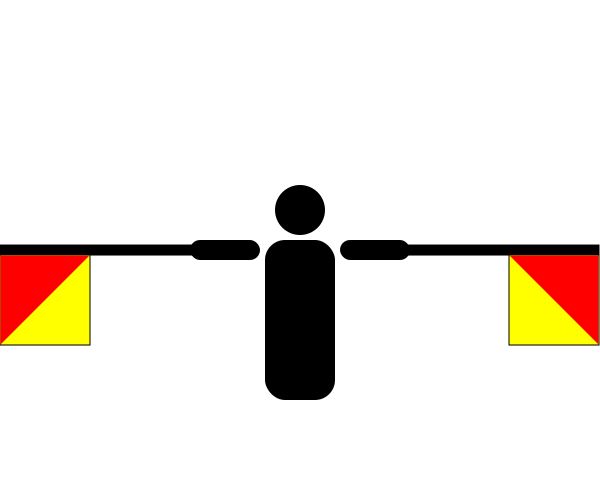


There are approximately 168 people named Andress in the UK. That makes it one of Britain's least common surnames. Only around three in a million people in Britain are named Andress.
Origin: English
Region of origin: British Isles
Country of origin: England
Religion of origin: Christian
Language of origin: English

Famous people named Andress
- Ursula Andress - Swiss-American actress and sex symbol of the 1960s
Names and descriptions courtesy of Wikipedia, and may contain errors. This is not intended to be an exhaustive list of every famous person with this name.