ANDRUS
Andrus is a surname of Greek origin that entered the British Isles through the medieval adaptation of the Greek personal name Andreas. The Greek root andr-, derived from aner meaning "man", imparts the sense of "manly" or "warrior" to the name. As a patronymic surname it signified descent from an ancestor bearing the given name Andreas.
The earliest surviving English reference to the name is found in the Domesday Book, where the Latinised form Andreas is recorded. Subsequent medieval documents provide early variants such as Moricius Andrewys (1275, Worcestershire), William Andro (1339, Aberdeen), John Andrus (1510, Norfolk) and Humfrey Andros (1552, Yorkshire). The first documented spelling of the family name in the region of Berkshire is that of William Andreu (1237, Fees Court Records) during the reign of King Henry III.
The surname spread beyond England into eastern Scotland, where it was commonly borne by families in the Highlands and Lowlands. Its presence in Estonia is regarded as an Estonian version of the personal name Andreas or Andrew, reflecting similar Christian naming traditions across Europe.
Christianity contributed significantly to the proliferation of the name. Saint Andrew, the apostle and patron saint of Scotland, fostered widespread use of the related given name across Christendom. The popularity of the name Andrew and its variants—including Andrews, Anders, Anderson, and others—ensured that its patronymic constructions, including Andrus, were naturally integrated into family lineaments.
During the period of transoceanic migration, individuals bearing the surname Andrus were carried to the New World. In the United States, the name appeared not only among voluntary migrants but also among formerly enslaved people who, upon emancipation, sometimes adopted the surnames of their former enslavers or of familiar Christian saints. Today, the name is found throughout the United States, with noticeable concentrations in Utah and Idaho, reflecting patterns of settlement by Scottish and other European immigrants.
In contemporary times, Andrus remains a recognised surname in various countries, including the United Kingdom, the United States, Canada, Australia, and New Zealand. Its widespread distribution results from a combination of migration, intermarriage and the enduring legacy of early Christian naming practices.
Typical given names associated with the Andrus surname
Male
- Daniel
- David
- Mark
- Paul
Female
- Anne
- Caroline
- Laura
- Lynda
Similar and related surnames
- Andras
- Andrea
- Andre
- Andraos
- Andra
- Andraous
- Andurs
- Andru
- Andreas
- Andreis
- Andren
- Andrens
- Andres
- Andreu
- Andreus
- Andrew
- Andrewes
- Andrews
- Andries
- Andrieu
- Andris
- Andrius
- Andro
- Andron
- Andros
- Androu
- Androulis
- Androus
- Andruk
- Andrulis
- Andrup
- Andrusier
- Andrusiw
- Andruska
- Andrusyk
- Andrws
- Andrys
- Andrasz
- Andrau
- Andraws
- Andreos
- Andress
- Andrez
- Andri
- Andrious
- Andriss
- Andross
- Andrucci
- Andrusiak
- Andrusjak
- Andrusyak
- Andruszko
- Andry
- Andreou
Related and similar names are generated algorithmically based on the spelling, and may not necessarily share an etymology.
How to communicate the surname Andrus in...
Braille
⠁⠝⠙⠗⠥⠎
Morse
.--.-...-...-...
Semaphore

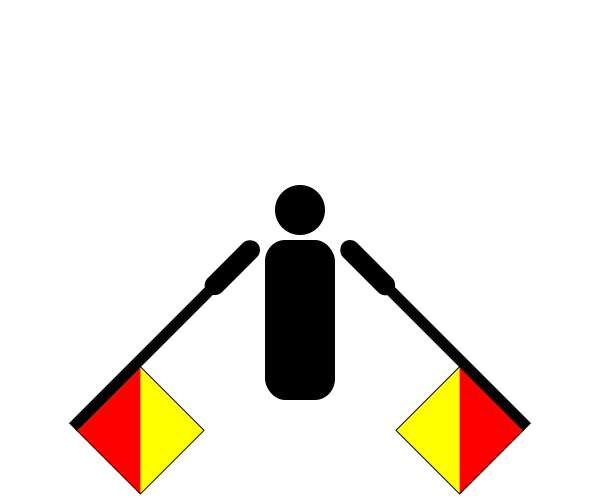

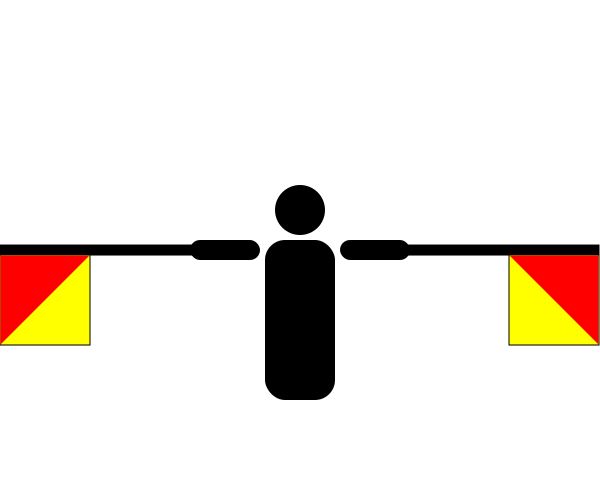


There are approximately 62 people named Andrus in the UK. That makes it one of Britain's least common surnames. Only around one in a million people in Britain are named Andrus.
Origin: English
Region of origin: British Isles
Country of origin: England
Religion of origin: Christian
Language of origin: English
