MATTS
Matts is a patronymic surname of Hebrew origin, derived from the personal name Matthew, which in turn comes from Matityahu meaning “gift of Yahweh” or “gift of God.” The name entered English usage during the Norman Conquest of 1066, and its biblical association with one of the twelve apostles of Jesus Christ contributed to its popularity in the medieval period.
As a patronymic, the surname indicates descent from an ancestor named Matthew. It has evolved into a variety of forms, including Mates, Matt and Matts, reflecting affectionate or diminutive nicknaming practices of the Middle Ages. In the early English record, the name appears in the 1086 Domesday Book and in subsequent documents such as the Hundred Rolls of 1275, where a reference to Adam Matte is recorded in Warwick under the reign of King Edward I.
Early individual instances of the surname in England include Thomas Matt, who married Mary Toner at St Dunstans, Stepney, on 8 May 1561; Susan Mayte, who married John Hadocke at St Andrews by the Tower, London, on 8 March 1614; and Robert Mates, christened at St Botolphs Church, Bishopgate, London, on 10 August 1684. These examples illustrate the surname’s presence in both criminal and ecclesiastical records over several centuries.
In Germany the surname is associated with the given name Matthias, derived from the Greek name Mattathias and meaning “gift of God.” It became common in northern regions such as Schleswig-Holstein, Westphalia and Oldenburg, where families retain a strong attachment to their ancestral lineage and often celebrate close-knit reunions that reaffirm traditional values.
Currently the surname is most frequently found in English‑speaking countries. In the United States it ranks as the 6,454th most common last name according to the 2000 census, with a concentration in northern states such as Mississippi near the Louisiana border. In the United Kingdom the name is less common but is particularly noted in Buckinghamshire, London and Yorkshire. Australian distributions appear along the eastern coastal regions and the southern part of the continent, especially Victoria, while in Canada it is principally present in Ontario, with smaller concentrations in Alberta and Quebec.
Internationally, the surname also appears in the Netherlands, Scandinavia, France, Spain and Italy, often under variations such as Mathes, Mathis, Matheus and Mattsson. In Ireland it may appear as Mathuna, especially in County Monaghan and County Fermanagh, and in Poland it can be found as Matusz, Matuz or Matcz. Across these shifting orthographies the core meaning remains rooted in the idea of a divine gift.
The surname Matts is traditionally associated with Christian families, reflecting the biblical origins of the name. Its distribution and recorded history underscore a lineage that spans the British Isles, continental Europe and, through migration, the wider world, maintaining a continuity of heritage that is celebrated by many bearers to this day.
Typical given names associated with the Matts surname
Male
- Andrew
- Anthony
- Christopher
- Colin
- David
- George
- John
- Lee
- Michael
- Philip
- Richard
- Stephen
- William
Female
- Donna
- Elizabeth
- Emma
- Helen
- Jennifer
- Julie
- Nicola
- Rebecca
- Sarah
- Sheila
- Susan
- Tracey
- Yvonne
Similar and related surnames
- Matas
- Mat
- Maitz
- Mateas
- Mate
- Maat
- Maites
- Matees
- Matt
- Matta
- Madas
- Maddas
- Maddes
- Maddess
- Maddeys
- Maddies
- Maddis
- Maddiss
- Maddos
- Maddows
- Maddus
- Mades
- Madias
- Madis
- Madise
- Madiss
- Mads
- Maduzia
- Madzia
- Maeght
- Maides
- Maids
- Mait
- Maite
- Maoudis
- Matassa
- Mataz
- Mateos
- Mates
- Mateus
- Mateusz
- Mathes
- Maths
- Matias
- Maties
- Matis
- Matiz
- Matiza
- Matos
- Matous
- Matoussi
- Matozza
- Mats
- Matsa
- Matsi
- Matsui
- Matsuo
- Mattai
- Mattas
- Matte
- Mattei
- Matteis
- Mattes
- Mattess
- Mattew
- Mattews
- Mattey
- Matthas
- Matthes
- Matthis
- Matthus
- Matthws
- Matthys
- Matti
- Mattias
- Mattice
- Mattie
- Mattis
- Mattiussi
- Mattiuzzo
- Mattke
- Mattl
- Matto
- Mattoo
- Mattos
- Mattow
- Mattozzi
- Mattu
- Mattus
- Matty
- Matues
- Matus
- Matusa
- Matusz
- Matuz
- Matys
- Matz
- Matza
- Mauds
- Mautz
- Mawtus
- Mayetts
- Meaddows
- Meadeas
- Meades
- Meados
- Meadows
- Meads
- Meadus
- Meat
- Meate
- Meates
- Meats
- Medas
- Meddes
- Meddess
- Meddis
- Meddows
- Medds
- Medes
- Medice
- Medici
- Medows
- Medoza
- Medus
- Medza
- Medze
- Meedes
- Meeds
- Meets
- Metais
- Metias
- Metos
- Mets
- Metso
- Mett
- Mettas
- Mette
- Mettis
- Metts
- Metz
- Metze
- Meyts
- Middis
- Middows
- Midds
- Midzi
- Miette
- Mietus
- Mietz
- Mitas
- Mites
- Mitsi
- Mitsui
- Mittas
- Mittaz
- Mittews
- Mitts
- Mitz
- Mitzi
- Moates
- Moats
- Modasia
- Modes
- Modessa
- Modise
- Modos
- Mods
- Moitysee
- Moods
- Moots
- Mootz
- Motas
- Motes
- Motis
- Motisi
- Motos
- Mots
- Motsi
- Mottais
- Mottaz
- Motts
- Mottus
- Motz
- Moutos
- Moutts
- Muds
- Mutasa
- Mutes
- Mutiso
- Muts
- Mutsau
- Mutts
- Mutz
Related and similar names are generated algorithmically based on the spelling, and may not necessarily share an etymology.
How to communicate the surname Matts in...
Braille
⠍⠁⠞⠞⠎
Morse
--.---...
Semaphore
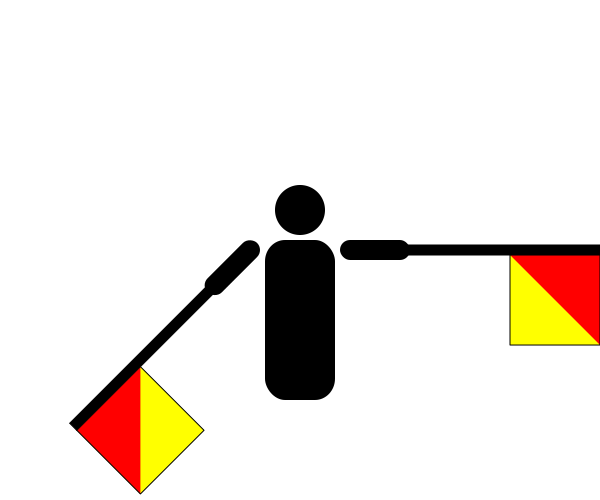

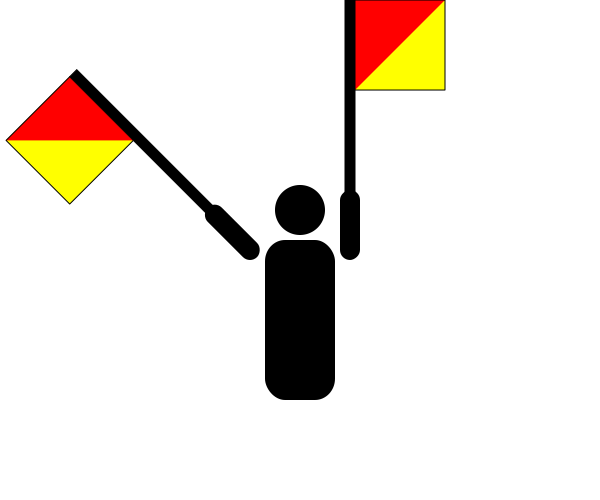

There are approximately 496 people named Matts in the UK. That makes it one of Britain's least common surnames. Only around eight in a million people in Britain are named Matts.
Origin: English
Region of origin: British Isles
Country of origin: England
Religion of origin: Christian
Language of origin: English
