FANT
Fant is a surname with a multifaceted history, reflecting the linguistic and cultural movements that have taken place across Europe and the Americas since the Middle Ages.
The name is recorded in Italy where it is derived from the Italian word fante, meaning “infantryman” or “foot soldier”. The nickname was likely attributed to an individual who served in the infantry or who displayed the bravery and strength traditionally associated with a soldier.
In the British Isles, the surname entered England shortly after the Norman Conquest of 1066. Early records show a variety of spellings: Fant, Font, Faint, Faunt, Vant, and Phant. The earliest documented spelling is Thomas Lenfaunt, dated 1230 in the pipe rolls of Shropshire. Subsequent legal documents cite William Le Faunt in 1271, John Faunt of London in 1277, and Alan Fant in the subsidy rolls of Suffolk for 1327. Later entries include William Faynte of St Giles Church, Cripplegate in 1628 and Edward Faint of St Dunstans Church, Stepney in 1644. These documents indicate a gradual evolution from the Norman French patronymic Le Fant to the modern forms without the article.
French linguistic evidence suggests another potential origin: the French word fant translates to “phantom” or “ghost”. This could imply an ancestral link to spiritual or supernatural activities. Another French angle is the Old French term infante, used to denote a noble or royal child, which might have been condensed into the English surname Fant.
Locational and occupational theories also appear in England. The surname has been associated with the place name Faints or Fant in Kent. From the Old English fante or vane meaning flag, it may have functioned as an occupational name for a flag or pennon maker.
In the United States, the most common lineage traces back to the Swedish immigrant Wolter Fant, who settled in Delaware in 1642. In that context, fant may have meant a merchant or, alternatively, a joker or ghost. Today, the surname is most prevalent in the Southern states, particularly South Carolina, Alabama, and Mississippi, though smaller concentrations exist in Sweden and the United Kingdom.
Variation in spelling is common and reflects regional dialects, orthographic changes, and transcription errors. Notable variants include Fante, Phant, Fent, and Vant. In some German contexts, Fant could be a shortened form of surnames such as Fanthom or Fanthof; in Swedish contexts, it may derive from longer names like Fantin or Fanting.
The surname Fant thus exhibits multiple potential origins—Italian, French, English, and Scandinavian—each corroborated by historical documents and linguistic analysis. Consequently, the precise provenance of an individual family line may vary, necessitating detailed genealogical research to ascertain exact lineage and cultural affiliation.
Typical given names associated with the Fant surname
Male
- Carl
- Fabio
- Ian
- Nicholas
Female
Similar and related surnames
Related and similar names are generated algorithmically based on the spelling, and may not necessarily share an etymology.
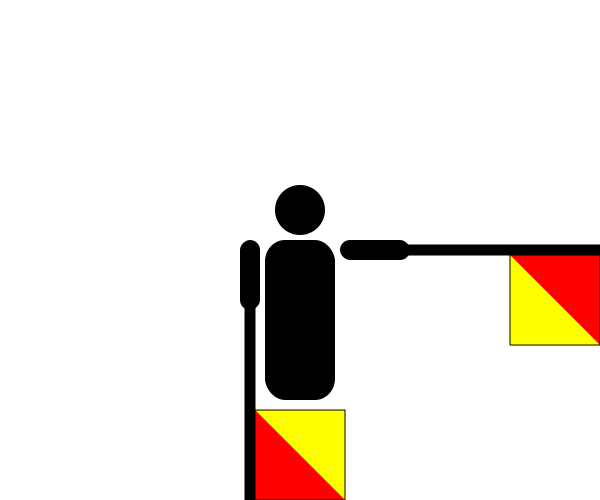
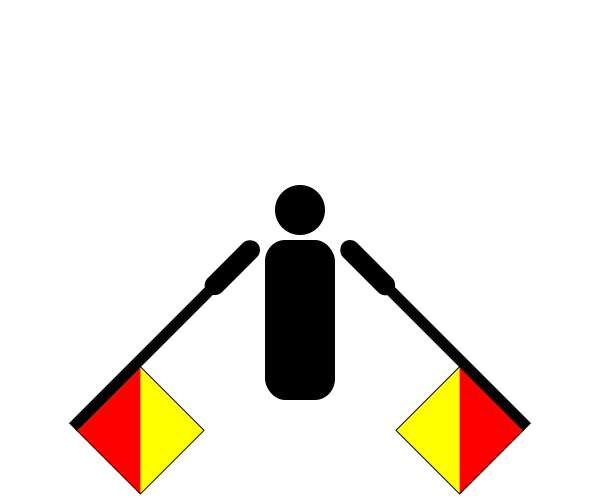
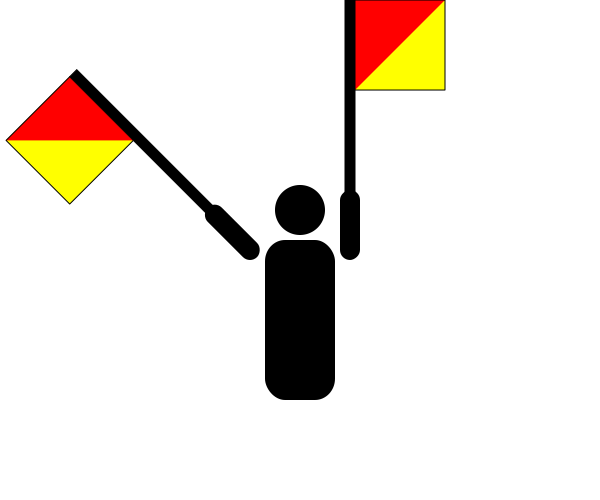
How to communicate the surname Fant in...
Braille
⠋⠁⠝⠞
Morse
..-..--.-
Semaphore

There are approximately 70 people named Fant in the UK. That makes it one of Britain's least common surnames. Only around one in a million people in Britain are named Fant.
Origin: English
Region of origin: British Isles
Country of origin: England
Religion of origin: Christian
Language of origin: English
