FAIN
Fain is a surname that can be traced to English, French, and Scottish roots. Its presence throughout the British Isles and in former British colonies is well documented.
The word is believed to originate from the Old French term fain, meaning “glad” or “willing,” and was often applied as a nickname to someone who displayed a cheerful or eager disposition. An analogous derivation comes from the Old English word fægen (modern English feign), and from the Middle Eighteenth century term fayn, all of which convey the sense of gladness or joyfulness.
Historical records show a variety of spellings: Fain, Fane, Fayne, Faynes, Vain, Vaines, Vanes and Vayne. The earliest extant record is that of William le Vain in the 1242 tax rolls of Worcestershire, during the reign of Henry III. In 1488 Sir John Vane, noted for his knighthood at the Battle of Poitiers, wrote his name as Fane in his will. These variations indicate a degree of fluidity in spelling across centuries.
There is also evidence of a locational connection to Normandy. A place named Vains in the Manche region exists, and some bearers of the name may have arrived in England following the Norman invasion of 1066. Though less certain, a few records suggest a possible Welsh element, with the Welsh word fain meaning “slender,” though this is not universally accepted.
In the modern era the surname retains a strong concentration in England, especially in Norfolk, London and Lancashire. It also survived trans‑Atlantic migration, with large numbers settled in the United States, notably in Georgia, Tennessee, Texas and Arizona, during the eighteenth and nineteenth centuries. France and the United States remain significant centres of the name, while its frequency drops in Canada and Australia, reflecting patterns of historical emigration.
Variants of the name include Fane, Faine, Fayne, Vane, Vaines and Vanes. In some contexts the surname has been recorded in forms such as Fein, Feyn or Vein, and there are rare instances of its use as an Americanised form by Ashkenazi Jewish families, although this adaptation is not widespread. The multiplicity of spellings underscores the fact that one surname can arise from several independent sources.
Thus the surname Fain most consistently denotes a person who is cheerful or good‑humoured, a meaning preserved through its Old French, Old English, and Middle English origins. Its persistence across centuries and across continents demonstrates its resilience and the strong social identities attached to it.
Typical given names associated with the Fain surname
Male
- Arthur
- David
- Graham
- Ian
- Mark
Female
- Beverley
- Claire
- Clara
- Gloria
Similar and related surnames
- Faine
- Fahn
- Faina
- Faines
- Faini
- Fainey
- Fian
- Fani
- Fai
- Faia
- Fains
- Faint
- Fan
- Fana
- Fanai
- Fane
- Fanes
- Fania
- Fanis
- Fann
- Fanna
- Fannie
- Fanns
- Fano
- Fanou
- Fans
- Fanu
- Fany
- Fayne
- Fean
- Feane
- Fehn
- Feihn
- Fein
- Feine
- Feins
- Fiehn
- Pfan
- Pfann
- Vain
- Vaine
- Vains
- Fand
- Fanea
- Faney
- Fang
- Fanin
- Fannis
- Fanny
- Fanow
- Fant
- Fanx
- Feannie
- Fenne
- Vaan
- Vaines
- Vainu
- Van
- Vane
- Vann
- Vein
- Fine
- Foan
- Phinn
- Vian
Related and similar names are generated algorithmically based on the spelling, and may not necessarily share an etymology.
How to communicate the surname Fain in...
Braille
⠋⠁⠊⠝
Morse
..-..-..-.
Semaphore
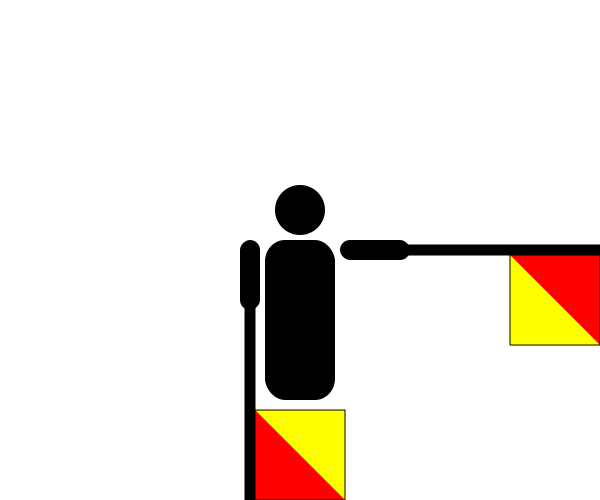

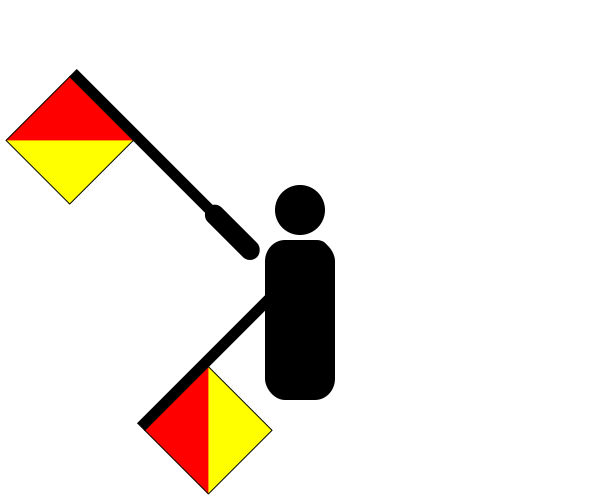
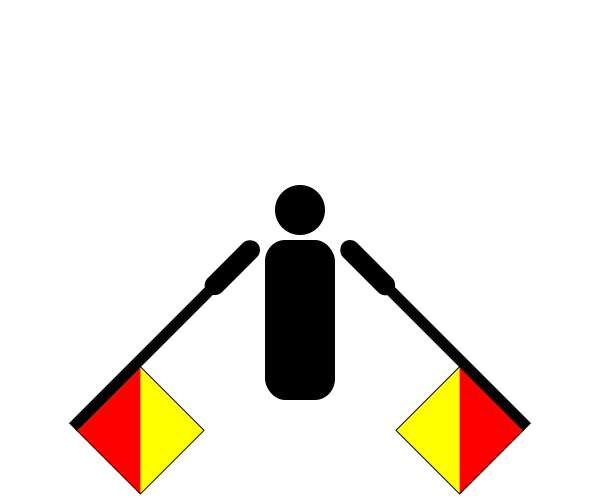
There are approximately 64 people named Fain in the UK. That makes it one of Britain's least common surnames. Only around one in a million people in Britain are named Fain.
Origin: English
Region of origin: British Isles
Country of origin: England
Religion of origin: Christian
Language of origin: English
