COCKAYNE
Cockayne is a surname that descends from both English and French linguistic traditions. It appears within the British Isles, particularly in England, where early records trace its use from the late twelfth century onward. The name is traditionally associated with Christian families.
The etymology of Cockayne may be traced to the Old French word coquaigne, which signifies “a land of plenty” or “a place of luxury and ease.” Consequently the surname has been interpreted as a nickname for someone who lived in a prosperous, comfortable locality, or conversely, for an individual noted for a lavish or indulgent lifestyle. The association with wealth and abundance underpins the surname’s historical connotations.
Alternatively, the name may derive from Anglo‑Saxon origins. It is recorded as a locational surname linked to the village of Cocking in Sussex, which appears in the Domesday Book of 1086 as “Cochinges.” The place name is derived from the Old English personal name Cocca, which itself comes from cocc (“cock”) combined with the suffix -ing meaning “people of.” Thus, the surname could originally denote “the people of Cocca” or “the settlement belonging to Cocca’s people.”
Early documents provide evidence of the surname’s use. The first recorded spelling appears in the “Pipe Rolls of Warwickshire” dated to 1193, identifying a William Cokein during the reign of King Richard I, known as “The Lionheart.” Subsequent medieval sites include Hawisa de Cokaingne in Yorkshire (1219), William Coccing in Leicester (1266), and William Cocking in Sussex (1327). These attestations demonstrate the name’s endurance across several English counties.
Variations of the surname have evolved over centuries, resulting in forms such as Cockin, Cockings and the present-day Cockayne. The surname remains a marker of locational identity, often reflecting either a connection to a specific geographic settlement or an emblem of perceived prosperity, such as the imagined “land of cakes” that appears in medieval Latin poetry, derived from coquere (to cook).
In contemporary contexts, Cockayne continues to be used as a family name within England, carrying with it a heritage rooted in both Anglo‑Saxon settlement patterns and the medieval French influences that shaped much of British onomastics. Its etymological layers provide insight into the ways in which geography, social milieu, and linguistic interchange converge in the formation of surnames.
Typical given names associated with the Cockayne surname
Male
- Alan
- Andrew
- Anthony
- David
- James
- John
- Michael
- Paul
- Peter
- Stephen
Female
- Christine
- Emma
- Helen
- Jacqueline
- Jean
- Jill
- Lisa
- Margaret
- Marie
- Nicola
- Patricia
- Sarah
- Sue
- Susan
Similar and related surnames
- Cockayn
- Cockane
- Cockaine
- Cockain
- Cocan
- Cagan
- Caggiano
- Caggon
- Caigan
- Cakan
- Cakin
- Cakoni
- Caughan
- Cawkin
- Cocean
- Cocken
- Cockeyne
- Cockin
- Cockoyne
- Cockrane
- Cockrayne
- Cockyane
- Coekin
- Cogan
- Coggan
- Coggane
- Coggen
- Coggin
- Coggon
- Coghan
- Cogon
- Cogoni
- Cokayne
- Coken
- Cokin
- Coogan
- Coohcan
- Cooken
- Coquin
- Cougan
- Coughan
- Coughen
- Coughin
- Coxan
- Cuckon
- Cugan
- Cuggan
- Gaccon
- Gacon
- Gacquin
- Gagan
- Gaggiano
- Gaggin
- Gaggini
- Gaghan
- Gagon
- Gahgan
- Gaquin
- Gaugain
- Gaughan
- Gaughen
- Gawkin
- Gaygan
- Ghagan
- Ghegan
- Gocan
- Gocgun
- Gogan
- Goggan
- Goggen
- Goggin
- Goghan
- Gokani
- Gokcan
- Googan
- Gooken
- Gookin
- Gougan
- Goughan
- Guaghan
- Guckian
- Guckin
- Guckion
- Guegan
- Gueguen
- Gugan
- Guggan
- Guguen
- Guigan
- Guighon
- Guigon
- Kacan
- Kacani
- Kagan
- Kagon
- Kagona
- Kaighan
- Kaighen
- Kaighin
- Kaikini
- Kakani
- Kakon
- Kaughan
- Kaygan
- Kaygun
- Keagan
- Keegan
- Keeghan
- Kegan
- Keggan
- Keggen
- Keggin
- Keigan
- Keighan
- Kekana
- Keogan
- Keoghan
- Keoghane
- Keygan
- Kiegan
- Kigano
- Kiggen
- Kiggin
- Kikani
- Kikano
- Kocan
- Kocken
- Kocon
- Kogan
- Kogon
- Kokan
- Kokane
- Kokans
- Kokina
- Kokkini
- Kokkinou
- Kokona
- Kucana
- Kuckian
- Kugan
- Kuiken
- Kukan
- Kukina
- Kuyken
- Quaggan
- Quaggin
- Quaken
- Quegan
- Quigan
- Quiggan
- Quiggin
- Quogan
- Cokay
Related and similar names are generated algorithmically based on the spelling, and may not necessarily share an etymology.
How to communicate the surname Cockayne in...
Braille
⠉⠕⠉⠅⠁⠽⠝⠑
Morse
-.-.----.-.-.-.--.---..
Semaphore

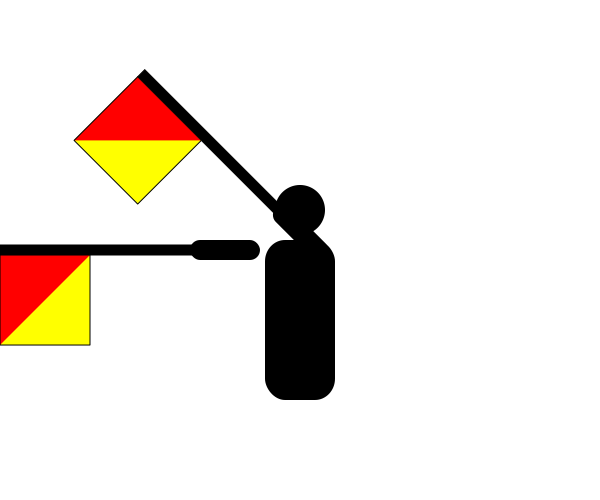
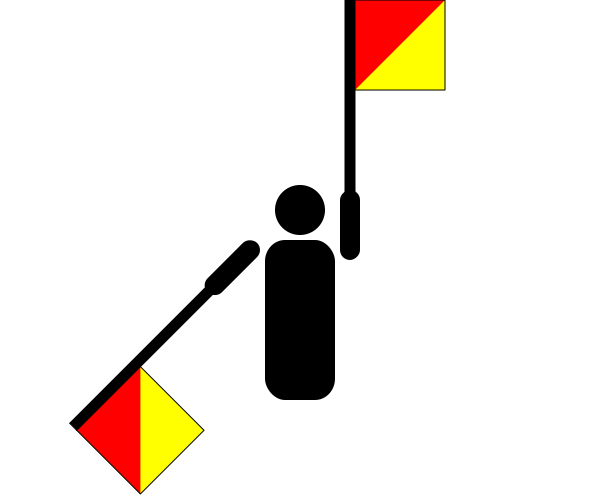

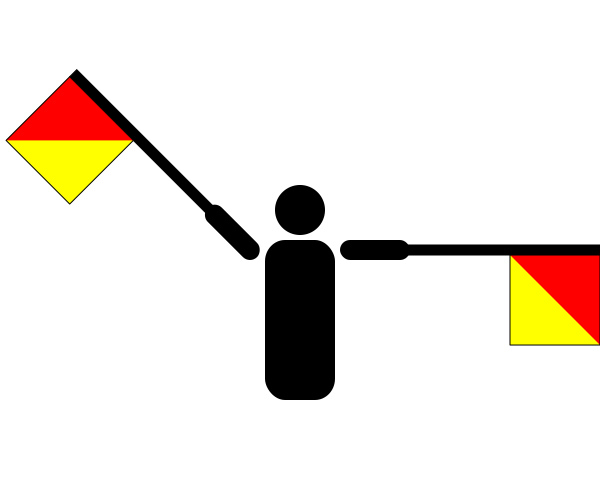
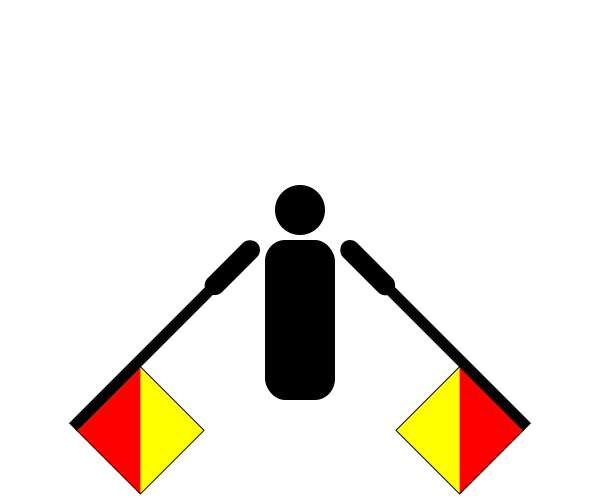

There are approximately 2,000 people named Cockayne in the UK. That makes it roughly the 4,221st most common surname in Britain. Around 31 in a million people in Britain are named Cockayne.
Surname type: Location or geographical feature
Origin: English
Region of origin: British Isles
Country of origin: England
Religion of origin: Christian
Language of origin: English

Famous people named Cockayne
- Elizabeth Cockayne - Nursing administrator (1894 to 1988)
- Leonard Cockayne - New Zealand botanist (1855 to 1934)
Names and descriptions courtesy of Wikipedia, and may contain errors. This is not intended to be an exhaustive list of every famous person with this name.