WILBY
Wilby is a surname of English origin that has been documented since the Anglo‑Saxon period. The name is locational and derives from settlements bearing the same toponym, which appear in several counties across the British Isles. Its bearers were traditionally associated with agricultural communities, and the name reflects both natural features and the social structure of early medieval England.
The etymology of Wilby combines two elements. The first, from Old English, is wilig, meaning “willow”, a tree commonly found beside streams and in marshy ground. The second, from the suffix -by, originates in Old Norse and denotes a farm or settlement. Consequently, the name has been interpreted as “the farm or settlement by the willow trees”. In certain places the ending appears as beag in the Domesday records, which, together with wilig, would convey the sense “circle of willows”. These variants illustrate the interaction of Anglo‑Saxon and Norse linguistic traditions in the naming of places.
Historical documentation of the surname is extensive. The earliest recorded spelling is Willabyg in 1067, referring to a location in Northamptonshire that combines the personal name Vili with the Old Scandinavian suffix -bi. Other early forms include Wilebey in the Domesday Book for a village in Suffolk, and variants such as Wilgeby and Willebeih for a Norfolk settlement. The first known individual to bear the name in a formal record is Robert de Willeby in a Yorkshire charter dated c. 1161, during the reign of King Henry I (1154–1189). Further evidence appears in the Tax Fines court rolls of Essex in 1327, where a Robert Wilby is mentioned.
The surname was especially widespread in Yorkshire, with several spellings—Wilby, Wilbe, Wilbee, and Wilbye—found throughout the county. It remained common in the East Anglian region, where variations such as Wilby appear in local parish registers. One notable early emigrant, George Wilby, set sail from London aboard the ship “Suzan and Ellin” in April 1635, arriving in the Virginia colony. This voyage represents one of the earliest instances of a Wilby settling in America, placing the family among the pioneer English colonists on the New World coast.
In summary, the surname Wilby provides a clear example of how English place‑names evolved from natural descriptors and Norse influences, how they were recorded in contemporary documents, and how individuals bearing the name participated in the socio‑historical developments of medieval and early modern Britain and beyond.
Typical given names associated with the Wilby surname
Male
- Andrew
- Christopher
- David
- James
- John
- Mark
- Matthew
- Michael
- Paul
- Peter
Female
- Elizabeth
- Emma
- Hannah
- Jean
- Joanne
- Margaret
- Mary
- Michelle
- Nicola
- Patricia
- Sarah
- Susan
Similar and related surnames
Related and similar names are generated algorithmically based on the spelling, and may not necessarily share an etymology.
How to communicate the surname Wilby in...
Braille
⠺⠊⠇⠃⠽
Morse
.--...-..-...-.--
Semaphore
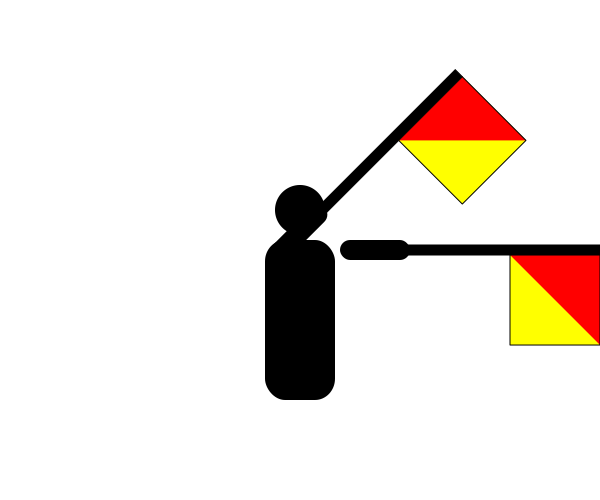
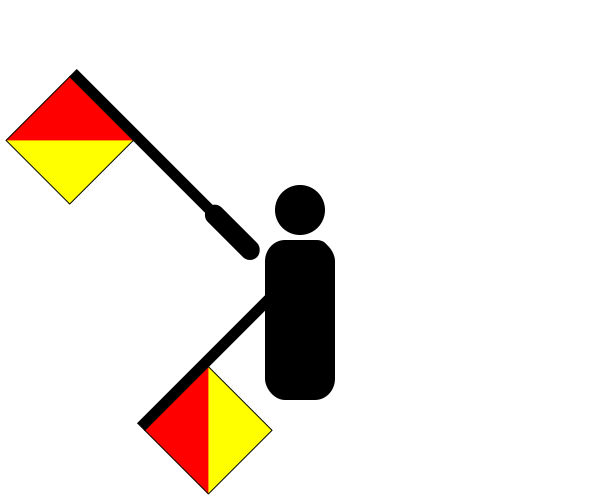

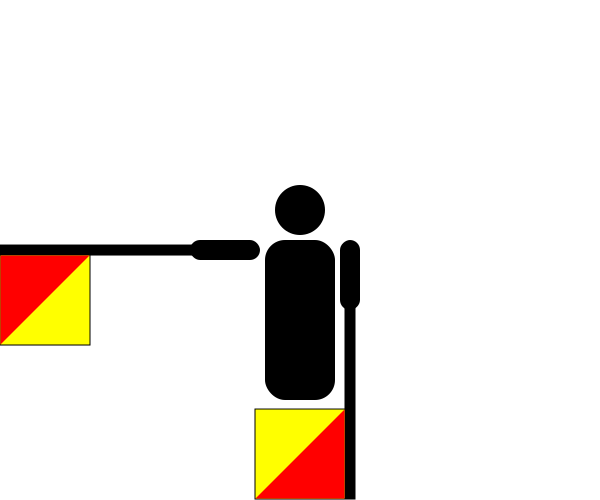
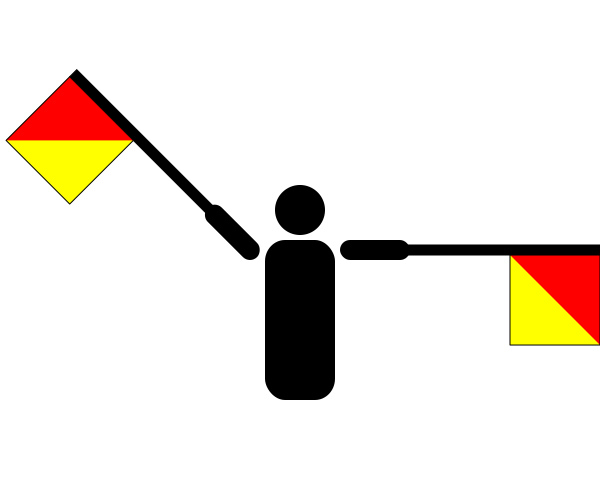
There are approximately 3,375 people named Wilby in the UK. That makes it roughly the 2,703rd most common surname in Britain. Around 52 in a million people in Britain are named Wilby.
Origin: English
Region of origin: British Isles
Country of origin: England
Religion of origin: Christian
Language of origin: English

Famous people named Wilby
- James Wilby - Actor
- Philip Wilby - Composer
- Basil Wilby - Writer
- Peter Wilby - Journalist
- James Wilby -
Names and descriptions courtesy of Wikipedia, and may contain errors. This is not intended to be an exhaustive list of every famous person with this name.