LEVINS
Levins is a surname that has developed independently in several linguistic and cultural contexts, resulting in a range of meanings and orthographic variations.
In the Irish context, the name is an anglicised form of the Gaelic patronymic Ó Laighin, which literally means "descendant of Laighean". The personal name Laighean itself is derived from the word for a spear or a warrior, and the surname is most commonly found in County Galway and County Mayo.
Within England, Levins can be traced back to the Middle English personal name Leofwine (also recorded as Lefwine). The constituent elements leof ("dear" or "beloved") and wine ("friend") give the name an affectionate meaning. A figure named Leofwini appears in the Old English Bynames Register of 1010, indicating an early use of the root that would evolve into the modern surname.
In Jewish Ashkenazic heritage the surname originates from the Hebrew name Levi, signifying "joining" or "attached". Traditionally the name was given to the third son of a family, and over time it was modified by the addition of the Slavic suffix -in, producing forms such as Levin and, in English-speaking countries, often Anglicised further to Levin**s**. This lineage is associated with the Levitical tribe, which held special religious duties in ancient Israel.
Another possible source is the Gaelic patronymic Mac Giolla Giullin, meaning "son of the servant of William". Anglicisation of this patronymic could yield surnames such as Lewins or Lewen, which are sometimes spelled with a single 'n'.
Historical records provide evidence for the surname in the British Isles. The earliest documented spelling appears as John Lewyn in a 1230 Northamptonshire Register, dated to the reign of King Henry the Frenchman (1216–1272). Other early entries include Elonor Lewen born in 1660 on the Isle of Man, George Lewens christened in London in March 1700, and Jemima Scot Lewen born in East Lothian, Haddington, Scotland in 1869.
The spelling of the surname has evolved over time, with variants such as Lewins, Lewen, Levin, Leven, Livens, and Levens appearing in legal documents, parish registers and census records. These variations may result from dialectal influences, clerical errors or deliberate changes to distinguish branches of the family.
In addition to patronymic origins, some instances of Levins are likely locational, deriving from place names such as Levens in Westmorland or Levens Bridge in Yorkshire. In such cases the surname would indicate that an ancestor hailed from or resided in one of these localities, thereby adopting it as a family name.
Today the surname is found throughout the United Kingdom and Ireland, as well as in countries with significant Irish, English or Jewish diasporas, including the United States, Canada and Israel. The varying frequencies of the name in different regions reflect the diverse cultural and linguistic pathways that have contributed to its lineage.
Typical given names associated with the Levins surname
Male
- Alan
- Alexander
- Andrew
- Bernie
- Colin
- David
- John
- Kenneth
- Kerry
- Kevin
- Michael
- Noah
- Patrick
- Philip
- Robert
Female
- Anne
- Catherine
- Elizabeth
- Emma
- Gillian
- Greta
- Iris
- Julie
- Moira
- Pauline
- Pepertua
- Rebecca
- Sarah
- Sharon
Similar and related surnames
- Lavin
- Lavine
- Lavigne
- Lavina
- Elvins
- Levin
- Levina
- Lavans
- Lavence
- Lavens
- Laving
- Lavini
- Lavons
- Leavens
- Leavins
- Leavis
- Leavons
- Leevin
- Leevis
- Levans
- Levenez
- Levens
- Levi
- Levian
- Levics
- Levie
- Levien
- Levies
- Levinas
- Levine
- Levines
- Leving
- Levinge
- Levings
- Levinskas
- Levinski
- Levinsky
- Levinsohn
- Levinson
- Levis
- Leviss
- Levons
- Levvin
- Lievens
- Lievense
- Lievin
- Livanos
- Livens
- Livins
- Livinsea
- Livinus
- Lofnes
- Lovence
- Lovines
- Lovins
Related and similar names are generated algorithmically based on the spelling, and may not necessarily share an etymology.
How to communicate the surname Levins in...
Braille
⠇⠑⠧⠊⠝⠎
Morse
.-......-..-....
Semaphore


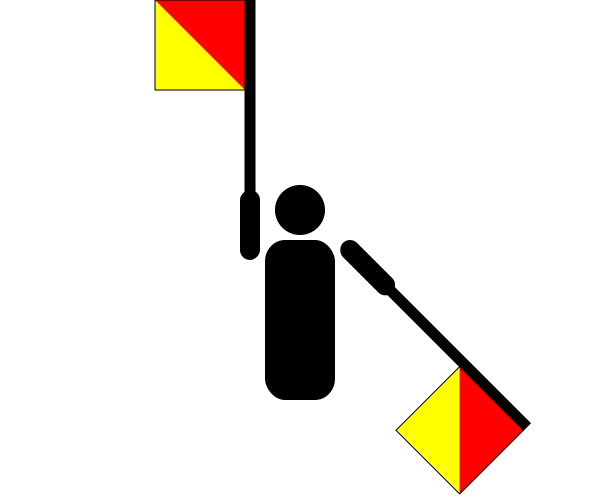
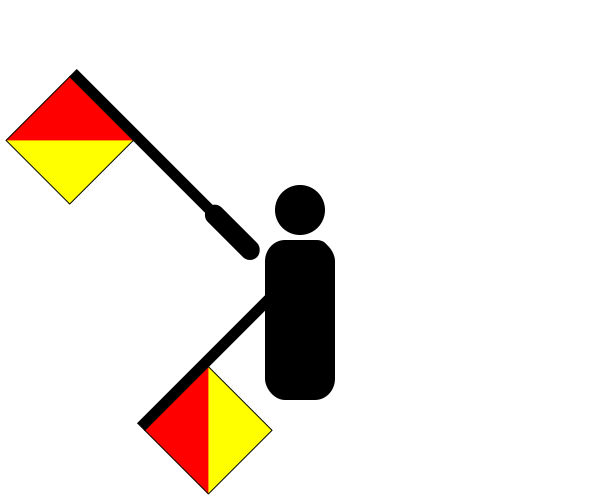
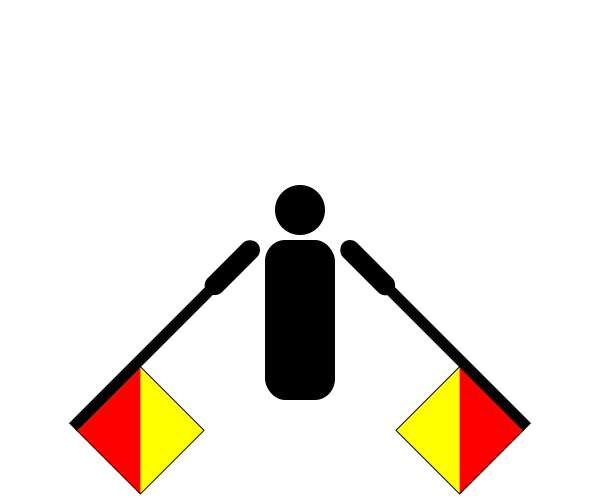

There are approximately 177 people named Levins in the UK. That makes it one of Britain's least common surnames. Only around three in a million people in Britain are named Levins.
Origin: Celtic
Region of origin: British Isles
Country of origin: Ireland
Religion of origin: Christian
Language of origin: Gaelic
