KINDLE
Kindle is a surname of Germanic origin that is principally recognised within the United Kingdom and among English‑speaking populations abroad. According to linguistic evidence it derives from the Middle High German word kindel, which translates as ‘child’ or ‘offspring’. The name is considered an occupational or nickname form, applied to individuals who had many children or who worked closely with children, such as schoolmasters or nurses. In another sense it could denote a person who possessed a youthful appearance or childlike qualities.
In addition to the Germanic explanation, the surname has also been identified with a locational source in north‑eastern England. The name Kindle appears as a variant of Kendal, a place in Westmorland (now Cumbria) that was originally recorded as Kirkby Kendal and later appears in the Domesday Book as “Cherchebi” and in the early Records of Kendal as “Cherkaby Kendale”. The placename itself means ‘the valley of the River Kent’, derived from the ancient Brittonic river name *Cunetio* and the Old English dael ‘valley’. A second English place named Kendale, situated in the parish of Driffield in Yorkshire, derives from the Old Norse words kelda ‘spring’ and dalr ‘valley’. The surname from these sources is now widespread, and it has evolved into a variety of forms including Kendall, Kendell, Kindall, Kindell and Kindle.
The earliest documentary evidence for the name appearing in recorded history is the entry for John de Kendale in the Lancashire Subsidy Rolls of 1332, a period that falls within the reign of King Edward I. Subsequent records in London Church Registers note the christening of Chrystover, son of Thomas Kendall, at St. Mary Bothaw on 12 August 1544 and the marriage of Edward Kendall and Agnes Deuton at St. Botolph's, Bishopsgate on 12 April 1572.
Other linguistic traditions associate Kindle with the Middle High German term kindelîn, meaning ‘tender’ or ‘kind’. From this source the name was sometimes used for people connected with children, and some scholars note an additional derivation from a combination of kindel ‘child’ and bach ‘brook’, which would describe someone who lived by a ‘child’s brook’. A further line of scholarship suggests that Kindle may be an anglicised form of the southern German surnames Kindler or Kündler, wherein the name was used for a farmer who paid rent in produce rather than money. The variation Kundel, appearing in the medieval period in reference to a maker or seller of small barrels (the Middle High German kundeln), is thought to be less prevalent.
Throughout the modern era the surname has developed a wide range of orthographic variants, many of which arose through the processes of immigration, regional accentuation, or the lack of standardised spelling until recent centuries. Familiarly recognised forms include Kindleberger, Kinder, Kindler, Kindel, Kindell, Kindelsberger and Kyndall. Alternative spellings that preserve a connection to the original location are Kendle, Kendal, Kendell and Kendall. The surname also shares linguistic roots with related names such as Kienle, Kienzle and Kündel, which are found in Swabian dialects of southern Germany.
Population data indicate that although the surname appears in Germany, Canada and other European countries, the United States hosts the largest number of living bearers of the name. Within the United Kingdom, the surname is relatively uncommon but remains in existence across various regions, particularly in areas historically associated with the Lake District and the Yorkshire coast.
In sum, Kindle is a surname that illustrates the interaction of occupational, locational and linguistic elements in the evolution of family names. Its Germanic roots in the term for a child or kind person, coupled with its possible ties to English place‑names, demonstrate how surnames can arise from a range of social, geographical and linguistic contexts, with their forms and frequencies reflecting centuries of migration, settlement and language change. The variations preserved in contemporary records attest to the enduring legacy of the name in multiple societies around the globe.
Typical given names associated with the Kindle surname
Male
Female
Similar and related surnames
Related and similar names are generated algorithmically based on the spelling, and may not necessarily share an etymology.
How to communicate the surname Kindle in...
Braille
⠅⠊⠝⠙⠇⠑
Morse
-.-..-.-...-...
Semaphore
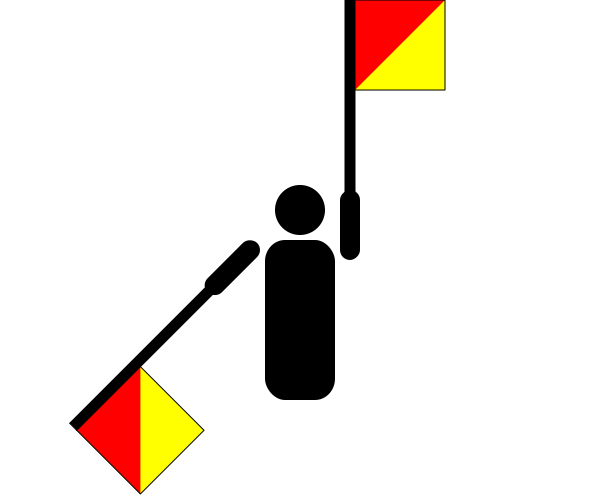
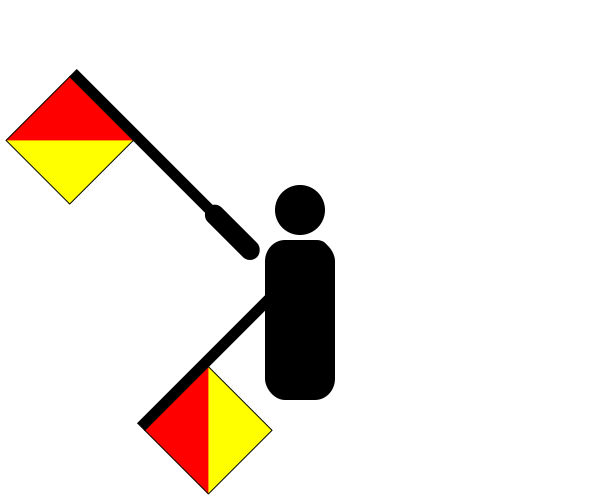
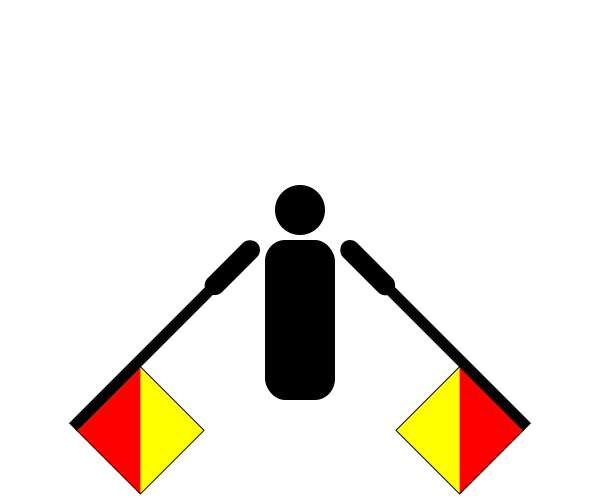


There are approximately 17 people named Kindle in the UK. That makes it one of Britain's least common surnames. Fewer than one in a million people in Britain are named Kindle.
Region of origin: Europe
Country of origin: Germany
Language of origin: German
