HARRING
Harring is a surname of broad European provenance, with documented occurrences in the British Isles, Germany, and the Netherlands. Its presence in historical records dates back to the twelfth century, and the name has evolved through a series of linguistic influences.
In England, Harring is traditionally recognised as a patronymic surname derived from the medieval personal name Harry, a diminutive of Henry. The name Henry itself originates from the Germanic Heinrich, meaning home ruler or ruler of the household. Consequently, the surname may be interpreted as “son of Harry” or “descendant of Henry”.
French influence on the name is evident in the alternated spelling Herring, which is a metonymic designation for a dealer or processor of herring fish. The term was introduced to England by the Normans after 1066, and the earliest recorded instance of a related surname appears approximately a century later. Notable bearers of the surname in this context include Thomas Herring, Archbishop of Canterbury in the late seventeenth and early eighteenth centuries, and John Herring, a prominent stage coach driver and member of the Society of British Artists in the nineteenth century.
In the Netherlands, the surname has been associated with the personal name Heer, which denotes army or ruler. As a patronymic form, it signifies “son of the ruler” or, more broadly, “descendant of a warrior”. The meaning of the name in Dutch contexts is closely aligned with its Germanic roots, emphasising a lineage of leadership or martial prowess.
German sources identify Harring as emerging from Northern Germany, specifically Lower Saxony. The name is believed to derive either from the Old German personal name Hariwulf or from the place name Haringe. In this setting the surname likewise functions as a patronymic: “son of Hari”. The pattern of adopting the name of a distinguished ancestor was common in early medieval Germanic societies.
Today, Harring remains a relatively uncommon surname worldwide. It can still be found in German states such as Lower Saxony, as well as in English-speaking countries including the United Kingdom, the United States (particularly in Illinois, New York and New Jersey), Canada, and Australia, largely due to migration over the past several centuries. Variants of the surname include Haring, Haringe, Haering, Hering, Häring, Häringer and Haeringer; these forms reflect regional linguistic adaptations and orthographic changes that occurred as families moved across borders.
Typical given names associated with the Harring surname
Male
- Carl
- John
- Thomas
Female
Similar and related surnames
- Haring
- Haering
- Harin
- Hareing
- Haringa
- Harrin
- Harringman
- Harrington
- Harrowing
- Harwing
- Hearing
- Hearring
- Heering
- Heeringa
- Hering
- Herring
- Herringe
- Herringer
- Herrings
- Heryng
- Hiring
- Hirring
- Horings
- Horring
- Hurring
- Harein
- Harines
- Haringman
- Harington
- Harri
- Harringshaw
- Hearin
- Hearington
- Herawing
- Herink
- Herrin
- Herringham
- Herringhan
- Herrington
- Hurrin
- Harding
- Harling
Related and similar names are generated algorithmically based on the spelling, and may not necessarily share an etymology.
How to communicate the surname Harring in...
Braille
⠓⠁⠗⠗⠊⠝⠛
Morse
.....-.-..-...-.--.
Semaphore


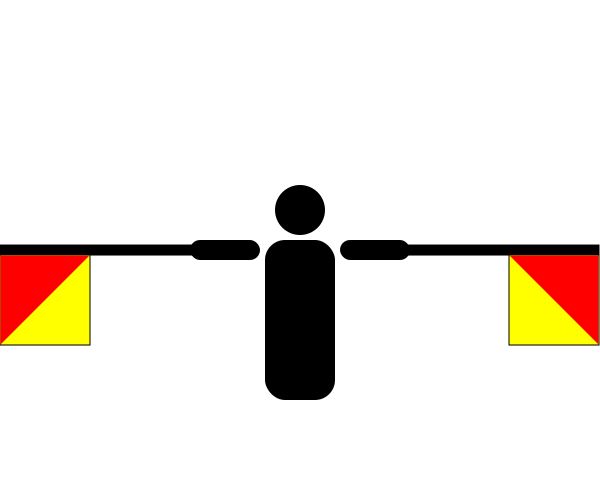
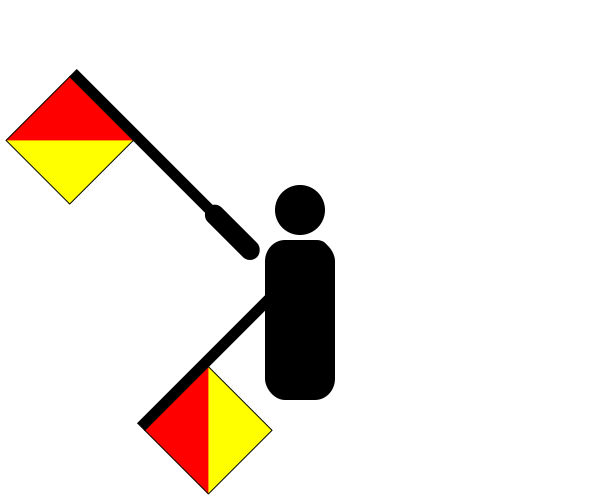
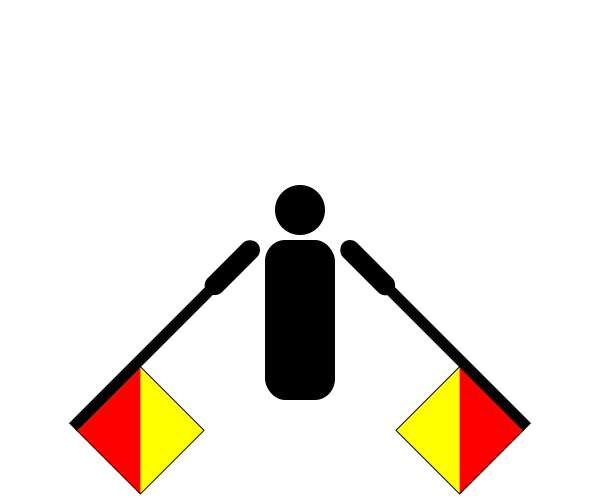

There are approximately 29 people named Harring in the UK. That makes it one of Britain's least common surnames. Fewer than one in a million people in Britain are named Harring.
Origin: English
Region of origin: British Isles
Country of origin: England
Religion of origin: Christian
Language of origin: English
