GOODIN
Goodin is a surname of English origin that can be traced back to the medieval period in the British Isles. The name derives from the Middle English word gode, meaning “good”, combined with the diminutive suffix -in which was commonly used to indicate “son of” or “descendant of”. Consequently, Goodin is historically interpreted as “son of Good” or “descendant of the good one”.
The earliest recorded instance of the family name appears in the year 1280, when Philip Guodin (also recorded as Guodin) served as a witness at the Somerset Assize Court in Taunton during the reign of King Edward I. This early attestation confirms the existence of the surname in England soon after the Norman Conquest, when English surnames were becoming fixed.
Historical entries from the fourteenth to the eighteenth centuries provide further evidence of the surname’s use within England. In 1594 Christopher Godden was noted as a witness at St. Mary Magdalene Church in Bermondsey. In 1607 Ann Goodin was recorded at St. Andrews, Holborn, and in 1677 John Guiden served as a witness at St. Mary's Church in Harmondsworth. These documents illustrate several contemporary spellings of the name that were in use across different regions of the country.
Later records include Daniel Gaudin, a Huguenot refugee, who is documented at the French church of Des Grecs in London on 20 May 1711. The presence of French‑linguistic variants such as Gaudin and Guiden indicates that the surname travelled beyond England, often under altered forms compatible with local orthographic practices.
Throughout the Middle Ages, surnames generally reflected personal attributes, occupations, or places of origin. It is plausible that early bearers of the name Goodin were originally identified by a reputation for good conduct or good friendship, as the root gode also appears in the Old English personal names Godwine and Godwyn, meaning “good friend”. Such nomenclatural practices were common in Kent, the original south‑eastern English county where the name first appears.
Over the centuries, a variety of spelling variants have emerged, reflecting regional accents, migration, and lower levels of literacy. Common derivatives include Goodwin, Gooden, Goodan, Goodwyn, Godin, Godwin, Godden, Goddin, Gooding, Godding, Gidden, Goden, Goodson, and Goodison. These variants share the same etymological root but have evolved independently in spelling over time.
In terms of contemporary distribution, the surname Goodin remains relatively uncommon. It is most frequently encountered in the United States and, to a lesser extent, in England and Australia, reflecting patterns of migration from the British Isles over the last several centuries.
Typical given names associated with the Goodin surname
Male
- Alan
- Andrew
- David
- Gary
- Matthew
- Melvin
- Michael
- Peter
- Philip
- Robert
- Steven
- Thomas
Female
- Ada
- Alice
- Anita
- Catherine
- Christine
- Irene
- Jacqueline
- Mary
- Michelle
- Pauline
- Sarah
- Susan
- Tanya
- Vicky
Similar and related surnames
- Gooding
- Goodine
- Goodding
- Goodie
- Godin
- Goddin
- Goodan
- Gooden
- Goodain
- Cadan
- Cadani
- Cadden
- Caddin
- Caddon
- Caden
- Cadena
- Cadenne
- Cadien
- Cadin
- Cadion
- Cadon
- Cadona
- Cadoni
- Caetano
- Caidan
- Caiden
- Catan
- Catana
- Catani
- Catania
- Catano
- Caten
- Catena
- Catin
- Catino
- Cation
- Caton
- Catone
- Catoni
- Cattan
- Cattaneo
- Cattani
- Cattano
- Catten
- Cattin
- Cattini
- Catton
- Catun
- Catuna
- Catuogno
- Cauden
- Caution
- Cauton
- Cawden
- Cawton
- Cayton
- Coaten
- Coatin
- Coaton
- Codden
- Coddin
- Coden
- Codin
- Codina
- Codini
- Codogno
- Codon
- Codona
- Coidan
- Coitino
- Cooton
- Cotan
- Coten
- Cotin
- Cotogni
- Coton
- Cotone
- Cottain
- Cottan
- Cotteen
- Cotten
- Cottin
- Cottino
- Cotton
- Cottone
- Cottton
- Cottyn
- Cotugno
- Couden
- Coudon
- Coutain
- Couten
- Coutin
- Coutino
- Couton
- Cowden
- Cowdon
- Cowtain
- Cowtan
- Cowton
- Cudden
- Cuddin
- Cuddon
- Cudon
- Cudone
- Cutino
- Cuton
- Cutone
- Cutten
- Cuttin
- Cuttino
- Cutton
- Gadani
- Gadden
- Gaddin
- Gaddini
- Gaddon
- Gaden
- Gadenne
- Gadian
- Gadien
- Gadin
- Gadon
- Gaetan
- Gaetani
- Gaetano
- Gaeton
- Gaitan
- Gaiton
- Gaten
- Gatin
- Gatina
- Gatineau
- Gaton
- Gattan
- Gattani
- Gattegno
- Gatten
- Gatton
- Gattoni
- Gaudan
- Gauden
- Gaudian
- Gaudiano
- Gaudin
- Gaudini
- Gaudino
- Gaudion
- Gaudoin
- Gaudon
- Gaudyn
- Gauton
- Gawden
- Gayden
- Gaydon
- Gaytan
- Gaytano
- Gayton
- Gaytten
- Gdynia
- Ghaidan
- Ghatan
- Gheedan
- Ghidini
- Ghidoni
- Goaden
- Goaten
- Godan
- Godana
- Goddan
- Godden
- Goddon
- Godeanu
- Goden
- Godina
- Godino
- Godon
- Godwyn
- Godyn
- Goeden
- Goidon
- Goitein
- Goodbin
- Goodden
- Gooddie
- Goodhine
- Goodies
- Goodinge
- Goodings
- Goodinough
- Goodins
- Goodis
- Goodkin
- Goodlin
- Goodmin
- Goodney
- Goodon
- Goodsin
- Goodvin
- Goodwin
- Goodwine
- Goodwinn
- Goodwins
- Goodwyn
- Goody
- Goodyn
- Goton
- Gotton
- Gouden
- Gouding
- Goudon
- Gowden
- Gowdin
- Gowton
- Guadagni
- Guadagno
- Guden
- Gudeon
- Gudin
- Gudino
- Guedon
- Guiden
- Guidon
- Guidone
- Guidoni
- Guitian
- Guiton
- Guitton
- Gutin
- Guton
- Gutten
- Gutton
- Guyton
- Kadan
- Kaden
- Kadian
- Kahtan
- Kaitani
- Kaitano
- Kaittani
- Katan
- Katana
- Katani
- Katen
- Katene
- Katin
- Katina
- Katon
- Katona
- Katono
- Kattan
- Kattana
- Katten
- Katton
- Katun
- Kayden
- Kayton
- Keatin
- Keaton
- Keddan
- Kedden
- Kedian
- Keetan
- Keeton
- Keetoon
- Keidan
- Keiton
- Ketani
- Keten
- Keton
- Ketten
- Ketton
- Kewton
- Keyden
- Keydon
- Keyton
- Kidan
- Kidane
- Kidden
- Kiddin
- Kitano
- Kittani
- Kitten
- Kitton
- Kotan
- Kotani
- Koten
- Kotian
- Kotin
- Kotni
- Koton
- Kotonou
- Kottaun
- Kotun
- Kotynia
- Koutna
- Kowden
- Kuodiene
- Kuten
- Kutin
- Kuton
- Kuttan
- Kutten
- Qattan
- Quiden
Related and similar names are generated algorithmically based on the spelling, and may not necessarily share an etymology.
How to communicate the surname Goodin in...
Braille
⠛⠕⠕⠙⠊⠝
Morse
--.-------....-.
Semaphore

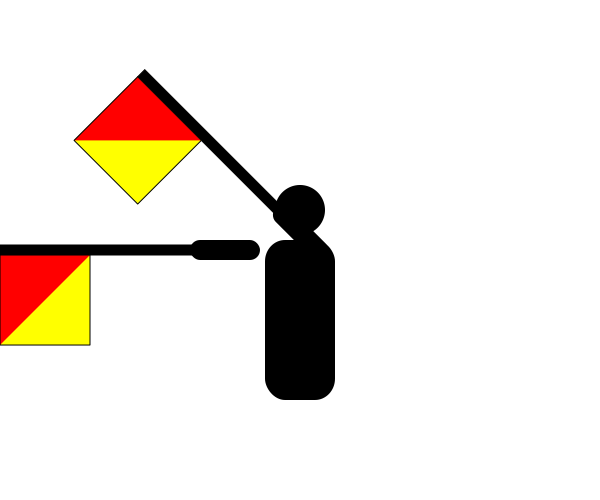

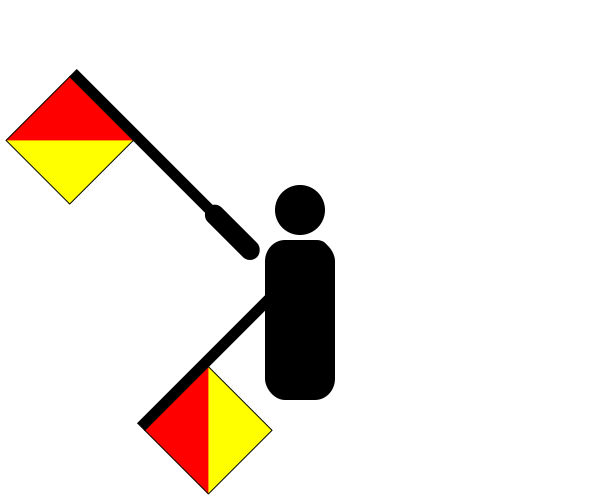
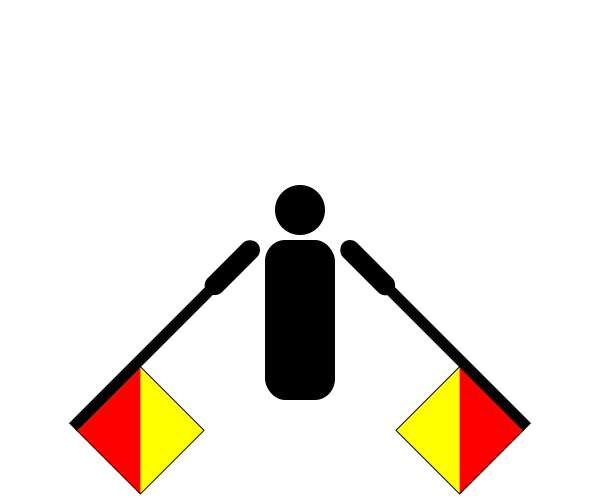
There are approximately 340 people named Goodin in the UK. That makes it one of Britain's least common surnames. Only around five in a million people in Britain are named Goodin.
Origin: English
Region of origin: British Isles
Country of origin: England
Religion of origin: Christian
Language of origin: English
