FLANIGAN
Flanigan is a surname of Gaelic origin, traditionally borne by families within the British Isles, particularly in Ireland. The name is an Anglicised variant of the Old Gaelic form Ó Flannagáin, which indicates a lineage descending from an ancestor named Flannagán.
The personal name Flannagán derives from the Gaelic word flann, meaning red or ruddy. The suffix -án is a diminutive, so that Flannagán can be understood as “the little red one”, a reference to a distinctive physical trait such as red hair or a ruddy complexion possessed by an early clan member.
Historically the Flanigan clan was situated in the western province of Connacht. The chief of the sept governed the district of Magh Aoi in county Roscommon, acting as hereditary stewards to the Kings of Connaught. The principal sept was based between Mantua and Elphin, and its members were regarded as a royal lord under the powerful O’Connor dynasty.
A coat of arms attributed to the family bears a silver shield crowned by an oak tree proper upon a green mount, surrounded by a bordure of oak leaf motif. The crest shows a dexter cubit arm in armour, adorned with gold and red, holding a flaming azure sword whose pommel and hilt are gilded. The family motto “Certavi et vici”, translating as “I have fought and conquered”, appears on the seal.
The earliest documented record of the name is that of Donough O’Flanagan, Bishop of Elphin, dated 1308 in the Ecclesiastical Records of county Roscommon. This document was produced during the reign of King Edward II of England, whose reign extended from 1327 to 1377.
In contemporary Ireland the surname remains widespread, appearing in the top 100 most common surnames and ranking 69th on that list. The highest concentrations of bearers are found in county Roscommon, and in the western counties of Mayo, Galway and Clare. The name also persists in the southern counties of Tipperary and Monaghan.
The Great Famine of the mid-nineteenth century triggered significant emigration, dispersing the Flanigan surname beyond Irish borders. Today it is common in the United States, Canada, the United Kingdom and Australia, reflecting the broader patterns of Irish diaspora.
Variations of the surname, such as Flanagan, Flanagin, Flannigan, Flanegen and Flanigen, all share the same Gaelic root and are considered cognates of the original name. These orthographic differences arose from phonetic transliteration across regions and historical periods, yet each variant maintains the underlying meaning connected to the ancestor Flannagán.
Typical given names associated with the Flanigan surname
Male
- Brian
- Christopher
- David
- James
- John
- Mark
- Michael
- Neal
- Neil
- Paul
- Stephen
- Thomas
- William
Female
- Alison
- Ann
- Carole
- Catherine
- Christine
- Elizabeth
- Joanne
- Kathleen
- Laura
- Lorraine
- Margaret
- Mary
- Patricia
- Susan
Similar and related surnames
Related and similar names are generated algorithmically based on the spelling, and may not necessarily share an etymology.
How to communicate the surname Flanigan in...
Braille
⠋⠇⠁⠝⠊⠛⠁⠝
Morse
..-..-...--...--..--.
Semaphore
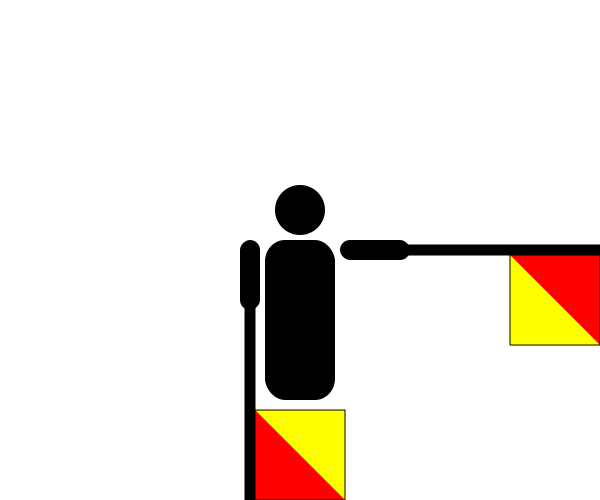


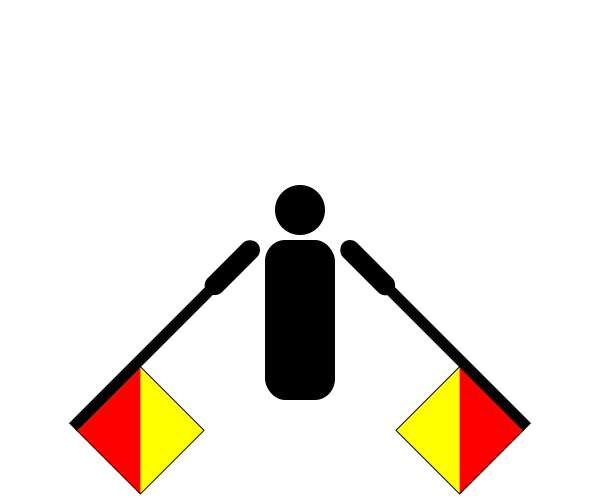
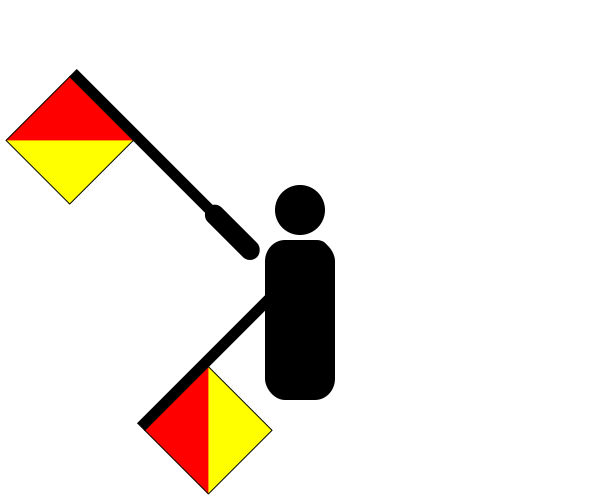

There are approximately 382 people named Flanigan in the UK. That makes it one of Britain's least common surnames. Only around six in a million people in Britain are named Flanigan.
Origin: Celtic
Region of origin: British Isles
Country of origin: Ireland
Religion of origin: Christian
Language of origin: Gaelic