FITTON
Fitton is a surname of English origin, originally a habitational name derived from places in the Midlands and North of England. The name is a compound of two Old English words: fitt, meaning a piece of land or grassland, and tun, meaning an enclosure or settlement. The name therefore referred to a person who lived near or was associated with a particular piece of land or settlement.
In addition to the Old English derivation, some researchers note a second possible source for the place name. In the north, a local term fitten meaning lying or deceit was sometimes used as a nickname. The name may also be linked to Fitton Hall in Leverington, Cambridgeshire, where the place name is thought to combine the Old Norse word fit – grassland on a river bank – with the Old English pre-7th‑century word tun meaning settlement. The use of the negative nickname rings has been recorded in medieval documents, making the name a possible mark of reputation or character as well as geography.
The earliest recorded spelling of the family name in surviving parish or legal records is that of Richard Ffyton, dated 1188 in the Chartulary of Whalley Abbey, Lancashire, during the reign of King Henry XI, the builder of churches. This demonstrates that the Fitton name had become established in the North of England by the late 12th century. In the 16th century, a Benjamin Fitton – son of George Fitton – was christened at St. Margaret’s, Lothbury, London in 1584, indicating a presence in the capital as well.
A notable bearer of the name was Mary Fitton, who flourished in the early 17th century. She was a maid of honour to Queen Elizabeth I and the daughter of Sir Edward Fitton. Historical accounts describe her as the mistress of William Herbert, third earl of Pembroke, and later as the wife of two captains, W. Polwhele and Lougher. Contemporary commentators have sometimes identified her with the poetically enigmatic “dark lady” of Shakespeare’s sonnets, a suggestion that is widely disputed and should be treated cautiously.
During the 13th and 14th centuries, the surname appears in a number of English records. In 1286, a Robert Ficche was noted as a witness in the Assize Court Rolls of Cheshire, suggesting the name had a settled presence in that county. By the 14th century, the name was recorded in Ireland as Uaitune (1346) and Fytton (1455), indicating an Irish migration or adoption of the name that may reflect a different linguistic lineage, potentially from a diminutive of Fitche derived from the Old French ficche meaning to make neat or tidy.
From the 16th to the 18th centuries, parish registers show the Fitton name primarily in Cheshire and Lancashire, with spill‑over into Yorkshire, Norfolk and Cornwall. The name also appears in military rolls of the 18th century, indicating that members of the family served in the armed forces. In the 19th century, with the rise of literacy and the standardisation of spelling, many variants – including Fittan, Fihton, Fitten and Phiton – were consolidated around the contemporary spelling Fitton. The tendency to retain the maiden name upon marriage has occasionally produced a complex array of surnames for genealogical research.
In more recent times, the surname is chiefly found across the United Kingdom, with a strong concentration in the north‑west, particularly in the counties of Cheshire, Lancashire and Yorkshire, as well as in metropolitan areas such as London, Birmingham and Manchester. A small but significant number of Fittons reside in Ireland, especially in the counties of Down, Armagh and Tyrone, a distribution that correlates with both medieval land holdings and later emigration patterns.
Today, individuals bearing the surname are often described as determined, optimistic and adventurous, traits that are celebrated in modern narratives about lineage. The name continues to be used as a family name and, less commonly, as a given name, reflecting its enduring presence in the anglo‑celtic world.
Typical given names associated with the Fitton surname
Male
- Andrew
- Christopher
- David
- James
- John
- Mark
- Michael
- Paul
- Simon
- Stephen
Female
- Christine
- Elizabeth
- Emma
- Helen
- Jayne
- Laura
- Margaret
- Mary
- Patricia
- Sarah
- Susan
Similar and related surnames
- Fitten
- Fittro
- Fiton
- Fadden
- Faddon
- Faden
- Fadian
- Fadina
- Fatani
- Fatania
- Fatehnia
- Faten
- Fatin
- Fatine
- Faton
- Fatona
- Fatone
- Fattani
- Fatton
- Fawden
- Fawdon
- Fayden
- Fayton
- Feadon
- Featon
- Fedden
- Feddin
- Feddon
- Feden
- Fedon
- Fedun
- Fedyna
- Feetan
- Fetten
- Fettin
- Fetton
- Feuton
- Fidan
- Fiddian
- Fidian
- Fiteni
- Fithon
- Fittan
- Fittin
- Foaden
- Fodan
- Fodden
- Foden
- Fodon
- Foten
- Fotune
- Fouden
- Foutain
- Foutaine
- Fowden
- Fowdon
- Foyton
- Futon
- Futton
- Fytton
- Phatton
- Phedon
- Phutane
- Vadden
- Vaden
- Vadnai
- Vadon
- Vaidean
- Vaton
- Vaudean
- Vauden
- Vaudin
- Vawden
- Veaton
- Vidan
- Vidana
- Vidani
- Videan
- Viden
- Videon
- Vidion
- Vidoni
- Vieten
- Vitan
- Viton
- Vitone
- Vitto
- Vittone
- Voaden
- Vodden
- Voddon
- Voden
- Vodin
- Voeten
- Vouden
- Vowden
- Vowdon
- Vuitton
Related and similar names are generated algorithmically based on the spelling, and may not necessarily share an etymology.
How to communicate the surname Fitton in...
Braille
⠋⠊⠞⠞⠕⠝
Morse
..-...------.
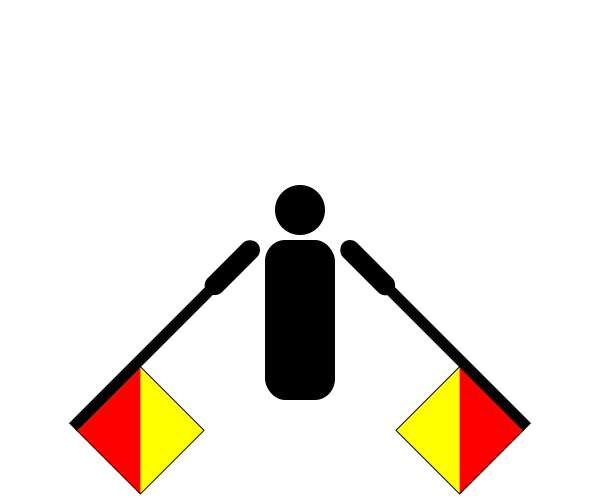
Semaphore
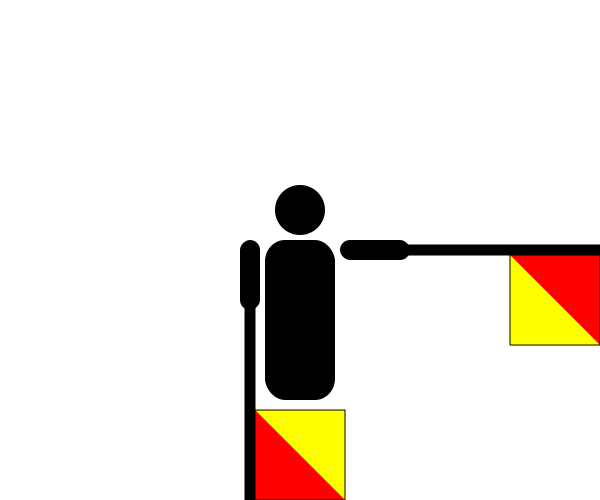
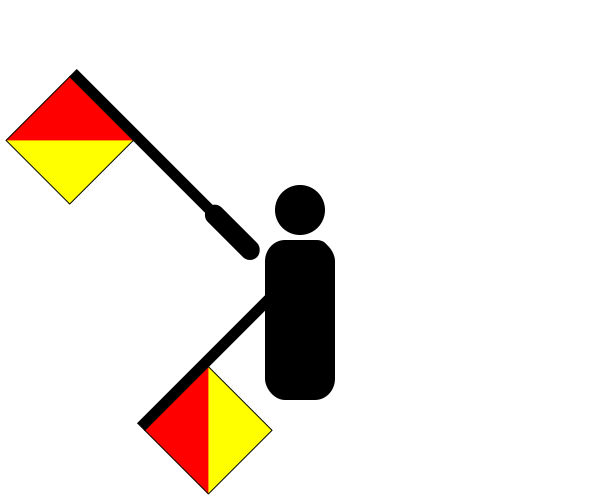
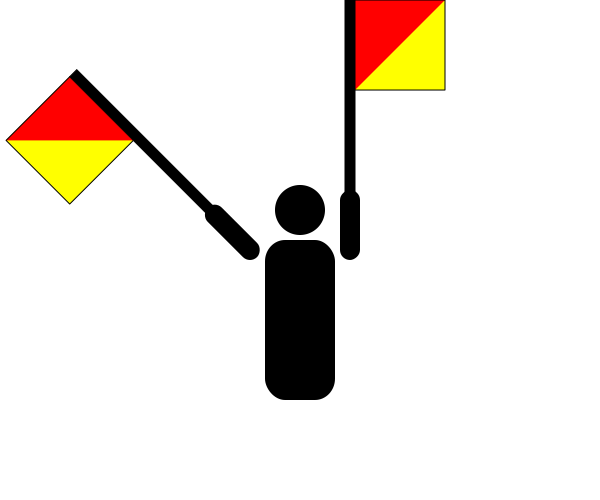
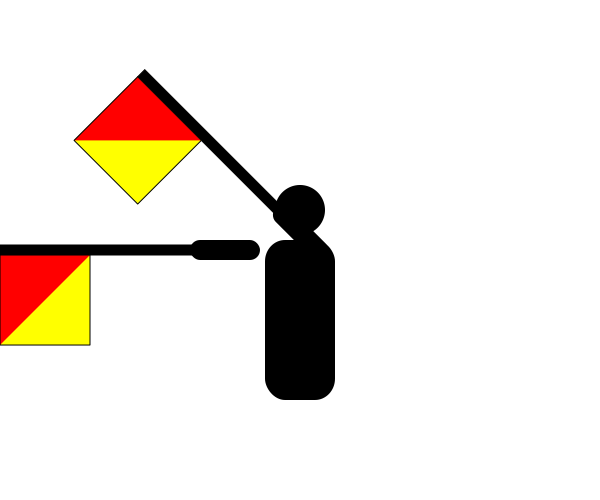
There are approximately 3,885 people named Fitton in the UK. That makes it roughly the 2,401st most common surname in Britain. Around 60 in a million people in Britain are named Fitton.
Surname type: Location or geographical feature
Origin: English
Region of origin: British Isles
Country of origin: England
Religion of origin: Christian
Language of origin: English

Famous people named Fitton
- Darryl Fitton - Darts player
- Arthur Fitton - Football player (1902 to 1984)
- Percy Fitton - Badminton player (1881 to 1946)
- Les Fitton - Darts player
Names and descriptions courtesy of Wikipedia, and may contain errors. This is not intended to be an exhaustive list of every famous person with this name.