DORN
Dorn is a surname of German origin which translates literally to thorn in English. It is most commonly found in the German-speaking parts of Europe, particularly within the borders of Germany and to a lesser extent Austria, and has also become established in the United Kingdom and the United States due to emigration during the nineteenth and twentieth centuries.
The name is derived from the Middle High German word dorn, meaning a prickly shrub or a thorny plant. Historically, it appears to have been used as a nickname for a person who displayed a prickly or obstinate character, or as a topographic designation for someone dwelling near a dense thorn bush or hedge. Another possibility, supported by the existence of places in Germany called Dorn or Dornbach, suggests a habitational origin, with the surname being adopted by those who came from such locales.
Parallel forms can be found in the British Isles. The English and Danish topographic surname Thorne (from the Old English pre‑seventh century word thorn) or Thorn comes from the same basic idea of a place of thorn bushes. Records such as “William Thorn” in the Curia Rolls of Sussex, 1206, provide evidence of early use of the name in England. In the same period, the spelling Dorn also appears, for example in the christening of Ellen Doon in 1568 at St. Botolph without Aldgate, within the reign of Queen Elizabeth I.
There are a number of recognised variants of the surname, largely reflecting differences in spelling, pronunciation and linguistic influence. These include Thorne, Thorn, Dorne, Doorn, Derne, Dort, Thurn and less common forms such as Durn, Thurne, Dorner, Durner and Dhorne. Dutch or Belgian versions may become Van Doorn or Vandoorn, literally meaning “from the thorn”. In German, cult of variants such as Dorn-bach describe a “thorny brook”. No single variant can be treated as uniformly equivalent to the others, though they share the same root element.
Beyond the purely topographic, the surname has occasionally appeared in occupational and patronymic forms. Names such as Dornier (suggesting a “thorn worker”), Dornseiff and Dornhart literally incorporate the idea of a person strong or hardy, like a thorn, or associated with the plant itself. These are relatively rare and usually identified within specific local traditions.
In terms of modern distribution, the surname remains most prevalent in Germany, where it can still be found in the majority of centuries-old records. Outside Germany, the name appears less frequently and is generally found in clusters corresponding to nineteenth‑century migration patterns, notably in the United Kingdom and the United States. It is not considered a common surname in any one particular region outside its country of origin, reflecting a pattern typical of many surnames that derive from specific landscape features.
Typical given names associated with the Dorn surname
Male
- Alan
- Charles
- Christopher
- David
- Karl
- Michael
- Norman
- Peter
- Philip
- Robert
- Simon
- Stephen
Female
- Amanda
- Emma
- Janice
- Jean
- Jody
- Karen
- Margaret
- Marianne
- Patricia
- Rachel
- Sarah
- Sharon
- Stefanie
- Veronica
Similar and related surnames
- Darnes
- Darney
- Darn
- Darne
- Darns
- Dron
- Dor
- Dora
- Dorna
- Dorne
- Dairon
- Daran
- Darani
- Daren
- Dargne
- Darian
- Dariani
- Darien
- Darin
- Darno
- Daron
- Darran
- Darren
- Darrin
- Darron
- Dauron
- Dearan
- Dearen
- Dearin
- Dearn
- Dearne
- Dearnes
- Dearns
- Dearny
- Deeran
- Deerin
- Dehorn
- Derain
- Deran
- Derani
- Deren
- Derenne
- Derian
- Derin
- Derine
- Dern
- Derne
- Derney
- Dernie
- Derny
- Deron
- Derouen
- Derrane
- Derrien
- Derrin
- Derun
- Diran
- Direen
- Diren
- Dirn
- Diron
- Diurno
- Doar
- Doehren
- Doern
- Dohren
- Dohrn
- Doiron
- Doohren
- Door
- Dooren
- Doorn
- Doorne
- Dorain
- Doran
- Dorane
- Dorani
- Dore
- Dorean
- Doreen
- Doren
- Dorian
- Dorien
- Dorin
- Dorine
- Dorion
- Dorm
- Dornak
- Dornam
- Dornan
- Dornay
- Dorner
- Dornes
- Dorney
- Dornie
- Dornin
- Dornis
- Dornom
- Dornon
- Dornor
- Dorny
- Dornyei
- Doron
- Doronie
- Dorr
- Dorrain
- Dorran
- Dorrean
- Dorreen
- Dorren
- Dorrian
- Dorrien
- Dorrin
- Dorrion
- Dorron
- Dors
- Dour
- Douran
- Dourne
- Dournes
- Dourney
- Dragna
- Dragnea
- Drain
- Draine
- Drainie
- Dran
- Drane
- Dranie
- Drann
- Drawn
- Drayne
- Drean
- Dreano
- Drein
- Dreina
- Dren
- Drene
- Dreni
- Dreon
- Drian
- Drien
- Drine
- Drinn
- Drion
- Droin
- Drona
- Drone
- Drouin
- Drouyn
- Drown
- Drowne
- Druian
- Druin
- Drun
- Druon
- Dryne
- Duarn
- Duern
- Duhrin
- Duran
- Durana
- Durane
- Durani
- Durann
- Durano
- Dureen
- Duren
- Durian
- Durien
- Durin
- Durion
- Durn
- Durna
- Durnay
- Durne
- Durnes
- Durney
- Durnie
- Durno
- Durns
- Durny
- Duron
- Duroni
- Durran
- Durrani
- Durren
- Durrin
- Dyrne
- Dyron
- Taran
- Tarani
- Taranu
- Tareen
- Tarin
- Tarini
- Tarn
- Tarna
- Tarnai
- Tarne
- Tarone
- Taroni
- Tarran
- Tarren
- Tarrien
- Tarrin
- Tarrini
- Tarron
- Tarrone
- Tarroni
- Tarun
- Taurani
- Tauren
- Taurina
- Taurino
- Tearn
- Tearne
- Tearon
- Tehran
- Tehrani
- Teran
- Terann
- Teren
- Terigno
- Tern
- Ternie
- Teron
- Terrain
- Terran
- Terrana
- Terraneo
- Terrano
- Terren
- Terreni
- Terrien
- Terrin
- Terron
- Terrone
- Terroni
- Terryn
- Tiran
- Tiren
- Tiron
- Tirona
- Tirone
- Tironi
- Toerien
- Toraine
- Toran
- Torano
- Toren
- Torian
- Torin
- Torina
- Torini
- Torino
- Torn
- Torna
- Tornai
- Torne
- Tornea
- Torno
- Toron
- Torrane
- Torrano
- Torren
- Torriani
- Torriano
- Torrini
- Torun
- Touraine
- Tourne
- Touron
- Tragne
- Tragni
- Traian
- Traianou
- Train
- Traina
- Traine
- Traini
- Traino
- Tran
- Trana
- Trane
- Trani
- Trann
- Tranne
- Trayne
- Trean
- Treen
- Treene
- Trein
- Tren
- Trenn
- Treon
- Trewyn
- Triana
- Triano
- Trin
- Trina
- Trine
- Trinn
- Troein
- Troen
- Troiani
- Troiano
- Troin
- Tron
- Trone
- Troni
- Trono
- Troon
- Troune
- Trown
- Trowne
- Troyna
- Truan
- Truen
- Truin
- Truine
- Trun
- Tryno
- Tuerena
- Turan
- Turani
- Turano
- Turean
- Turen
- Turian
- Turiano
- Turin
- Turina
- Turini
- Turino
- Turn
- Turna
- Turnau
- Turne
- Turnea
- Turneau
- Turnie
- Turno
- Turon
- Turone
- Turrin
- Turrini
- Turron
- Tyran
- Tyren
- Tyrna
- Tyron
- Tyrone
- Darnai
Related and similar names are generated algorithmically based on the spelling, and may not necessarily share an etymology.
How to communicate the surname Dorn in...
Braille
⠙⠕⠗⠝
Morse
-..---.-.-.
Semaphore

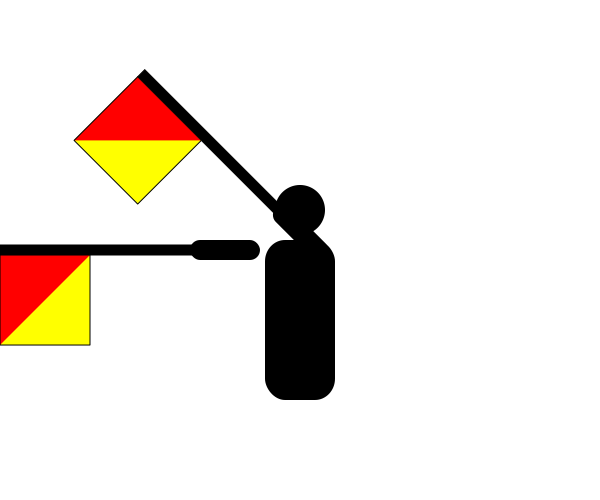
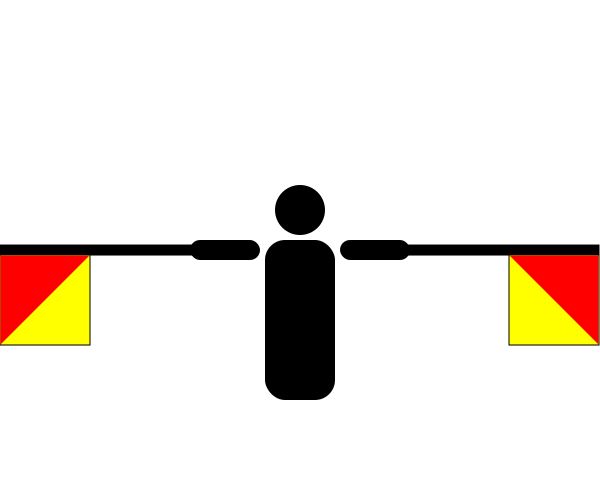
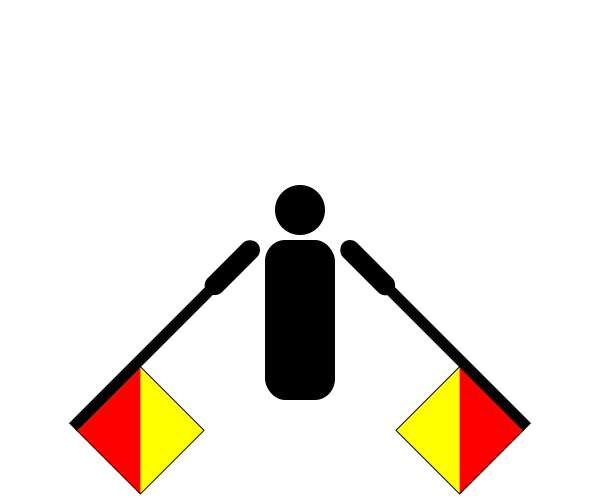
There are approximately 341 people named Dorn in the UK. That makes it one of Britain's least common surnames. Only around five in a million people in Britain are named Dorn.
Surname type: Location or geographical feature
Origin: English
Region of origin: British Isles
Country of origin: England
Religion of origin: Christian
Language of origin: English
