COLIN
Colin is a surname of predominantly Gaelic origin, found today in Scotland, Ireland and in parts of England where the name settled following the Norman Conquest. The earliest recorded instance of the name, John Collin, appears in the Kings Rolls of Devonshire in 1221, a document dated to the reign of King Henry I, who is often referred to historically as the ‘Frenchman’ (reigned 1100–1135). This evidence places the surname firmly in the medieval period, long before the widespread use of surnames in Britain.
The name derives from the Gaelic personal name Cailean, meaning “young pup” or “young hound”. In the Scots language, Cailean was used affectionately for a young warrior or a man of spirited energy. A diminutive formed from this personal name gave rise to the modern surname when it was adopted as a patronymic – the name of the father being used as a family name for his descendants. The spelling evolved over the centuries, giving rise to variants such as Collins, Collin, Collings and Collis.
In addition to the Gaelic line of descent, the surname Colin also traces back to the Latinised name Nicholas, itself derived from the Greek Nikolaos, meaning “people of victory”. In England, after the arrival of Norman influence in 1066, a number of English families adopted the form Colin as a shortened patronymic of Nicholas, with the element in interpreted as a diminutive suffix of the Saxon kin (“son of”). Many spellings were produced in that period – a catalogue of up to eighty different forms has been recorded, underscoring the name’s popularity.
In the west of Ireland the name appears frequently as an anglicised form of Coileain, usually prefixed by the patronymic Mac or O, indicating lineage. Here the meaning is again that of “young hound”, a term of affection in the Irish Gaelic tradition. Early Irish records include Fr Dominic Collins (1553–1602) and references to Roger Colynes (1329, Somerset), Agnice Collyns (1561, London), Agnete Collens (1586, Westminster) and Alce Collins (1549, London). These examples demonstrate the spread of the surname from its Gaelic origins into broader parts of the British Isles.
In Scotland the surname is often connected with the Clan MacKinnon, for which it is considered a sept or division of the family. Individuals bearing the name McColin or McColyn are regarded as part of this tradition, and the use of an apostrophe after the “Mc” has occasionally been seen in historical documents, although it has fallen out of contemporary usage. The term MacKinnon itself stems from the Gaelic Mac Cionaoidhe, meaning “son of the victorious one”, again showing the link with the original Greek heritage.
During the period of French influence in the British Isles, Colin also appeared as a diminutive of the French version Nicolas, and the name migrated to places such as France, Canada and the United States. The French form retained the meaning “victorious people”, and the surname is still quite common across France today. Variants generated in other languages include Koln and Kolinsky in Eastern Europe, Colina and Colinetti in Italy, and Colinas in Spanish‑speaking regions.
The array of spelling variations – from Collin to Coline, Collesson to Colison – illustrates the common practice of altering surnames to adapt to local orthographies and pronunciations. While such similarities can suggest a shared ancestry, they do not guarantee a single origin; detailed genealogical and historical research remains essential for accurate lineage determination.
Finally, the surname Colin is generally associated with a lineage that valued vigor, energetic spirit and, historically, triumph. These qualities are reflected in the etymology of both the Gaelic and Greek routes of the name, and in the persistent popularity of the surname across a range of cultures and eras. Whether derived from the affectionate Gaelic Cailean or from the Greek Nikolaos, bearers of the name share a connection to a heritage that recognises the triumph of the people and the spirited nature of the young. The surname’s endurance into the present day underscores the lasting influence of these historical roots, both linguistically and culturally.
Typical given names associated with the Colin surname
Male
- Andrew
- David
- John
- Michael
- Neil
- Paul
- Richard
- Robert
- Stephen
- Thomas
Female
- Ann
- Elizabeth
- Emma
- Joanna
- Julia
- Katherine
- Louise
- Martine
- Mary
- Patricia
- Sandrine
- Sarah
- Shiralee
- Valerie
Similar and related surnames
- Collison
- Collinson
- Coghlin
- Coli
- Coalin
- Colina
- Colini
- Colino
- Calan
- Calane
- Calen
- Calenio
- Caleno
- Calian
- Caliani
- Calin
- Calina
- Caline
- Calini
- Callan
- Callane
- Callann
- Callean
- Callen
- Calleon
- Callian
- Callien
- Callin
- Calline
- Callini
- Callion
- Callon
- Callone
- Callun
- Callyn
- Calne
- Caloianu
- Calon
- Calone
- Calonne
- Caluian
- Caluin
- Caulin
- Cawlin
- Caylan
- Clagne
- Clain
- Clan
- Clane
- Clawn
- Clayne
- Clean
- Cleane
- Cleene
- Clein
- Cleine
- Cleyne
- Clin
- Cline
- Clinn
- Cloen
- Clon
- Clone
- Cloona
- Clounie
- Clown
- Clownie
- Cloyne
- Cluan
- Cluen
- Cluin
- Clun
- Clune
- Clunie
- Clunn
- Clunne
- Clunnie
- Clyne
- Clynn
- Clynne
- Coaling
- Cohlan
- Colaianni
- Colain
- Colan
- Colean
- Coleen
- Colein
- Colen
- Colian
- Colic
- Colie
- Colies
- Colinan
- Coliner
- Colinet
- Coliney
- Coling
- Colinge
- Colings
- Colins
- Colis
- Collan
- Collean
- Colleen
- Collen
- Colleoni
- Colli
- Collian
- Collien
- Collim
- Collin
- Collina
- Collind
- Colline
- Collines
- Colling
- Collinge
- Collings
- Collini
- Collinns
- Collino
- Collins
- Collion
- Collis
- Colllins
- Collon
- Collun
- Collyn
- Collyns
- Coln
- Colne
- Colney
- Colnie
- Cologna
- Cologne
- Coloin
- Colon
- Colone
- Coloni
- Colonia
- Colonie
- Colonna
- Colonne
- Colrin
- Colsin
- Coluin
- Colun
- Colvin
- Colwin
- Colwyn
- Colyn
- Coolan
- Coolen
- Coolin
- Coulan
- Coulen
- Coulin
- Coullin
- Coulon
- Coulown
- Cowlan
- Cowlen
- Cowlin
- Cowling
- Cowlings
- Cowlyn
- Culan
- Culen
- Culenia
- Culin
- Culina
- Culine
- Cullan
- Cullane
- Culleen
- Cullegn
- Cullen
- Cullian
- Culliane
- Cullin
- Cullina
- Cullinn
- Cullion
- Cullon
- Cullun
- Gaelan
- Gahlin
- Gailani
- Gailen
- Galan
- Galani
- Galano
- Galaun
- Galeano
- Galen
- Galena
- Galeno
- Galeon
- Galeone
- Galian
- Galiana
- Galiano
- Galin
- Galina
- Galino
- Galione
- Gallan
- Gallani
- Gallen
- Galleni
- Galleon
- Gallian
- Galliana
- Galliani
- Galliano
- Gallien
- Galliena
- Galliene
- Gallienne
- Galliennee
- Gallin
- Gallina
- Galline
- Gallini
- Gallino
- Gallion
- Gallon
- Gallone
- Galloni
- Galloon
- Galna
- Galoin
- Galon
- Galone
- Galoni
- Galun
- Gaulin
- Gawlen
- Gaylen
- Gaylon
- Ghailan
- Ghalan
- Ghalani
- Ghelani
- Ghilani
- Ghiloni
- Ghuliani
- Glahn
- Glain
- Glan
- Glane
- Glann
- Glauwn
- Glayne
- Glean
- Gleane
- Gleen
- Glein
- Glen
- Glenie
- Glenn
- Glenni
- Glennie
- Gleyn
- Glin
- Glinn
- Gllen
- Gloin
- Glon
- Glone
- Gloon
- Glown
- Glownia
- Gloyn
- Gloyne
- Glunn
- Glyn
- Glyne
- Glynn
- Glynne
- Goalen
- Goalin
- Gohlan
- Goillan
- Goillon
- Golan
- Golani
- Golen
- Golenia
- Golian
- Golin
- Golini
- Golino
- Gollan
- Gollen
- Gollin
- Gollon
- Golon
- Golun
- Golynia
- Goualin
- Goulin
- Goulon
- Gowlan
- Gowlen
- Gowllane
- Gualano
- Gualini
- Guilano
- Guiliani
- Guiliano
- Guillain
- Guillan
- Guillaune
- Guillen
- Guillian
- Guilliano
- Guillin
- Guilline
- Guillion
- Guillon
- Guillonneau
- Guilon
- Gulan
- Gulen
- Gulian
- Guliani
- Gulin
- Gulino
- Gullan
- Gullane
- Gullen
- Gullin
- Gulline
- Gullion
- Gullon
- Kaelin
- Kahlani
- Kahlen
- Kahllon
- Kahlon
- Kahloon
- Kailani
- Kalan
- Kalani
- Kalen
- Kalian
- Kalin
- Kalina
- Kallan
- Kallen
- Kallin
- Kallon
- Kallyn
- Kalna
- Kalon
- Kalyn
- Kaylan
- Kaylene
- Keelan
- Keelen
- Keelin
- Keilen
- Keilon
- Kelan
- Kelani
- Kelen
- Kelian
- Kelin
- Kelion
- Kellan
- Kellane
- Kelleen
- Kellen
- Kellian
- Kellin
- Kellion
- Kelln
- Kellon
- Kellyn
- Kelon
- Kelone
- Keulen
- Kewlani
- Keylon
- Kielan
- Kielen
- Kielian
- Kilan
- Kilane
- Kilani
- Kilean
- Kileen
- Kilen
- Kilian
- Kilin
- Killan
- Killane
- Killean
- Killeen
- Killen
- Killene
- Killian
- Killien
- Killin
- Killina
- Killion
- Killon
- Killone
- Kiln
- Kilna
- Kilne
- Kilnee
- Kilon
- Klahn
- Klan
- Klane
- Klann
- Klean
- Kleen
- Klein
- Kleina
- Kleinau
- Kleine
- Klen
- Klene
- Kleyn
- Klien
- Kliene
- Klin
- Kline
- Kloen
- Klohn
- Klyn
- Klyne
- Kohlen
- Kolan
- Kolano
- Kolen
- Kolien
- Kolin
- Kolind
- Kolins
- Kollen
- Kollin
- Koln
- Kolon
- Koolen
- Kulan
- Kulane
- Kulin
- Kulina
- Kullen
- Kuln
- Kulon
- Kulyn
- Kulyna
- Quellin
- Quilan
- Quilian
- Quillan
- Quilleen
- Quillen
- Quillian
- Quillin
- Quillon
- Quilne
Related and similar names are generated algorithmically based on the spelling, and may not necessarily share an etymology.
How to communicate the surname Colin in...
Braille
⠉⠕⠇⠊⠝
Morse
-.-.---.-....-.
Semaphore

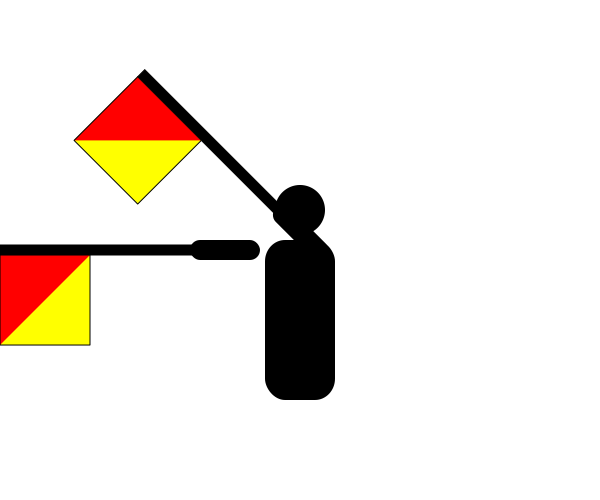

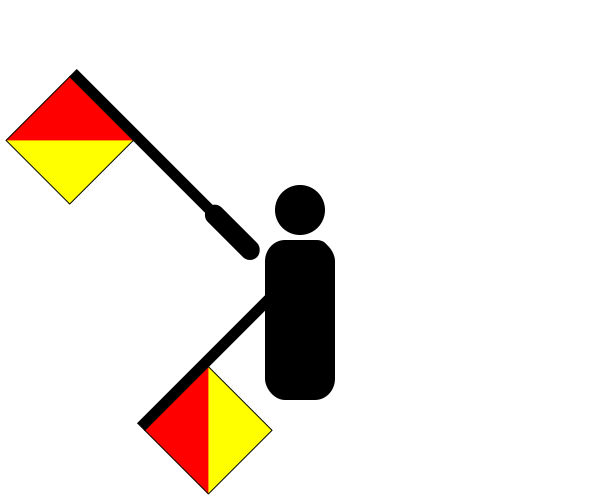
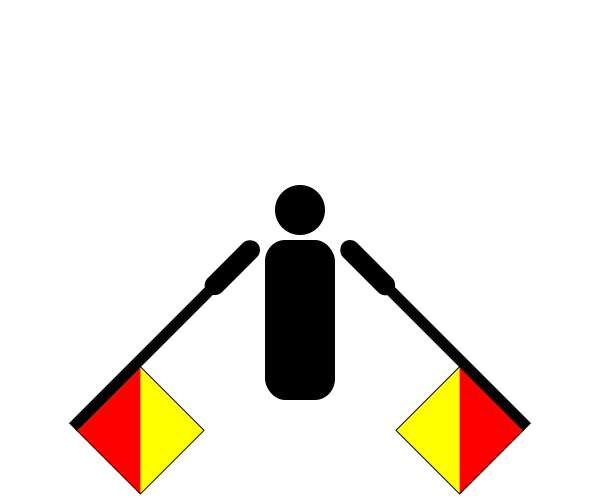
There are approximately 745 people named Colin in the UK. That makes it roughly the 9,256th most common surname in Britain. Around 11 in a million people in Britain are named Colin.
Surname type: From given name or forename
Region of origin: Europe

Famous people named Colin
- David Colin - UK judoka
- Jean Colin - Actress (1905 to 1989)
Names and descriptions courtesy of Wikipedia, and may contain errors. This is not intended to be an exhaustive list of every famous person with this name.