BUNTIN
Origin The Buntin surname is primarily associated with the British Isles, particularly Scotland. It descends from the Gaelic personal name Buinnean, which translates as ‘fair‑headed’ or ‘blond’. The name therefore appears to have been a patronymic marker, identifying the descendants of an individual bearing that given name.
Etymology In addition to its Gaelic roots, some scholars have noted a possible Old English influence. The element bune meaning ‘reed’ combined with tūn, a term for a small settlement or enclosure, has led to an alternative explanation that the name could mean ‘dweller by the reeds’ settlement’. This theory aligns with the surname’s classification as a topographic name in certain Scottish records. Another suggested derivation involves the Gaelic word buntáta, meaning potato, which might indicate a connection to potato cultivation, although evidence for this usage remains limited.
Historical Records The earliest documented spelling of the family name appears in the 1273 Hundred Rolls, where a Hugh Bonting is recorded in Lincolnshire during the reign of King Edward I, who was also known as “The Hammer of the Scots”. Names such as Thomas Bunetun of Oxfordshire and Henry Buntyng of Suffolk appear on the same list, suggesting a broader early medieval presence in England.
Patronymic and Localised Variants The surname saw a range of spellings in the early modern period, including Buntin, Bunten, Bunton, Bunting, Buntain and Bontine. In Scotland, the surname is principally concentrated in the regions of Ayrshire and Galloway, where it is often considered a topographic marker of a settlement near reeds or pasture. Some biographical entries link the Buntin family with the broader MacDonald clan, one of the largest Scottish clans.
Migration and the New World Records indicate that members of the Buntin family emigrated to the New World during the seventeenth century. An example is Richard Bunting, who departed from the Port of London aboard the Dorst bound for the “Bormodos” in 1635. Subsequent marriage records show individuals bearing the surname marrying in London: for instance, Henricus Bunting and Katherina Clarke were wed at St. Martin in the Fields, Westminster, on 30 September 1599; and Richard Bunting and Susan Asley were married at St. Dunstan’s, Stepney, on 31 May 1631.
Occupational Links While the primary classification of the surname is topographic, some historical accounts suggest that certain Buntin families engaged in occupations associated with reeds, such as the manufacture of rushes, rope or matting. In other sources, a link to potato cultivation is proposed, though this connection is not universally accepted.
Usage in the 16th Century and Beyond Surnames as inherited family names were not common throughout Scotland until the 16th century, when a shift from patronymic or occupational identifiers toward fixed surnames began. Consequently, early bearers of the name appear under a variety of spellings in parish and tax records, which may pose challenges for genealogical research.
Modern Distribution Today, the Buntin surname remains most prevalent in Scotland, especially in the south‑western regions. Immigration patterns have carried the name to English‑speaking countries such as the United States, Canada and Australia, where it can still be found as a relatively uncommon surname. Despite this diaspora, the majority of contemporary bearers retain the surname’s Scottish heritage.
Variants and Spelling Changes Variants of the surname, including Bunten, Buntain, Buntine, Bunting and Buntyn, are attributed to regional linguistic differences and clerical variations in official documents. Such discrepancies can complicate efforts to trace lineage, making awareness of all plausible spellings vital for accurate genealogical inquiry.
Conclusion The Buntin surname exemplifies the complex interplay of linguistic, geographical and historical factors that shape family names in the British Isles. Derived from a Gaelic personal name and potentially influenced by Old English topographic terms, the name has evolved across centuries, recorded in medieval rolls, parish registers and maritime logs, and remains an indicator of Scottish origin and resilience in contemporary populations.
Typical given names associated with the Buntin surname
Male
- Andrew
- Darren
- David
- George
- Graeme
- James
- John
- Joseph
- Robert
- Steven
- Thomas
- William
Female
- Ann
- Caroline
- Catherine
- Elaine
- Janet
- Jemma
- Jennifer
- Jessica
- Josephine
- Louise
- Lynda
- Lynn
- Margaret
- Sarah
Similar and related surnames
Related and similar names are generated algorithmically based on the spelling, and may not necessarily share an etymology.
How to communicate the surname Buntin in...
Braille
⠃⠥⠝⠞⠊⠝
Morse
-.....--.-..-.
Semaphore
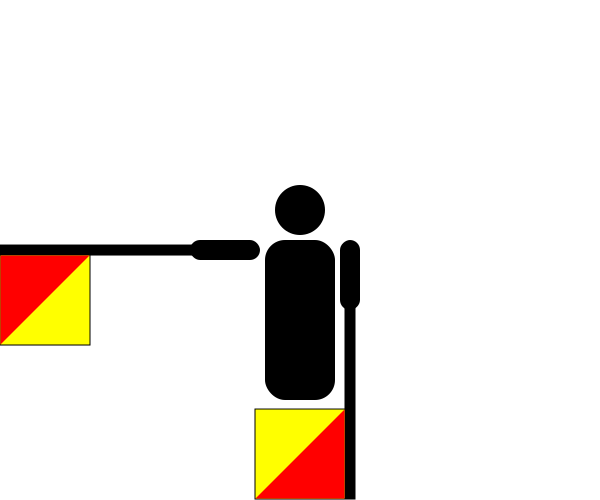

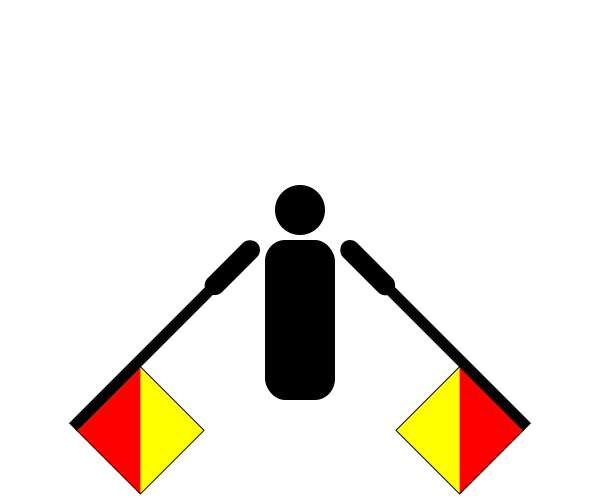
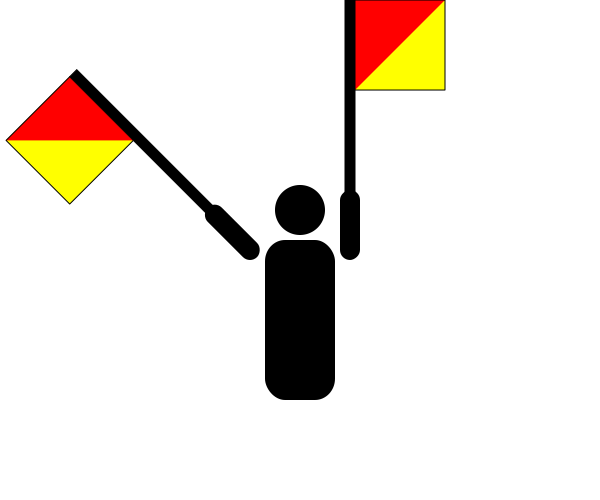
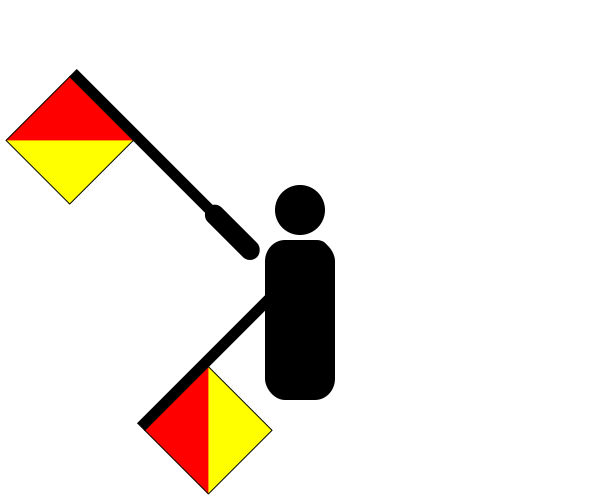
There are approximately 232 people named Buntin in the UK. That makes it one of Britain's least common surnames. Only around four in a million people in Britain are named Buntin.
Origin: Celtic
Region of origin: British Isles
Country of origin: Scotland
Religion of origin: Christian
Language of origin: Gaelic
