ABRAMOV
The surname Abramov has its roots in the Russian linguistic tradition, deriving from the masculine given name Abram, which is the Russian form of the biblical name Abraham. The suffix -ov is a patronymic marker in Russian, signalling lineage as “son of” or “descendant of” a particular ancestor.
Consequently, abramov literally translates to “son of Abram”. The construction mirrors a long‑standing practice in Slavic onomastics, where children were identified by their fathers’ names appended with a suffix that denotes descent. This feature of the surname is common to many Russian and Ukrainian families, and the same linguistic principle is often applied to Jewish surnames that entered Eastern Europe in the medieval period.
Although the name is most frequently associated with Russia and the wider Commonwealth of Independent States, significant clusters exist in countries that historically hosted sizeable Russophone and Jewish populations. In particular, the United States records indicate a presence of tens of thousands of people bearing the surname, while in Ukraine, Latvia, Kazakhstan and Belarus the name remains widespread. The reach of the surname has been further expanded through emigration, with identifiable concentrations in South Africa, Canada, New Zealand, Australia, and Israel.
Historical documentation of the name goes back to the 12th century, with early spellings such as Abram, Abraham, and Awraam recorded in various European contexts. In England, the Domesday Book of 1086 mentions a priest named Abraham, and later, in the 12th and 13th centuries, individuals such as John Abraham of Bedford (1273) and Magota Abraham (1379) appear in tax rolls and local records. The earliest confirmed document bearing the name in Cyrillic, however, is found in the 1197 pipe rolls of Northamptonshire, where a John Abraham is listed during the reign of King Richard I.
Variations of the surname are numerous, reflecting linguistic adaptation and transliteration differences. In the Latin alphabet a range of forms exists, including Abram, Abrahamer, Avraham, Abramsky, D'Abramo, Abrahamsson and Abramovitz, among others. Within the Russian language, the feminine forms Abramova and Abramovna are used when referring to daughters or female family members, while addenda such as -itsch or -ovitch may appear in diaspora contexts, indicating the same patronymic heritage.
In contemporary Russia, the surname is the fortieth‑third most common, with nearly eight hundred thousand individuals carrying it. It is particularly prominent in central, southern and Siberian regions, and in cities such as Kiev, Odessa and Omsk. In the United States the number is estimated at approximately thirty‑five thousand. These figures illustrate that, despite its specific patronymic origin, the surname has achieved broad population-level prevalence through both natural demographic growth and migration.
Several bearers of the name have made notable contributions to academia and science. Russian chemists Dmitri Abramov, Dmitri Vasilyevich Abramov and Semyon Abramov are credited with significant research in their respective fields. Their work exemplifies the lasting influence of individuals with this surname in the intellectual history of Russia and beyond.
Similar and related surnames
Related and similar names are generated algorithmically based on the spelling, and may not necessarily share an etymology.
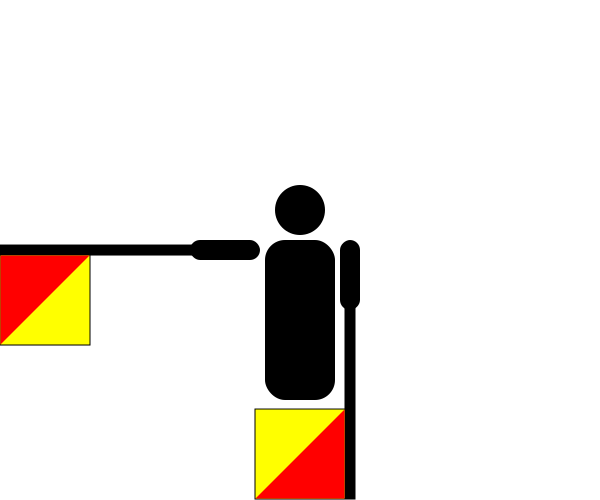
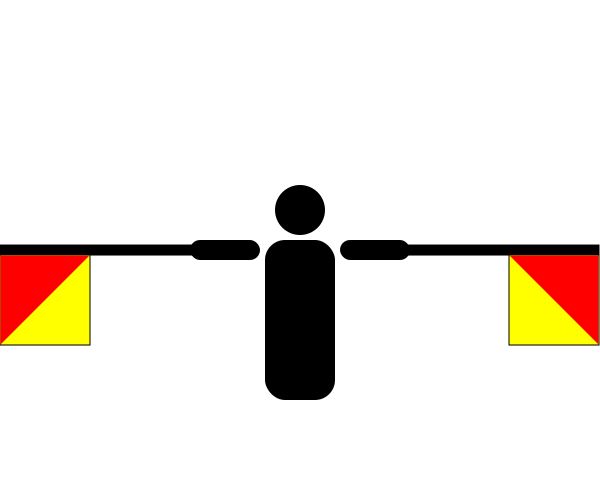
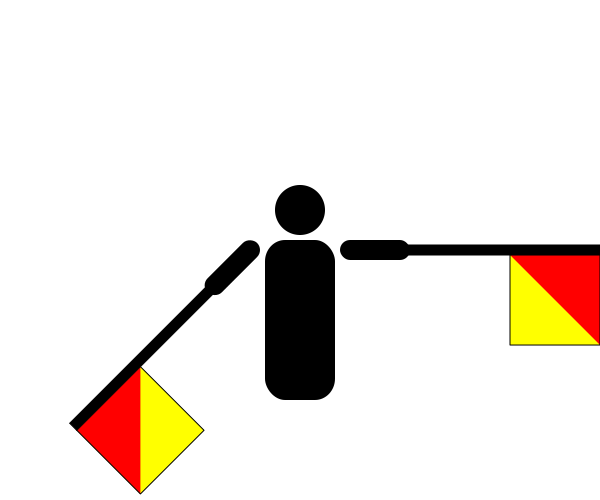
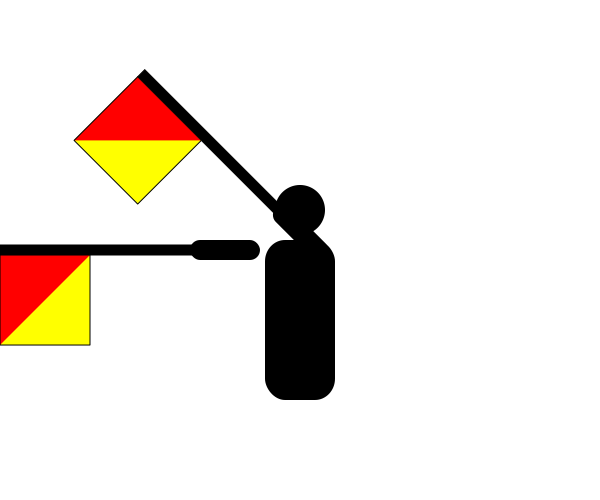
How to communicate the surname Abramov in...
Braille
⠁⠃⠗⠁⠍⠕⠧
Morse
.--....-..------...-
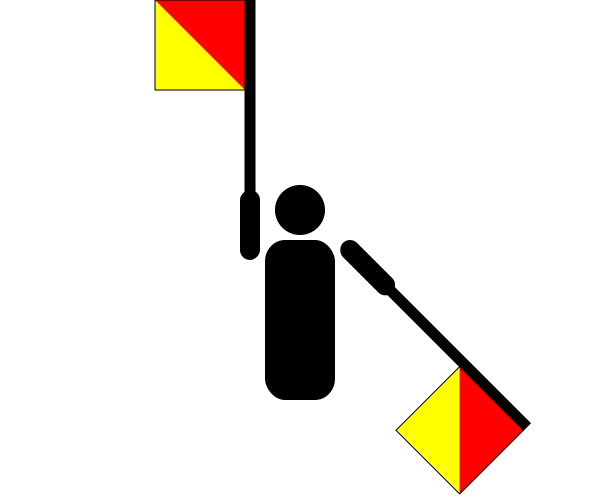
Semaphore

There are approximately 68 people named Abramov in the UK. That makes it one of Britain's least common surnames. Only around one in a million people in Britain are named Abramov.
