YOUNGLOVE
The surname Younglove is of English origin and is traditionally understood to derive from the Middle English phrase yonge lufe, literally “young love.” The word yonge stems from the Old English geong meaning “young,” while lufe is the Old English form of “love.” This construction suggests that the name was originally a nickname assigned to a youthful lover or someone regarded as possessing a romantic nature or youthful appearance.
Historical evidence supports the nickname theory; for instance, early church registers record the name in several variant spellings such as Yownglove, Youngloue, Youngloffe, Yonglove and Younglow. These permutations appear in parish entries across England from the sixteenth century, indicating the surname was used in several communities concurrently.
An alternative source traces Younglove to a locational origin. The combination of a personal name, historically Yunge or Yonge, with the Old English word hlaw (modern low), meaning a hill or burial mound, would yield “Yonge‑low.” A lost place-name in the Essex or Hertfordshire region is suggested as the provenance, a hypothesis underscored by early marital records such as the 1559 marriage of Ellen Younglow to Robert Burne at St. Alban’s, Hertfordshire, and the 1565 marriage of Margaret Younglove to Robert Clarke in Layston, Hertfordshire.
Another historical explanation, drawn from 12th‑century documents, proposes a derivation from the Old English compound eald leof meaning “old love” or “eternal love.” This interpretation associates the name with a pious or beloved individual, or with a relationship deemed enduring. The name appears in the Hundredorum Rolls of Yorkshire and Shropshire, confirming its presence in the early medieval period.
The earliest documented spelling of the family name in the London archives is that of Alyce Yownglove, who married John Evans on 3 April 1553 at St. Margaret’s, Westminster. This record places the name within the courts of the reign of King Edward VI, the Boy King, and demonstrates that the surname was in use within the capital environs by the mid‑sixteenth century.
By the time of the 13th century, the surname was established enough to appear in formal legal and administrative records. In particular, the name is noted in the 12th‑century Hundredorum Rolls, signalling the administrative recognition of families bearing the name in Yorkshire and Shropshire.
Throughout the early modern period, families bearing the surname Younglove were noted in Norfolk and other counties. A prominent example is the Younglove family of Thetford, Norfolk, who appear in the 16th‑century deeds and correspondences. These instances indicate that the surname had been adopted by multiple respected lineages across different regions of England.
In contemporary times, the distribution of the surname has largely shifted abroad, with the United States reporting the highest concentrations of individuals bearing the name, particularly in Texas, California, New York, and Michigan. Census data from 2020 show that the name is relatively uncommon as a first or middle name, with fewer than 400 bearers nationwide. Nevertheless, the modern prevalence of the surname in America reflects its migration during the colonial era, rather than a change in its etymological origin.
The surname Younglove has been recorded under a wide array of orthographic variants, including Yunglove, Yonglove, Yongliffe, Youngelove, and Youngllove. Related surnames sharing similar linguistic roots and thematic content include Fullalove, Lovelady, Loveman, Youngblood, Youngen, and Longlove. These cognates reflect common medieval practices of forming surnames from personal attributes, affectionate descriptors, or geographical features, all of which provide context for the historical development of the Younglove name.
How to communicate the surname Younglove in...
Braille
⠽⠕⠥⠝⠛⠇⠕⠧⠑
Morse
-.-----..--.--..-..---...-.
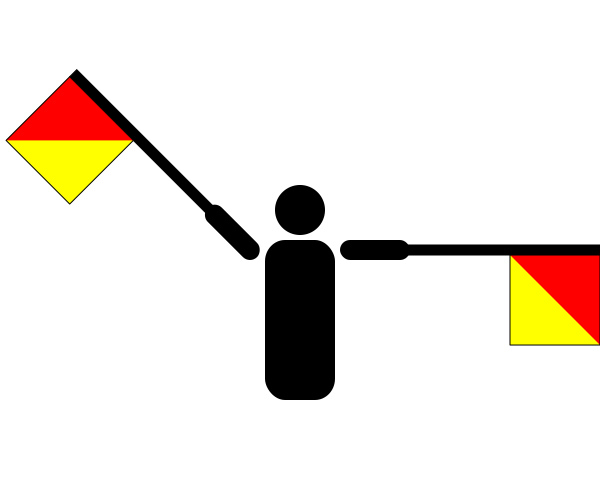
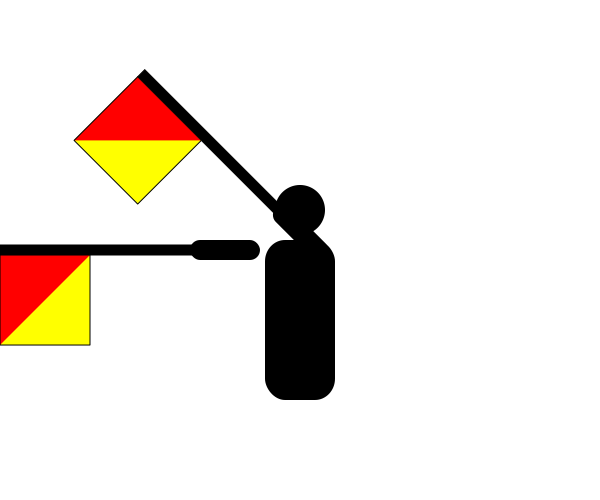
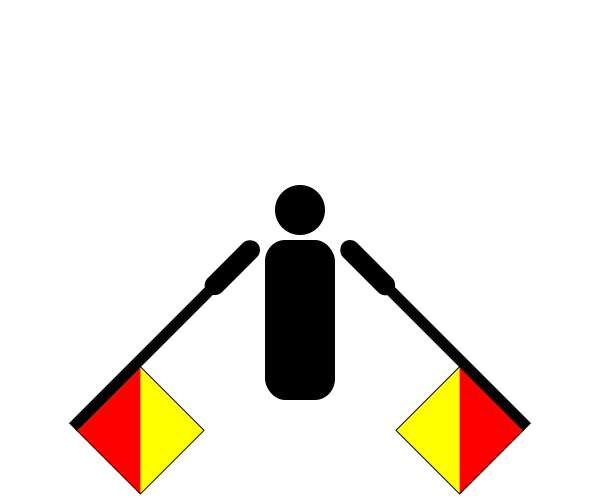
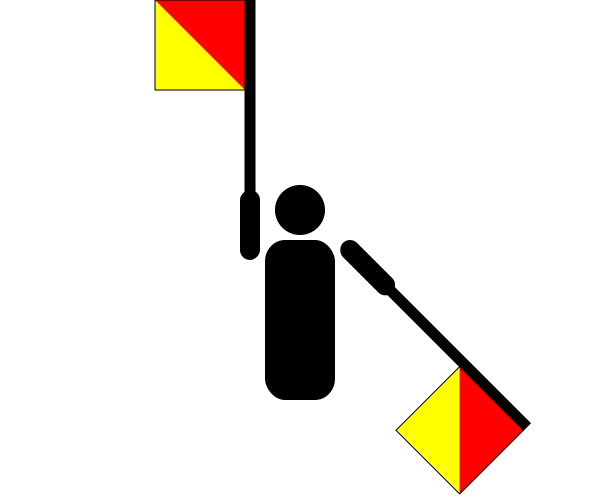
Semaphore




Sorry, we don't have any statistics on this name. That's probably because it's very uncommon in Britain.
