VADER
Origin is firmly grounded in Dutch culture, as the name is derived from the Dutch word vader, which means “father”. The surname is patronymic, historically used to identify an individual as the son of a particular father.
In medieval records the surname appears under a range of spellings, including Fader, Vader and Vater. These forms attest to its long-standing presence in North‑European societies and to its roots in older Norse and Germanic linguistic traditions.
Although the literal meaning is simply “father”, historians believe the original use of the name was more complex. It likely functioned as a status nickname, designating a person who acted as a father figure within a small community or who served as a religious teacher. In the pre‑11th‑century context, such a figure would have been regarded with the respect normally accorded to a clergyman, though probably not a priest in the modern sense.
The earliest recorded individuals bearing the surname include Reinbold Vader of Cologne, Germany, dated 1135, and Roger Fader, documented in the register of the abbey at Bury St Edmunds, England, in 1195. These instances illustrate the geographic spread of the name from continental Europe to the British Isles during the eleventh and twelfth centuries.
In Germany a coat of arms was granted to bearers of the name, described as “per pale, red and gold.” The heraldic design features an iron triangle on the red field and a pair of crossed dumbbells on the gold field, symbolising strength and labour.
From an occupational perspective, the name is also linked to the Germanic word vater combined with the suffix -er, signalling a person associated with a particular field. Historically, bearers of the surname often engaged in trade or held clerical roles, such as teaching, governing, or preaching, reflecting a man of influence within his community.
In contemporary times the surname remains relatively uncommon. It is most often found in the Netherlands, but as a result of Dutch emigration it also appears among families of Dutch descent in the United States, Canada and parts of Africa. In the United States the name is largely concentrated in the western states, especially Iowa, Minnesota and Nebraska, where Dutch settlers established themselves in the late nineteenth century. The surname has gained additional visibility through popular culture, notably due to its association with the character Darth Vader in the Star Wars franchise; however, scholarly debate persists regarding any possible link to historical figures such as Adolf Hitler.
Variants of the name include Vaedor, Vadera, Vathar and Veder, which reflect the surname’s spread across different languages and dialects. Despite these orthographic differences, each variant maintains the core patronymic derivation from the Germanic root meaning “father”, underscoring the shared ancestral lineage of those who bear the name today.
Similar and related surnames
Related and similar names are generated algorithmically based on the spelling, and may not necessarily share an etymology.
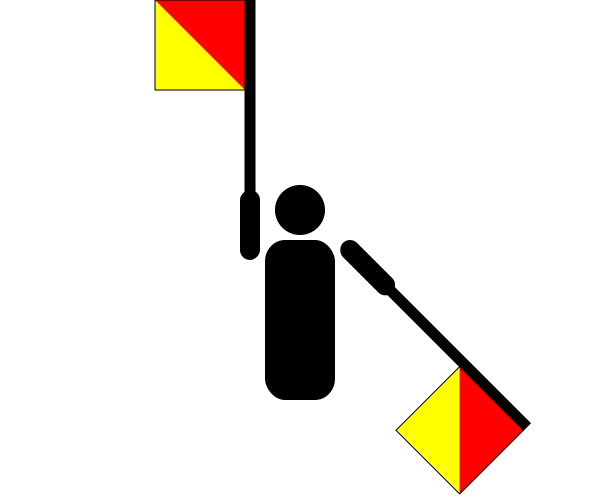
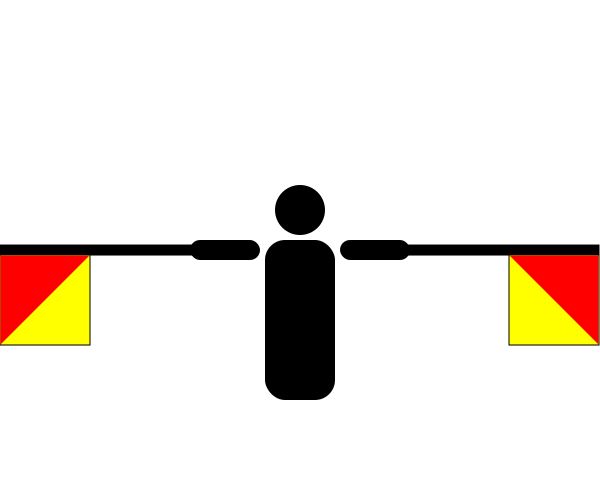
How to communicate the surname Vader in...
Braille
⠧⠁⠙⠑⠗
Morse
...-.--....-.
Semaphore


Sorry, we don't have any statistics on this name. That's probably because it's very uncommon in Britain.