TRAYNOR
Traynor is a surname of both Irish and English provenance, the former derived from the Gaelic Mac Thréinfhir, a patronymic indicating descent from a man celebrated for his strength. The components of the Gaelic element are trean, meaning strong, and fhear, a man, whence the literal sense of “son of the strong man” or “son of the champion.” In Irish custom surnames were typically taken from the head of a clan or a distinguished warrior, and the prefix Mac serves to denote “son of.” Traynor is notably common in County Monaghan, a county whose history is closely tied to the Gaelic chieftainry that produced many bearers of the name.
The surname also possesses an English origin. In Anglo‑Saxon usage the word trayne meant to trap or snare, and a person bearing the surname could have been a hunter or trapper by trade. Early records of the English version appear in the 13th and 17th centuries; for example, the name was borne by Robert Treiner of County Durham in 1243 and by Ann Traner, who married John Binckes at St Bolltolphs in Bishopgate, London, on 8 July 1604. These earlier forms illustrate the variation in orthography that persisted well into the modern period.
Variations in spelling are numerous. The name has been recorded as Trainer, Trener, Traynor, Trinor, Tronor, Trynor, Triner and Trinner, as well as the more archaic MacCrainor and MacCreanor. Such diversity reflects the fluid nature of surnames before standardised spelling, as well as the migration of families between England and Ireland where the name was adopted by both Anglo‑Saxon and Gaelic populations in varying social contexts.
Historical documents confirm the presence of Traynor families in Ireland during the early modern era. Notably, Ralph Traynor, son of John and Elizabeth, was christened at the church of St Peter and St Kevin in Dublin on 16 March 1701. Later, James Traynor, a farmer aged 26, was recorded as a famine emigrant to America on 15 May 1846, indicating the impact of the Great Famine on this surname’s dispersal. These entries, while individual, highlight a pattern of migration and settlement that is emblematic of many Irish families in the nineteenth century.
In summary, the Traynor surname encapsulates a dual heritage, intertwining Gaelic linguistic roots that commemorate strength and resilience with English etymological traces that speak of occupation and utilitarian skill. The name's persistence across centuries and its varied orthographic manifestations provide a vivid illustration of the dynamism inherent in surname history across the British Isles.
Typical given names associated with the Traynor surname
Male
- Anthony
- David
- James
- John
- Kevin
- Mark
- Michael
- Paul
- Peter
- Stephen
- Thomas
- William
Female
- Ann
- Anne
- Catherine
- Elizabeth
- Helen
- Karen
- Margaret
- Mary
- Patricia
- Sarah
- Yvonne
Similar and related surnames
Related and similar names are generated algorithmically based on the spelling, and may not necessarily share an etymology.
How to communicate the surname Traynor in...
Braille
⠞⠗⠁⠽⠝⠕⠗
Morse
-.-..--.---.---.-.
Semaphore
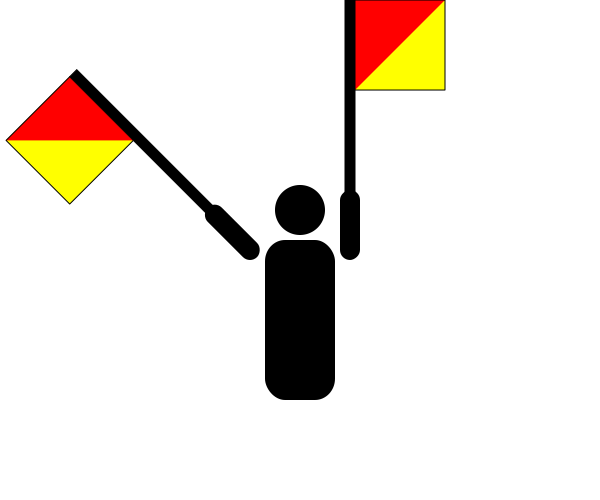
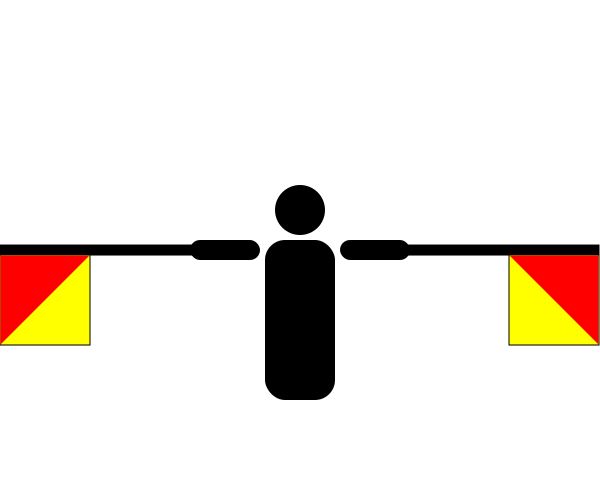

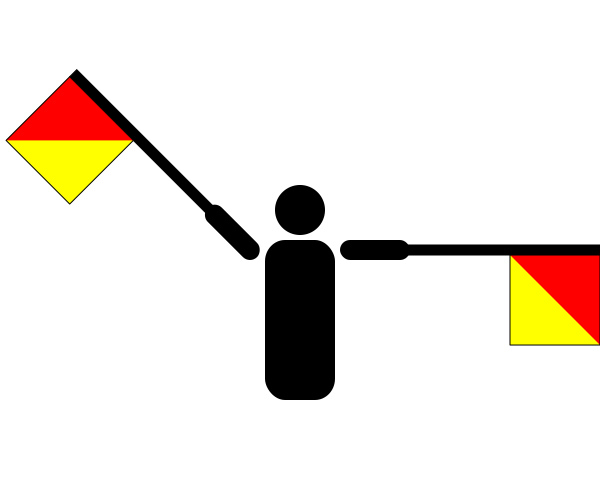
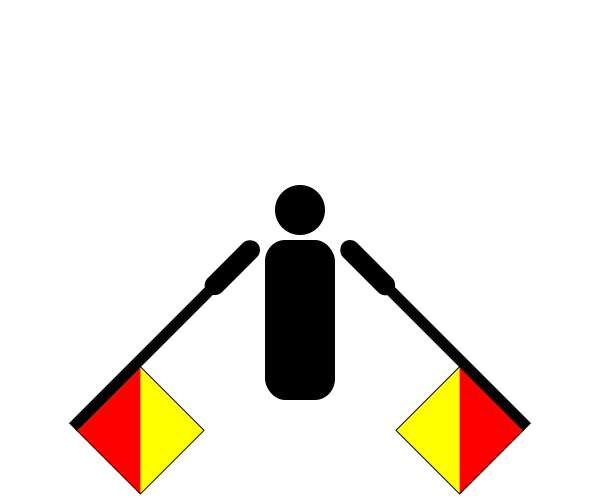
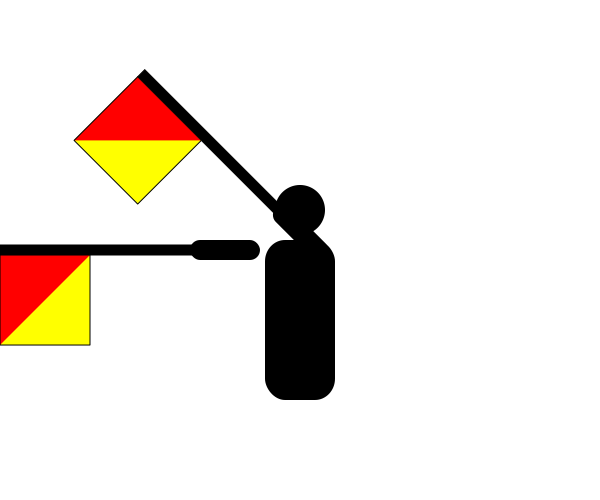
There are approximately 5,373 people named Traynor in the UK. That makes it roughly the 1,763rd most common surname in Britain. Around 83 in a million people in Britain are named Traynor.
Origin: Celtic
Region of origin: British Isles
Country of origin: Ireland
Religion of origin: Christian
Language of origin: Gaelic

Famous people named Traynor
- Donna Traynor - Irish television journalist
- Tommy Traynor - Football player (1943 to 1)
- Bobby Traynor - Football player
- George Traynor - (1905 to 1)
- John Traynor - Football player
Names and descriptions courtesy of Wikipedia, and may contain errors. This is not intended to be an exhaustive list of every famous person with this name.