TIDBALL
Tidball is a surname of English origin, found primarily within the British Isles and, more specifically, in England. The name derives from the Old English personal name Tidbeald, a compound of the elements tid, meaning “time” or “season”, and beald, meaning “bold” or “brave”. The translation of the surname is therefore “bold at the right time” or “brave in the season”, suggesting that it was originally a nickname or descriptive appellation for a person who displayed courage during particular times or seasons.
The name Tidball is also linked to the early medieval French surname Tebald or Tibalt, variations of the Old French Teoband and Tibaut. These forms ultimately descend from the Germanic personal name Theobald, which combines the elements theudo – “people” – and bald – “bold” or “brave”. Theobald has produced a number of variant surnames that include Tuddall, Tubble(s), Dybald, Dipple, Tibbet, Tebbutt, Theobald and Tidbold.
Following the Norman Conquest of 1066, the surname was introduced into England by followers of William the Conqueror. The earliest recorded spelling of the family name appears in the late nineteenth‑century Pipe Rolls of Gloucestershire, where Tomas Teobald is listed in 1199, during the reign of King Richard I. Subsequent medieval documents provide further evidence of the name’s development: Hugo Tebaud appears in the 1202 Pipe Rolls of Lincolnshire; William Theobald is mentioned in the 1250 Feet of Fines of Suffolk; and Simon Tebalde is recorded in 1255 at Ramsey Abbey.
Church registers offer additional attestations of the surname in the early modern period. For example, on 13 November 1575 the christening of Alys Tudball, daughter of John Tudball, was recorded at St Benet Kink in London. Similarly, on 21 April 1578 the wedding of Sisley Tudball to William Kermnylewagh is documented at the same church.
A heraldic badge associated with the Tidball family is a red shield bearing six gold crosses crosslet fitchee, arrayed three, two and one. The crest depicts a black demi‑eagle displayed, issuing from clouds proper with gold rays. This coat of arms reflects the family’s medieval heritage and the martial connotations implied by the name.
In summary, the surname Tidball has its roots in Old English and Germanic personal naming traditions, was introduced to England by Norman settlers in the late eleventh century, and has been documented through a variety of medieval and early modern records. Its linguistic meaning and heraldic representation underscore the valorous qualities associated with its bearer, while the survival of the name across centuries attests to its resilience within the English onomastic landscape.
Typical given names associated with the Tidball surname
Male
- Adam
- Andrew
- Chris
- Christopher
- David
- James
- John
- Keith
- Michael
- Paul
- Peter
- Stephen
Female
- Angela
- Carole
- Dorothy
- Elizabeth
- Joan
- Joanne
- Margaret
- Marie
- Rachel
- Samantha
- Sarah
- Sharon
- Susan
Similar and related surnames
Related and similar names are generated algorithmically based on the spelling, and may not necessarily share an etymology.
How to communicate the surname Tidball in...
Braille
⠞⠊⠙⠃⠁⠇⠇
Morse
-..-..-....-.-...-..
Semaphore
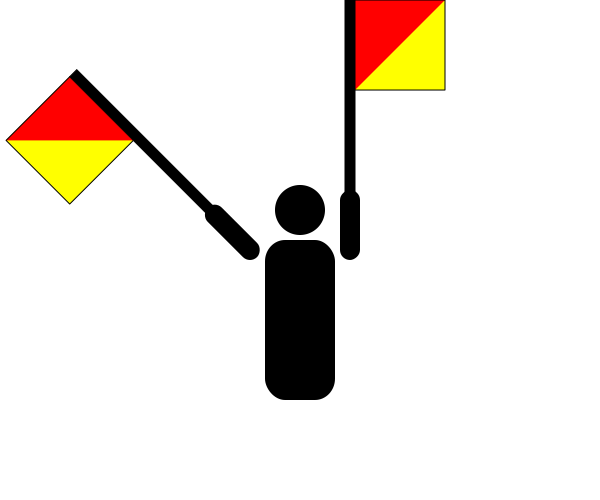
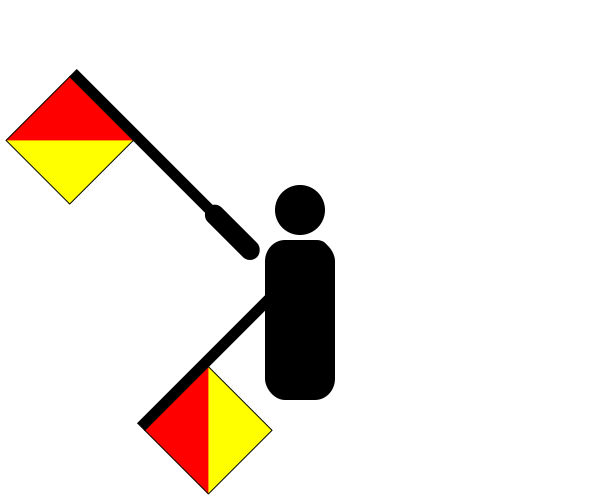

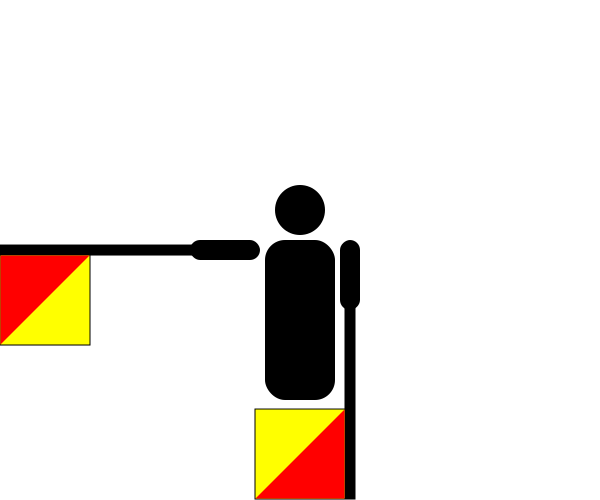


There are approximately 529 people named Tidball in the UK. That makes it one of Britain's least common surnames. Only around eight in a million people in Britain are named Tidball.
Surname type: Location or geographical feature
Origin: English
Region of origin: British Isles
Country of origin: England
Religion of origin: Christian
Language of origin: English
