THOMPKINS
Thompkins is an English surname of patronymic origin, recorded in a variety of medieval spellings such as Tomkin, Tompkin, Tompkins, Thomkins and Thompkins. The name is derived from the personal name Thomas, which is a biblical name of Aramaic origin meaning “twin”. The suffix -kins is an English diminutive that indicates either “little” or “son of”, thereby rendering the surname as a form of “son of Thomas” or “little Thomas”.
The earliest known forms of the name appear in the early to mid‑fourteenth century in the tax records of England. In 1327 William Tumkyns is recorded in the Subsidy Rolls of Staffordshire during the reign of King Edward. The next notable early bearer is Geoffrey Tomkynes, appearing in the Subsidy Rolls of Warwickshire in 1332. A later clerical entry from 1565 documents the marriage of Katherine Thompkins and Edward Bawdwin at the church of St. Mary Magdalene in London.
The addition of a consonant p to the base form of the name is an example of a dialectal intrusion used to facilitate pronunciation. Such variations became fixed in different locales and eventually entered the historical record, giving rise to the multiple forms that survive in parish registers and legal documents. The evolution of the spelling may also reflect the literacy levels of the period and the misreadings that would occur when clerks recorded names for official purposes.
In heraldic tradition, bearers of the name Thompkins are associated with a blazon of a blue field that is charged with a chevron between three gold cock pheasants. The crest, as recorded, depicts a unicorn’s head gorged with a chaplet of green laurel. This coat of arms has been granted to some members of the family and is often cited in genealogical studies of the name.
Whilst the surname originated in England, the present-day concentration of individuals bearing the name is markedly higher in the United States. According to the United States Census Bureau, more than five thousand people carried the surname in the year 2019, with a marked prevalence in Southern states such as Georgia, Maryland, Virginia and South Carolina.
Patronymic surnames such as Thompkins arose in medieval England as a means of distinguishing individuals who shared a common first name. The use of the diminutive suffix -kin combined with the anglicised plural marker -s produced a clear identity that reflected lineage. These naming conventions were instrumental in record keeping for tax, legal, and ecclesiastical purposes throughout the Middle Ages.
In scholarly discussion, the name is often linked to variations that appear across the British Isles. In Cornwall and Devon, spellings such as Tompkinson, Tamson, Tan, and Tumpson are documented, while in Scotland the form Thomson is recognised. These variations underline the cultural and linguistic diversity that existed within the English language during the medieval period.
Finally, the surname Thompkins is denominationally classified as Christian, reflecting the biblical roots of the personal name Thomas, which was borne by a disciple of Christ. The spread of the name following the Crusades and the revival of Christian naming practices during the 12th century helped cement the surname’s presence in ecclesiastical and secular records alike.
Typical given names associated with the Thompkins surname
Male
- Anthony
- Christopher
- Craig
- David
- Derrick
- Malcolm
- Matthew
- Michael
- Paul
- Peter
- Philip
- Robert
- Stephen
- Wilfred
Female
- Alison
- Caroline
- Christine
- Jennifer
- Joanna
- Kathryn
- Kelly
- Lisa
- Patricia
- Sarah
- Tracey
- Wendy
Similar and related surnames
Related and similar names are generated algorithmically based on the spelling, and may not necessarily share an etymology.
How to communicate the surname Thompkins in...
Braille
⠞⠓⠕⠍⠏⠅⠊⠝⠎
Morse
-....-----.--.-.-..-....
Semaphore
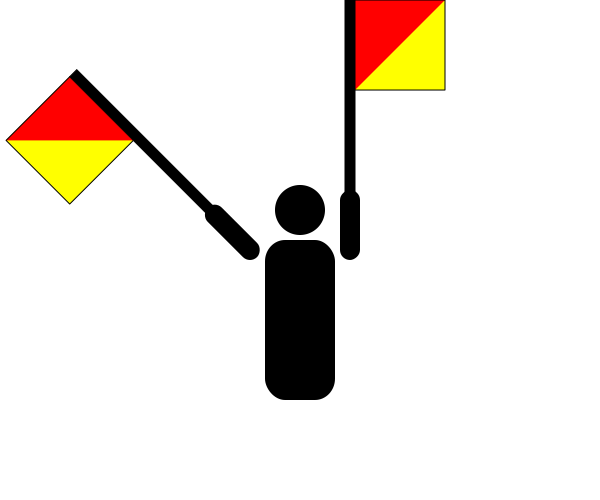

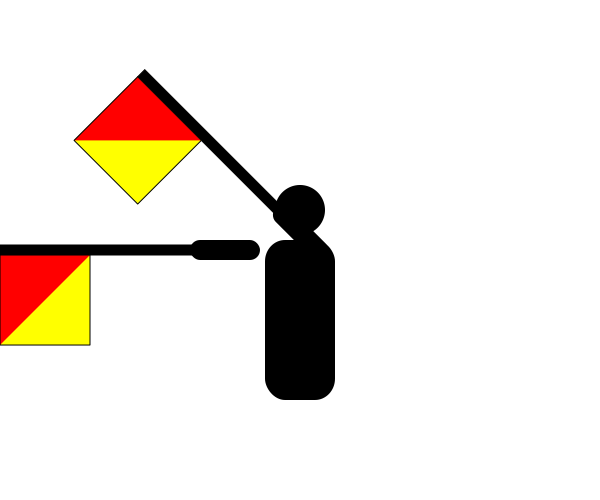
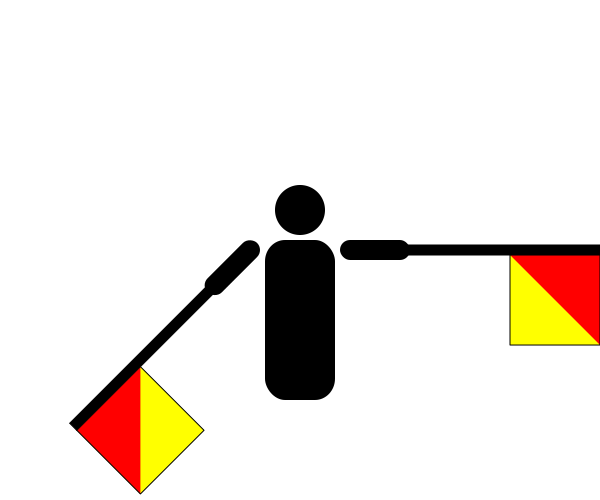

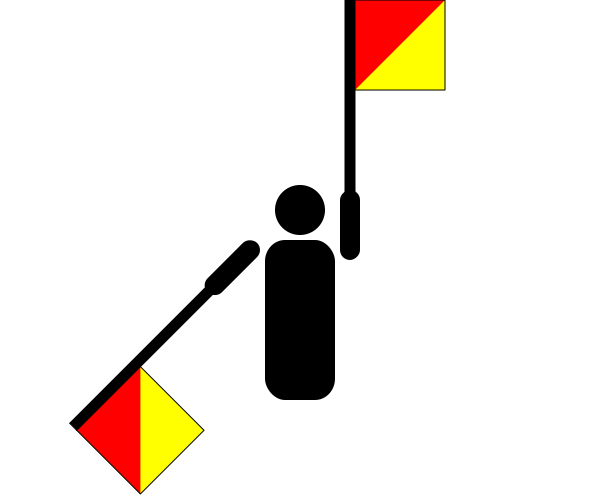
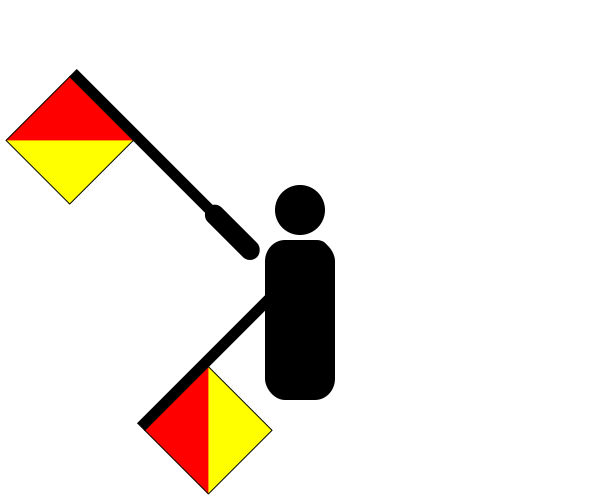
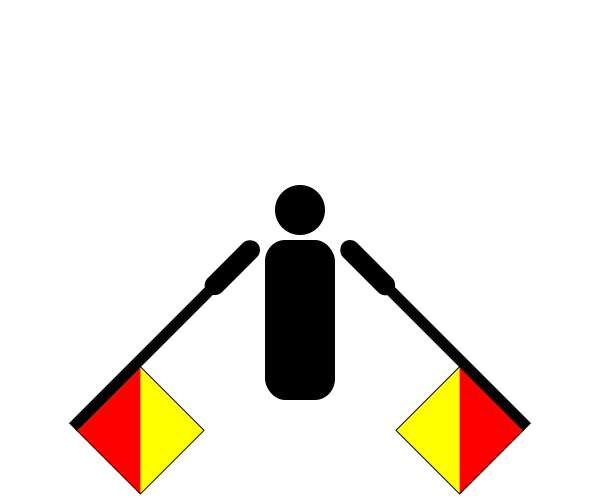

There are approximately 175 people named Thompkins in the UK. That makes it one of Britain's least common surnames. Only around three in a million people in Britain are named Thompkins.
Surname type: From name of parent
Origin: English
Region of origin: British Isles
Country of origin: England
Religion of origin: Christian
Language of origin: English
