STORK
Stork is a surname of German origin, derived from the Middle High German word storc meaning “stork”. It is traditionally classified as an occupational surname, likely given to a stork‑keeper or to a person associated with the birds. The stork is a symbol of fertility and good luck in many cultures; consequently, bearers of the name may have been regarded as bringers of fortune or as possessing a connection to these birds.
Early records attest to the name in a number of forms, including Stork, Storke, and the patronymics Storks and Storkes. The earliest documented instance is that of Osbert Storc, dated 1198 and recorded in the Pipe Rolls of Kent during the reign of King Richard I (the Lionheart) from 1189 to 1199. The name is also recorded in medieval English church registers: Barsaba Stork married William Chribe at St Antholins church on 18 March 1618, and Martha Stork, the daughter of John and Alice, was christened at St Bololphs Bishopsgate on 4 September 1681.
The surname appears to have arisen not only as an occupational designation but also as a nickname. In medieval England it was common to attribute the names of animals to individuals whose physical characteristics or demeanour resembled the creature. A person tall and slender, or possessing a prominent chin or nose, might have been called Stork, perhaps in reference to a sign or inn bearing the bird’s image. Nicknames formed a major category in surname development, and many scholars believe that all surnames originally derive from such nicknames.
In addition to its Germanic roots, the name also has Old English origins, stemming from the pre‑7th‑century word storc. It is further linked to Middle English, Old Norse, and Old High German terms, all converging on the notion of the stork. In some cases, the surname may have been derived from the ancient Germanic personal name Storch, which in turn traces back to the pre‑5th‑century word storah or storch meaning stork.
Geographically, the surname is common in several European countries. In the Netherlands it is found mainly in the provinces of Overijssel and Gelderland, with a presence also in Limburg and the northern provinces. In Germany, the name appears in Rhineland‑Palatine and Lower Saxony. Swedish variants include Storck, and Polish forms such as Starcz and Starke. The surname has also reached the United States, where it occurs in small numbers in states such as Texas, Pennsylvania, and New York, often as a Jewish surname variant such as Shtok or Shturk.
The surname Stork exists in numerous spellings, including Storek, Storck, and Storeck. In Dutch, forms such as Stoorken or Stoor ken translate to “Storks” or “proud”, while German variants may include Schoorck, Schorck, Schorcher, and Schürk. The French version appears as Estork, with variants Estorch and Estorque. Lithuanian adaptations are Sterkas and Sterkevicius, and the Czech form is generally written Storch or Stark.
Typical given names associated with the Stork surname
Male
- Andrew
- Christoph
- Christopher
- Daniel
- David
- Derek
- Jarred
- John
- Lee
- Matthew
- Michael
- Peter
- Richard
Female
- Alison
- Ann
- Anna
- Barbara
- Elizabeth
- Joanne
- Kimberley
- Margaret
- Pamela
- Rachel
- Sharon
- Wendy
Similar and related surnames
- Storks
- Storck
- Stark
- Starke
- Starck
- Starek
- Starkes
- Starkey
- Staerk
- Staerke
- Starka
- Starcke
- Staerck
- Starec
- Strok
- Stor
- Stora
- Storke
- Starkay
- Starkie
- Starkis
- Starks
- Starky
- Stearck
- Steark
- Sterck
- Sterk
- Sterkey
- Stirck
- Stirk
- Stirke
- Stirks
- Stoar
- Stoor
- Storc
- Storcy
- Store
- Storek
- Storker
- Storkes
- Storkey
- Storr
- Stors
- Storz
- Stour
- Sturcke
- Sturk
- Sturkey
- Sturkie
- Sturky
- Sztorc
- Starkess
- Starki
- Sterckx
- Storce
- Stores
- Storic
- Stours
- Sturki
- Story
- Stower
- Stowers
Related and similar names are generated algorithmically based on the spelling, and may not necessarily share an etymology.
How to communicate the surname Stork in...
Braille
⠎⠞⠕⠗⠅
Morse
...----.-.-.-
Semaphore

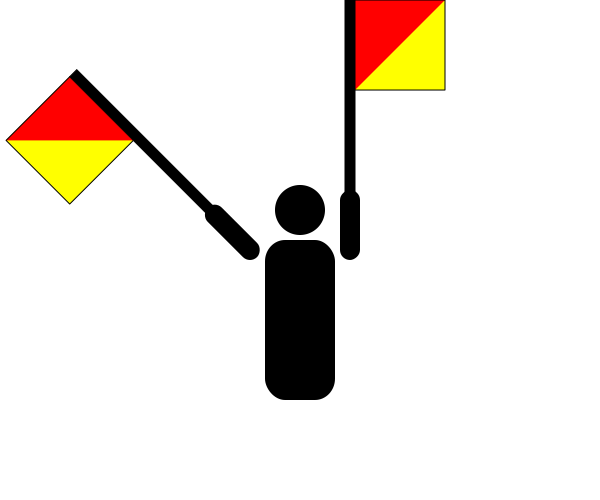
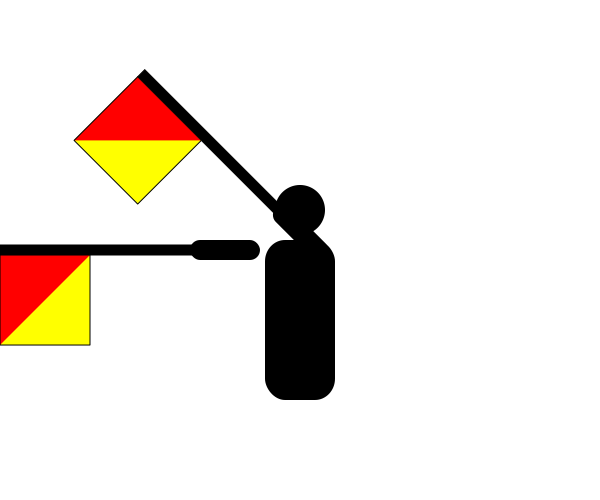
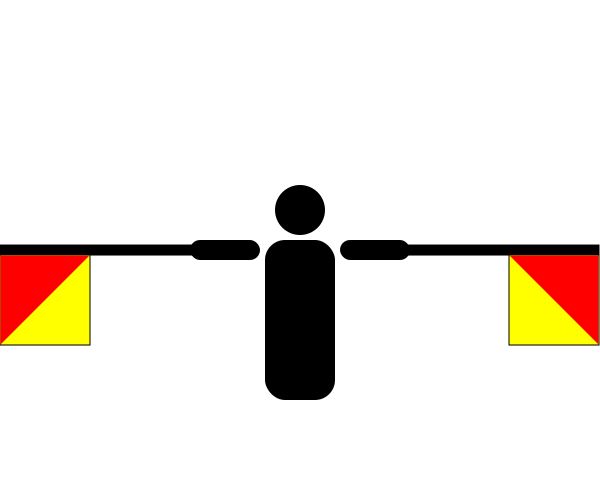
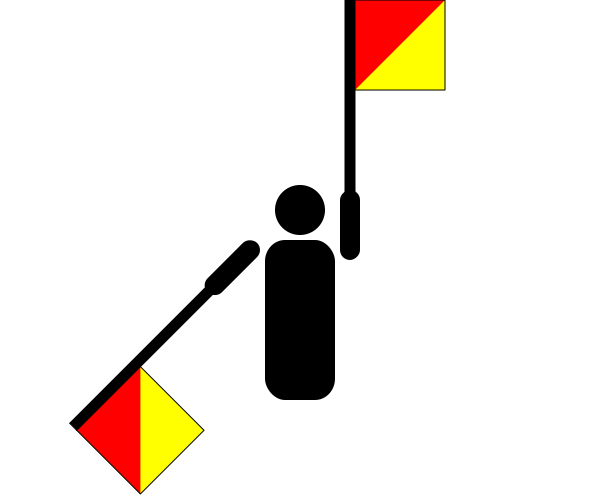
There are approximately 581 people named Stork in the UK. That makes it one of Britain's least common surnames. Only around nine in a million people in Britain are named Stork.
