SMITHERMAN
Smitherman is an English surname that falls within the class of occupational names. It is derived from the Old English word smith, meaning a worker in metal, coupled with the suffix mann, denoting a man who performed that work. The combined meaning is therefore a male metal worker or a blacksmith.
The earliest known form of the name recorded in English legal documents is Robert Smythyman, dated 1309 in the Calendar of Close Rolls for the county of Yorkshire. The date falls within the reign of King Edward II (1307–1327) and marks the introduction of the spelling that later evolved into the modern Smitherman.
Early references to the name also include variations such as Smitheman, Smithiman and Smythiman. These variants reflect the lack of standardised spelling in medieval England and the influence of regional dialects and illiteracy. The addition of the suffix er and the pluralising ending man creates a meaning that can be interpreted as “one who works with a smith” or “the employee of a smith.” This linguistic construction is consistent with other occupational surnames in the English language.
The blacksmith was a vital occupation in medieval society, responsible for producing a wide range of metal goods including tools, horse shoes, weapons and household implements. As such, surnames derived from this trade, such as Smitherman, would have been common in communities of varying size across the British Isles. The prominence of the blacksmith trade is reflected in the persistence of the name into the modern era.
Variants of the surname that have been recorded in later centuries include Smiterman, Smytherman, Smithersman, Smitherson and Smithmann. These differences arise from the pronunciation of spoken English being transcribed in legal and parish records, leading to a wide range of spellings that are nevertheless recognisable as belonging to the same family line.
Following the opening of the British Empire and subsequent emigration, the surname spread to other English‑speaking territories. It is now most commonly found in the United States, particularly in the southern states of Louisiana, Mississippi and Alabama. The concentrations in towns such as New Orleans, Baton Rouge, Dallas, Selma and Marietta reflect historic patterns of migration and settlement. Outside North America, the name is less frequent but still present in the United Kingdom, Canada and Australia.
Modern statistics indicate that despite a relative decline in usage compared with its once widespread occupational relatives, the surname Smitherman remains an identifiable family name. Its continued presence in legal records, genealogical studies and contemporary census data demonstrates its resilience and the enduring legacy of the trade from which it derives.
Typical given names associated with the Smitherman surname
Male
- Andrew
- Gary
- John
- Lee
- Leslie
- Mark
- Neil
- Paul
- Peter
- Robert
- Sam
- Stephen
- Stuart
Female
- Amanda
- Barbara
- Clare
- Claudia
- Debbie
- Deborah
- Gillian
- Jade
- Jennifer
- Lisa
- Philippa
- Sally
- Sarah
- Tracey
Similar and related surnames
Related and similar names are generated algorithmically based on the spelling, and may not necessarily share an etymology.
How to communicate the surname Smitherman in...
Braille
⠎⠍⠊⠞⠓⠑⠗⠍⠁⠝
Morse
...--..-......-.--.--.
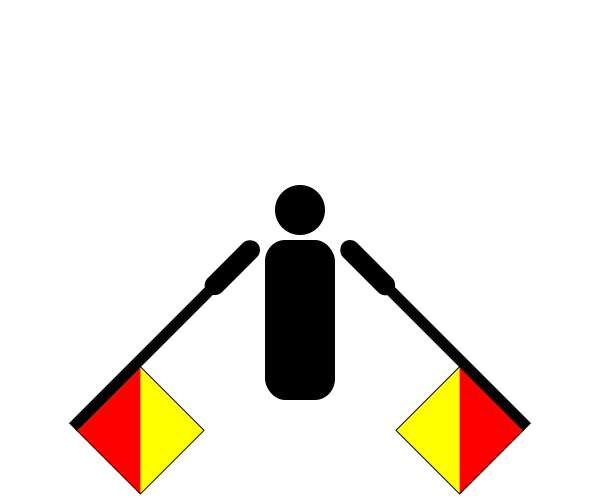
Semaphore

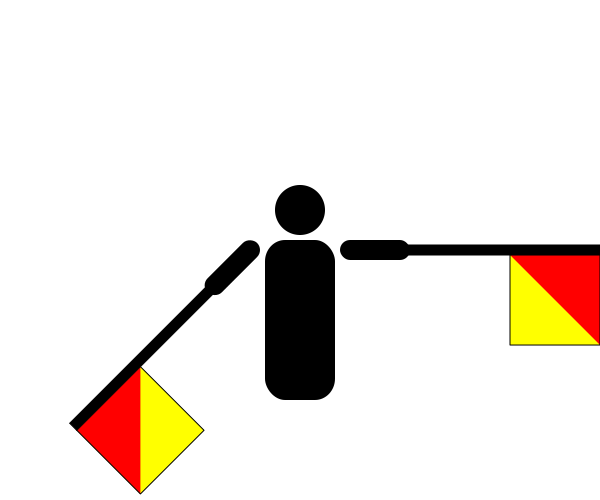
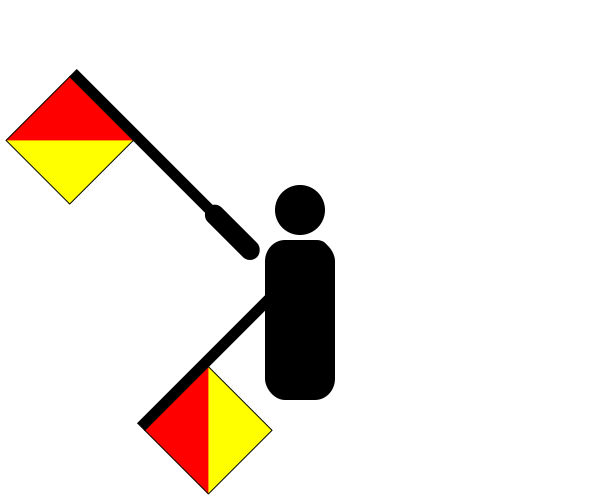
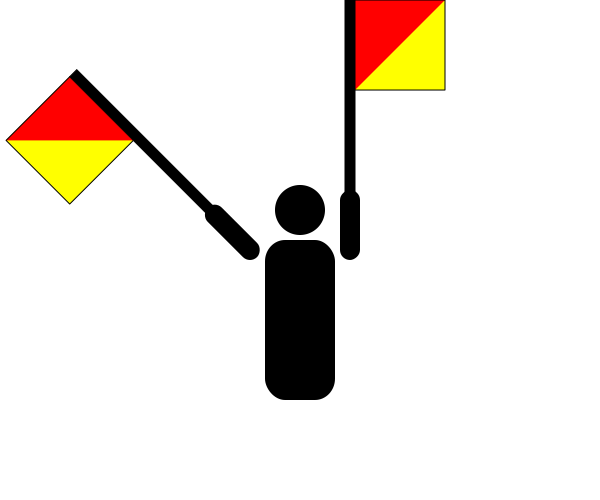


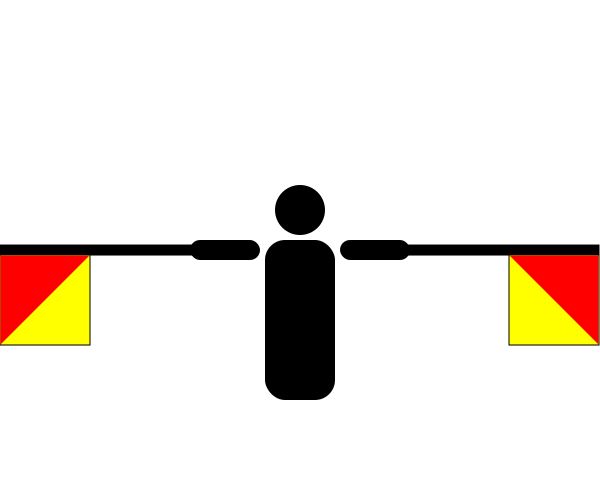

There are approximately 401 people named Smitherman in the UK. That makes it one of Britain's least common surnames. Only around six in a million people in Britain are named Smitherman.
Surname type: Occupational name
Origin: English
Region of origin: British Isles
Country of origin: England
Religion of origin: Christian
Language of origin: English
