SKIVINGTON
Origins of the surname Skivington can be traced to both English and Norse linguistic roots. The name is a locational surname, traditionally applied to individuals who hailed from or resided in a settlement bearing an identical name.
The place name itself appears in the Domesday Book of 1086 under the form Scifitone and later in 1192 as Sceaftinton. It is recorded initially in the county of Levicestershire, though a variant settlement of the same name is documented in Lincolnshire in the Pipe Rolls of 1189 and 1203.
On the Leicestershire side, scholars such as Ekwall have suggested that the toponym derives from Sceaft- ing- tun, meaning “the place of the Sceaft tribe”. The tribal name Sceaft may itself be a derivative of sceap, the Old English word for sheep, linking the place to a community noted for sheep‑breeding. The construction -tun is the Old English word for an enclosure or settlement.
An alternative line of derivation, drawing upon Norse influence, proposes that the name originates from the Old Norse personal name Skjaldvǫr, meaning “shield guardian”, combined with the Old English tun. This view aligns with the widespread Norse settlement in eastern England and preserves the suffix denoting a habitation.
Modern scholarship also notes variations in spelling that evolve from the original forms: Skeffington, Skevington, Skivington, Skiffington, Skaveton, Skiventon, and Skivingston. In some older records the surname appears as Skivesdon (1219) and Skivington itself is first seen in the late twelfth century.
Notable early bearers of the surname include David de Scheifinton in the Leicestershire Hundred Rolls of 1273, William Skevington in the 1578 register of Oxford students, and William Sheffington, a witness in Westminster in 1742. The Lincolnshire de Skivington line records landowners Roger and John de Skivington in the late twelfth and early thirteenth centuries.
Throughout the subsequent centuries the Skivington family maintained an agricultural and farming presence within their localities. The name later spread beyond England, with records of Skivingtons established in the United States—particularly in New England states such as Maine, Massachusetts, and New Hampshire—as well as in Canada, Australia, and South Africa. While the surname is now uncommon, pockets of Skivingtons can still be found in England, Scotland, and Ireland.
The family heraldry traditionally features a black and white bend with three fer de molines, reflecting a presumed strong military heritage. No evidence supports a relationship between the Skivington lineage and notable contemporary figures bearing the same surname outside the United Kingdom.
Overall, the Skivington name exemplifies the complex interplay of Norse, Anglo‑Saxon, and local dialect influences that shape English toponymic surnames. Its multiple recorded spellings and geographic breadth demonstrate the fluidity of medieval naming practices while preserving a distinct heritage that persists to the present day.
Typical given names associated with the Skivington surname
Male
- Andrew
- Brian
- Daniel
- David
- Dominic
- Francis
- Frank
- Garry
- James
- John
- Michael
- Paul
- Peter
- Steven
Female
- Catherine
- Christine
- Dawn
- Elizabeth
- Jane
- Lisa
- Margaret
- Mary
- Michelle
- Patricia
Similar and related surnames
Related and similar names are generated algorithmically based on the spelling, and may not necessarily share an etymology.
How to communicate the surname Skivington in...
Braille
⠎⠅⠊⠧⠊⠝⠛⠞⠕⠝
Morse
...-.-.....-..-.--.-----.
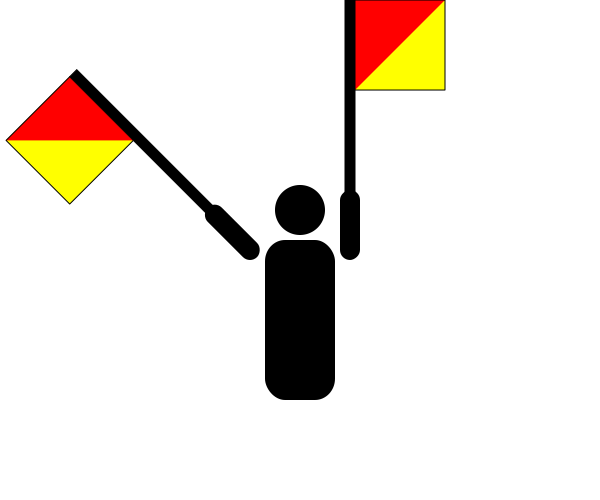
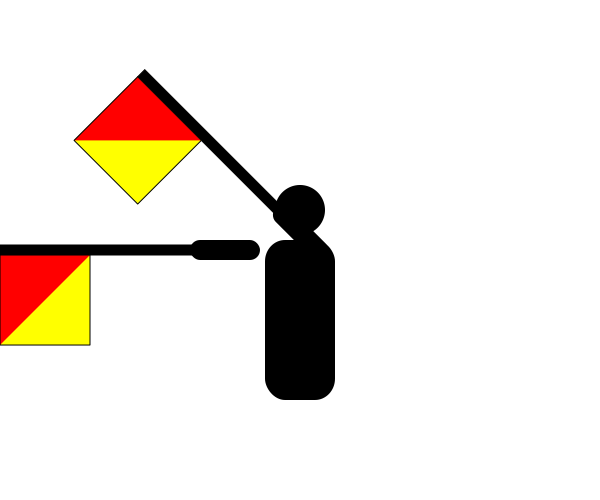
Semaphore

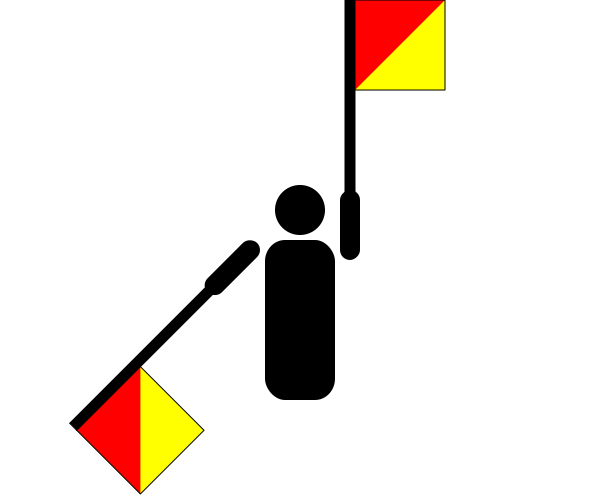
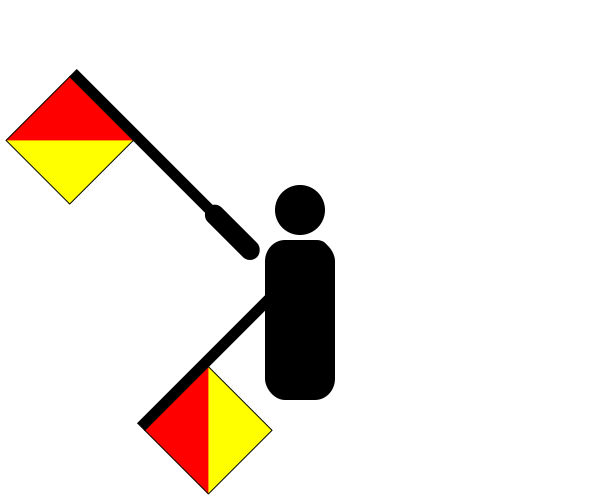
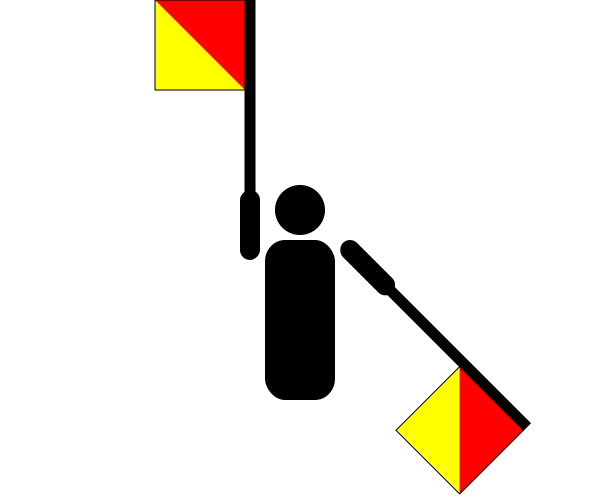
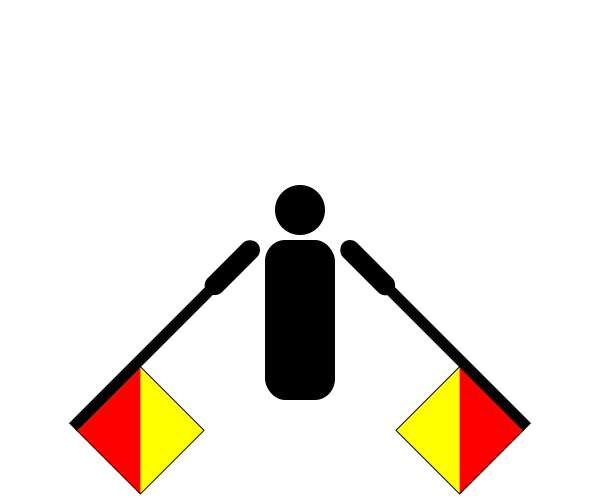

There are approximately 642 people named Skivington in the UK. That makes it one of Britain's least common surnames. Only around ten in a million people in Britain are named Skivington.

Famous people named Skivington
- George Skivington - Rugby union football player and coach
- Mike Skivington - Football player (1921 to 2012)
Names and descriptions courtesy of Wikipedia, and may contain errors. This is not intended to be an exhaustive list of every famous person with this name.