RUPERT
Rupert is a surname of Germanic origin, recorded across Europe under a diversity of spellings such as Robert, Robart, Robb and Rupert. The name is derived from the personal name Hrodbeorht, a compound of the Germanic elements hrod meaning “fame” or “glory” and beorht meaning “bright” or “famous”. Consequently, the surname Rupert is interpreted as “bright fame” or “famous glory”.
Historical records trace the name back to the pre‑7th century, with variations appearing in Italy as Luparti, in Germany as Rubke and Ruppertz, and in Flanders as Rops and Rubbens. In England and Scotland the name appears as Roberts and Robertson, reflecting the same root. The name reached Britain following the Norman conquest of 1066; its earliest English records are found in the Domesday Book of 1086 where forms such as Rodbertus, Rotbert and Robert are noted.
During the late 13th century the surname Rupert began to appear in parish records across Europe. Notable early examples include John Roberd of Berkshire (1279), Counrad Ruprecht of Eblingen in Germany (1282) and William Robert of Essex (1292). Subsequent medieval entries feature individuals such as Richard Roberdes (1327, Worcestershire), Neyneke Robeken (1359, Hannover) and Eberlin Rubbart (1445, Stuttgart).
In the 1100s the name grew in popularity throughout Germany, partly influenced by Holy Roman Emperor Rupert III, whose reign extended across the region and whose name was adopted by many as a mark of honour after his death in 1090. The Latinised form Robertus and the Germanic Hrodebert both convey the sense of a person who is “bright in fame” or “illustrious”. In medieval usage the name also carried a connotation of leadership, being a title bestowed upon those deemed capable and of good character.
In contemporary times the surname Rupert remains widespread across Europe, with significant concentrations in the United Kingdom, Austria, Germany and the Netherlands. Within the United Kingdom it is most common in the Midlands, Wales, East Anglia and Scotland. In the United States the name is primarily found in Midwestern and Northwestern states, while in Australia it is prevalent in the eastern states. The name’s distribution reflects the medieval spread of the Germanic root and the subsequent migration of families from Britain to the Americas and beyond.
Variations of the surname include Roopert, Roepert, Ruperto, Rupertz, Ruperts, Rupeerts, Roop, Roops and Ruubers. The most common variants differ by region; for example, Ruperts appears more frequently in the Netherlands, whereas Ruperto is rarer yet still recognised.
Despite its aristocratic associations, including the link to the House of Saxe‑Coburg and Gotha and the British royal family, the surname Rupert has no single class connotation and remains a common name across various social groups. Its enduring popularity is a testament to its ancient roots and the universal appeal of its meaning: a bearer of bright fame, a person who shines within the community.
Similar and related surnames
Related and similar names are generated algorithmically based on the spelling, and may not necessarily share an etymology.
How to communicate the surname Rupert in...
Braille
⠗⠥⠏⠑⠗⠞
Morse
.-...-.--...-.-
Semaphore
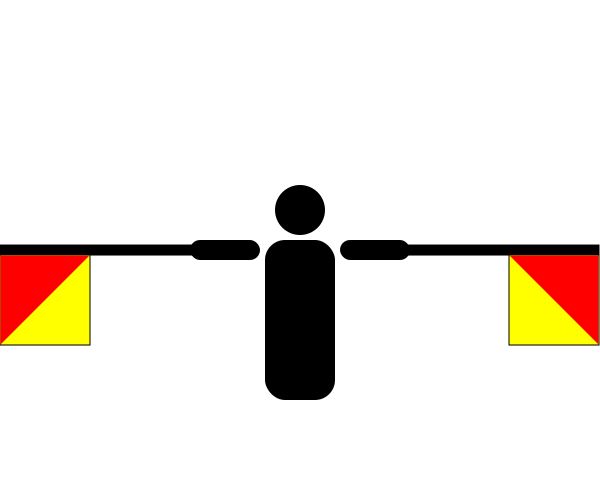


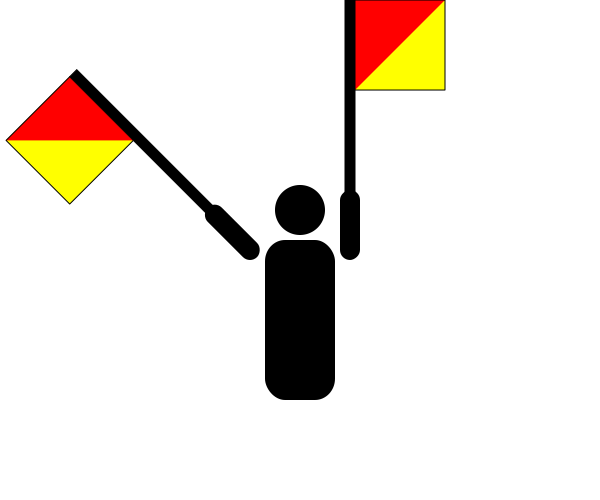
There are approximately 56 people named Rupert in the UK. That makes it one of Britain's least common surnames. Only around one in a million people in Britain are named Rupert.
Region of origin: Europe
Country of origin: Germany
Language of origin: German
