ROSENSTEIN
The surname Rosenstein is of German origin, formed from the elements rose and stein. The first element denotes the flower, symbolising beauty and love, while the second means stone, conveying solidity. Consequently the surname can be interpreted as rose stone or stone of the rose, suggesting a link between aesthetic beauty and enduring strength.
Historical records show that the name is very old; it appears among the earliest German surnames in the thirteenth century. It is classed as an ornamental surname, a practice in which early German families often chose pleasantly descriptive names rather than reflecting actual occupations or localities. Other surnames in this genre include Rosegren (rose branch) and Rosengart (rose garden). The simplest form, Rose, could indicate a person of ruddy complexion or red hair, or it could be a topographical reference to a person who grew roses or lived in a rose-producing area.
First documented occurrences of the surname are found under the spelling Rosenfeld in records from the seventeenth century, such as Michael Rosenfelder of Schapbach (1651) and Juergen Rosenfeld, who married Catharina Strang in Konigsberg (1632). The earliest known spelling, however, is Conrad Rosenfeld in the Freiburg rolls of 1299, recorded when the friar lived under the reign of Emperor Albert I of Hapsburg (1298‑1308).
Beyond its German roots, the surname also has a significant Ashkenazi Jewish pedigree. In Jewish tradition, surnames containing stein often denote a connection with precious stones or gem trade, though this relationship is not always definitive. The name may additionally refer to a geographical location where roses were plentiful. Jewish families bearing the name Rosenstein are found in Germany, the United Kingdom, Israel, the United States, France, and Canada. In Britain, concentrations of the name are greatest in London and Manchester.
In Germany today, Rosenstein remains most frequent among the Jewish population, particularly in cities such as Munster, Berlin, and the south‑west region. The surname has a rich history linked to the Jewish communities that migrated across Europe, many of whom arrived in the mid‑twentieth century to escape persecution during the Holocaust. Across the world, the name continues to be represented, with notable clusters in the United States, especially in New York, Texas, California and Florida.
Variants of the surname are widespread across Europe, reflecting linguistic shifts and orthographic differences. Some of the recognised forms include Rösenstein, Rozenstein, Rosonstein, Rosenstayn, Rozenstain, Rosenstahl, Rosenstutter, Rosenthal, and Rosenfeldt. Related surnames of similar etymological origin are Rosenberg, Rosenberger and Rosenbaum.
Thus the Rosenstein surname encapsulates a blend of botanical elegance and enduring solidity, reflecting both ornamental naming traditions of medieval Germany and the cultural heritage of Ashkenazi Jewish families across the globe. Its persistence as a recognised family name in multiple countries attests to its longstanding significance and adaptability through the centuries.
Typical given names associated with the Rosenstein surname
Male
Female
Similar and related surnames
Related and similar names are generated algorithmically based on the spelling, and may not necessarily share an etymology.
How to communicate the surname Rosenstein in...
Braille
⠗⠕⠎⠑⠝⠎⠞⠑⠊⠝
Morse
.-.---....-....-...-.
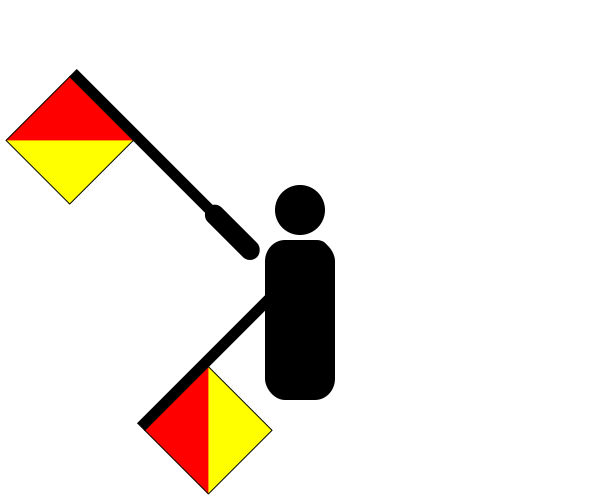
Semaphore
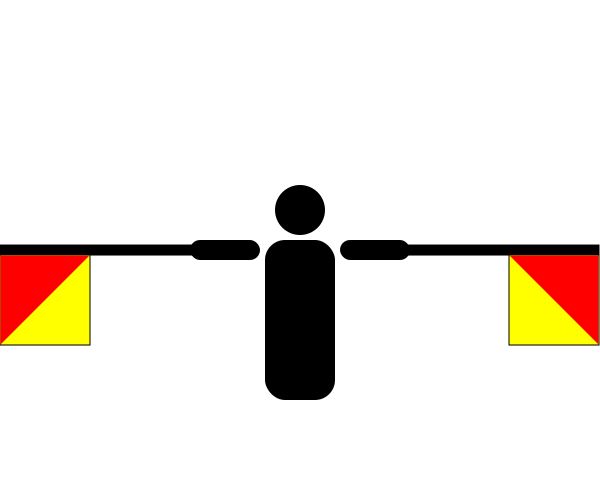
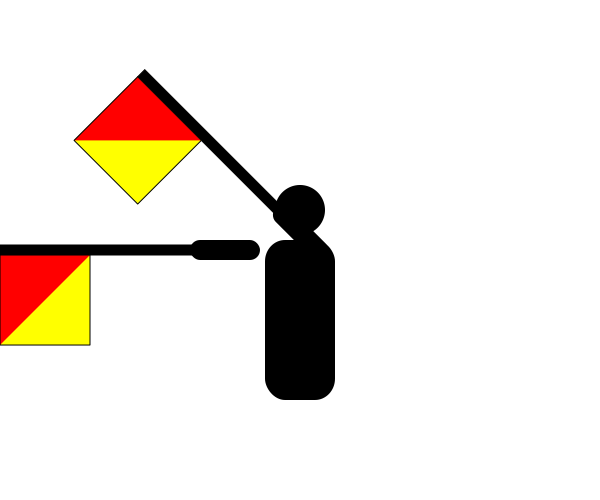


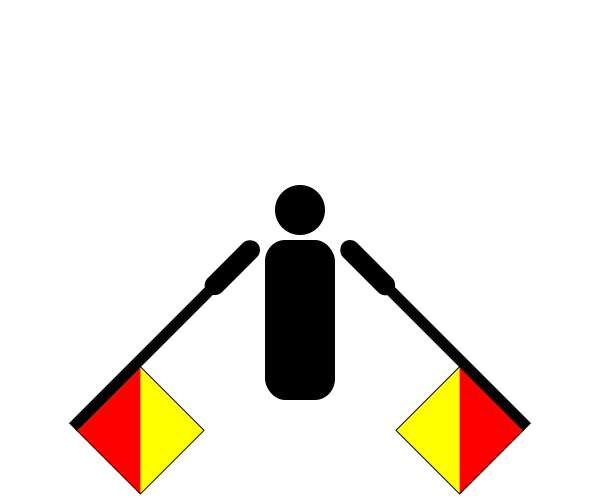
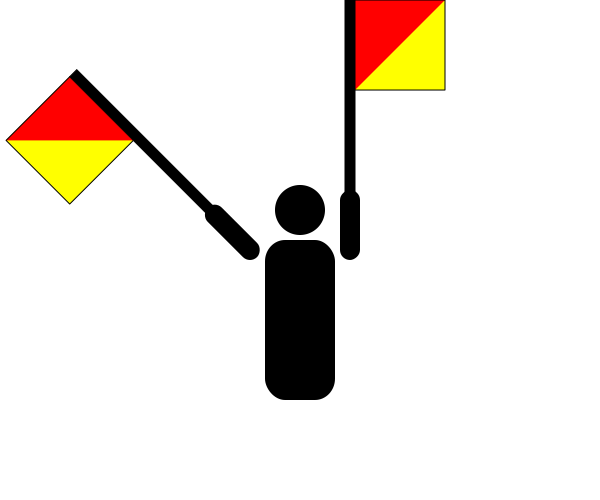
There are approximately 26 people named Rosenstein in the UK. That makes it one of Britain's least common surnames. Fewer than one in a million people in Britain are named Rosenstein.
