ROBINETT
Robinett is a surname of both English and French origin that has maintained a relatively low profile in the United Kingdom and abroad. Its earliest recorded appearance dates to the latter half of the thirteenth century, when a woman named Margaret Robines was listed in the Hundred Rolls of Cambridgeshire in 1279. Subsequent surviving documents from the diocese of Greater London record several marriages involving individuals with the surnames Robins, Robinnett and Robinette from the mid‑fifteenth to mid‑sixteenth centuries, such as the union of John Robins and Anna Clarcke in 1544 and the marriage of Thomas Robinnett to Cissely Wingfield in 1616.
The name Robinett originates as a diminutive form of the medieval English nickname Robin. Robin itself was a pet form of the Germanic personal name Hroþberht, which was later Latinised as Robert. The meaning of Hroþberht breaks down into the Old Germanic elements hroth, meaning fame, and berht, meaning bright. The French suffix ‑ett applied to the base name indicates a small or younger version, so the surname can be interpreted as “little Robin” or “young Robert.” In a patronymic sense it was probably used to differentiate a son from the father when the father was named Robin.
Variants of the surname are numerous, reflecting the linguistic fluidity of the British Isles and continental Europe. Recorded forms include Robinet, Robinette, Robinos, Robins, Robens, Robines, Robbing, Robyns and others. In the French tradition the name appears as Robinet, Robinet, Robynet and Robenet, with the suffix ‑ett signalling a diminutive. Similar surnames such as Robinson, Robertson, and Robynson are etymologically related and tend to convey the same patronymic idea.
In the United Kingdom the surname is most frequently found in England, particularly in the Midlands and in Wales, where it is considerably more common than in other English regions. London and the surrounding area hold a modest number of bearers. Across the Atlantic the name disseminated principally to the United States, where it is sparsely represented but concentrated mainly in Missouri – especially the city of St. Louis – and in the states of Kansas, Mississippi and Arkansas, with additional pockets in California and Florida. In Canada the strongest clusters lie in Ontario, notably the Greater Toronto Area, while smaller numbers appear in British Columbia and Quebec. In France the name is best documented in Brittany and Normandy, territories with historic ties to the Norman conquest and to French linguistic heritage. Australian records show the surname in the major cities of Sydney, Melbourne and Perth, although the overall distribution remains limited.
Given its antiquated roots and the simple, diminutive nature of its construction, the surname Robinett exemplifies how personal names of Germanic origin were adapted through medieval English and French linguistic practices, and how they evolved into inherited family names that today persist in small concentrations across the English‑speaking world and in francophones regions. Its endurance is a testament to the stability of hereditary naming conventions and the enduring cultural exchanges that shaped the British Isles and their diaspora.
Typical given names associated with the Robinett surname
Male
- Hugh
- Leslie
- Simon
- Stuart
Female
- Cindy
- Karen
Similar and related surnames
Related and similar names are generated algorithmically based on the spelling, and may not necessarily share an etymology.
How to communicate the surname Robinett in...
Braille
⠗⠕⠃⠊⠝⠑⠞⠞
Morse
.-.----.....-..--
Semaphore
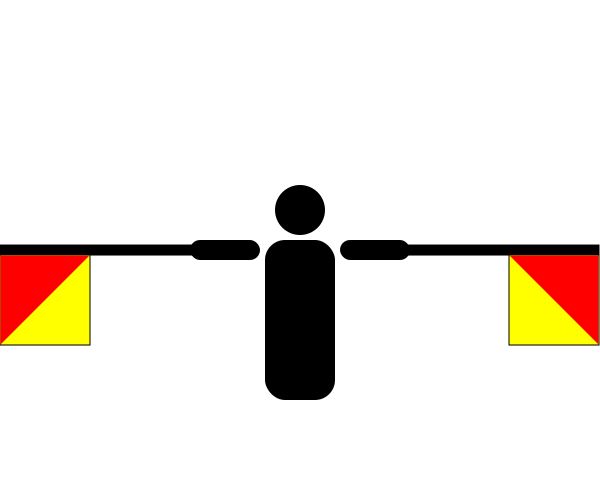
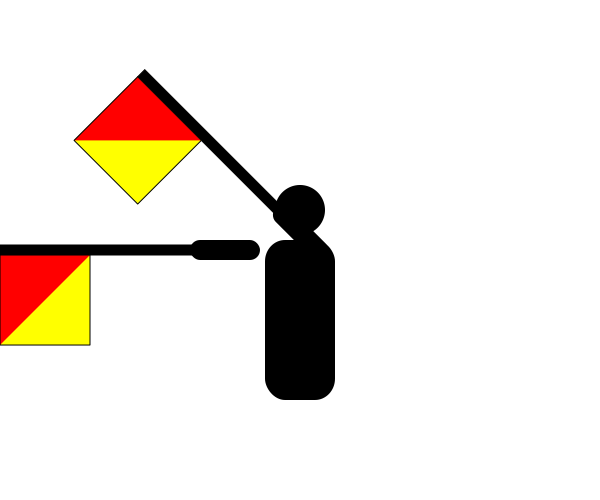
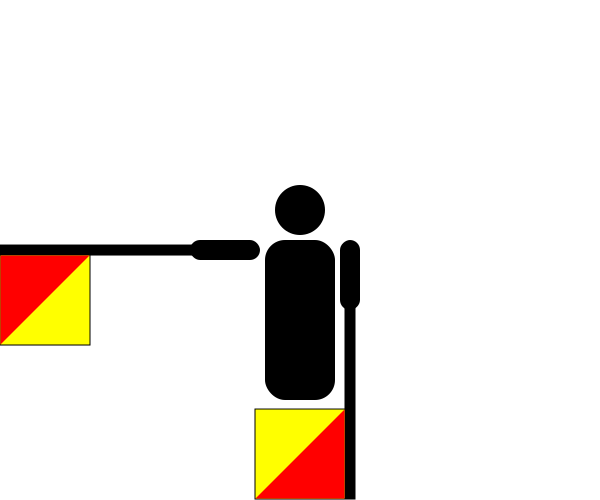
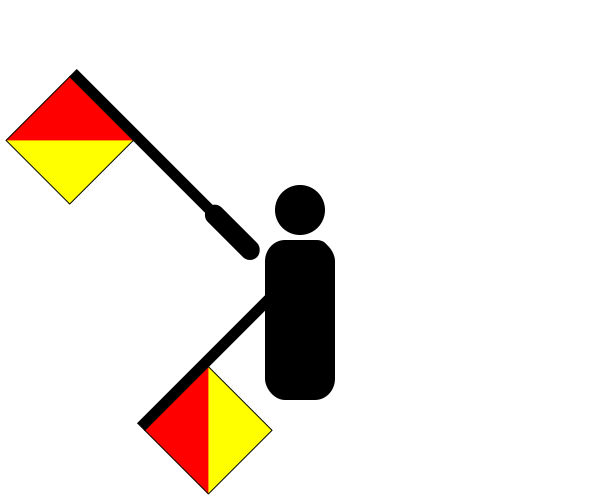
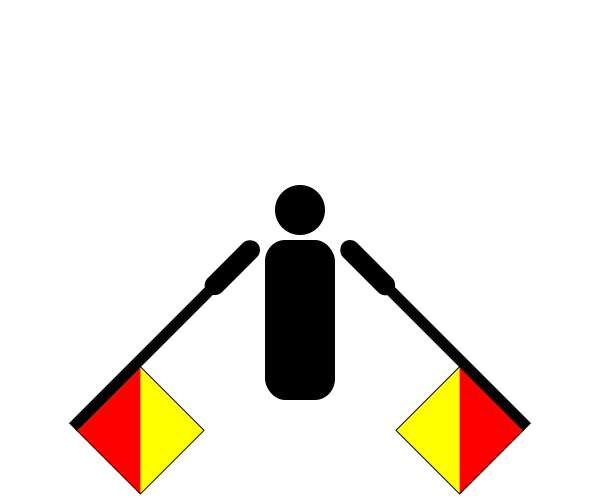

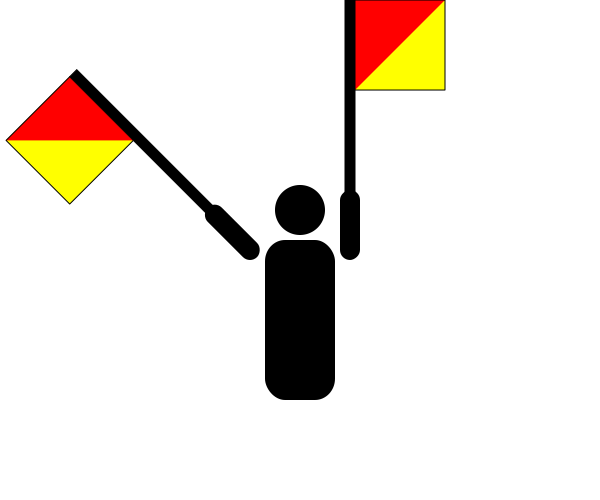
There are approximately 51 people named Robinett in the UK. That makes it one of Britain's least common surnames. Only around one in a million people in Britain are named Robinett.
Origin: English
Region of origin: British Isles
Country of origin: England
Religion of origin: Christian
Language of origin: English
