PAYLOR
Paylor is a surname of English origin, belonging to the class of occupational names that emerged during the Middle Ages. It is historically linked to the making and selling of wooden containers, typically pails or buckets.
The etymology of the name can be traced to the Middle English word paylere, which denoted a person involved in the manufacture or trade of pails. The pronunciation and spelling of the name evolved over time, giving rise to variants such as Payler and Pailer.
In addition to its English roots, the surname has connections to Norman French. The term paelle, introduced by the Norman invaders in 1066, entered English usage during the period when French was the dominant language of administration. It also referred to a maker of pails and buckets. A number of spellings have been recorded, including Paylor, Pailor, Paler, Payler, Pallor and Paillor; the latter two forms are now considered extinct.
Some researchers have suggested a possible link between the name and the French surname Palairet, introduced in Britain by Huguenot refugees after the revocation of the Edict of Nantes in 1685. The link remains unproven, and the meanings of the names are distinct. The French Palairet is effectively equivalent to the English surname Hayton, signifying a hay farm or a location for storing hay.
The earliest surviving record of the family name appears in the Pipe Rolls of Westmoreland, dated 1193, during the reign of King Richard I, also known as The Lionheart. The entry references Ralph le Paeler. Subsequent documentary evidence includes a 1297 reference to Ralph le Paeller of Worcester in the Hundred Rolls, and a 1585 grant of a coat of arms in Yorkshire.
Later ecclesiastical records provide further attestations of the surname. In 1578, the baptism of Frances Payler of North Cave, Yorkshire, is recorded. In 1651, the marriage of Willva Paylor to Eliza Brouke in Leake, North Yorkshire, is documented.
The blazon granted to the Paylor family in 1585 is described as follows: Gules, on a bend Sable, three mullets of six points Or pierced, between three lions passant guardant, Argent. This heraldic design reflects the family's historical standing within the local gentry of Yorkshire.
In contemporary times, the surname Paylor remains uncommon. The survival of its various spellings across the centuries illustrates the fluid nature of medieval orthography and the transitory influence of French on English nomenclature. While the name has largely fallen out of general use, surviving individuals retain a distinctive link to an occupational past rooted in the craft of pail making and to the broader historical currents that shaped Britain’s linguistic landscape.
Typical given names associated with the Paylor surname
Male
- Andrew
- David
- John
- Jonathan
- Mark
- Michael
- Richard
- Robert
- Simon
- Stephen
- Thomas
Female
- Angela
- Catherine
- Dawn
- Diane
- Dorothy
- Elizabeth
- Julie
- Margaret
- Patricia
- Susan
- Victoria
- Zoe
Similar and related surnames
- Pahler
- Pailer
- Pailler
- Paillier
- Pailor
- Palar
- Palarz
- Palau
- Paleari
- Paler
- Paleri
- Palero
- Palir
- Pallar
- Pallares
- Pallari
- Paller
- Pallier
- Palor
- Pauler
- Pauller
- Payler
- Pealer
- Peelar
- Peeler
- Pelari
- Peler
- Pelier
- Pellar
- Peller
- Pellereau
- Pellier
- Pellor
- Peyler
- Pilar
- Piler
- Pileri
- Piliero
- Pillar
- Piller
- Pillier
- Pillor
- Pillre
- Plair
- Pluer
- Poehler
- Pohler
- Polar
- Poler
- Polier
- Pollar
- Pollara
- Pollaro
- Poller
- Pollier
- Pooler
- Pooller
- Poulier
- Pouller
- Poulloura
- Powler
- Pullar
- Pullara
- Puller
- Pyler
- Wypler
Related and similar names are generated algorithmically based on the spelling, and may not necessarily share an etymology.
How to communicate the surname Paylor in...
Braille
⠏⠁⠽⠇⠕⠗
Morse
.--..--.--.-..---.-.
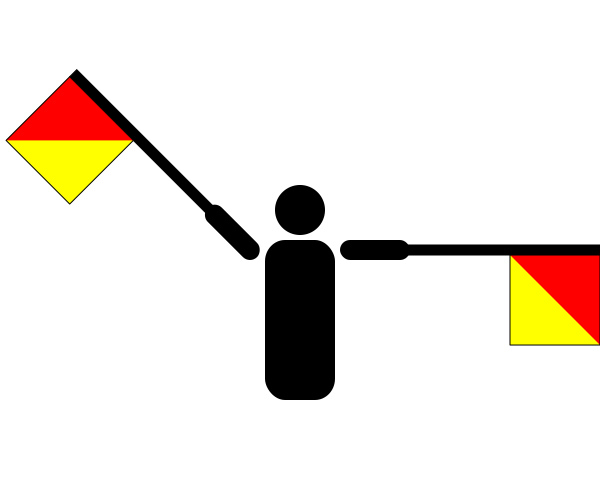
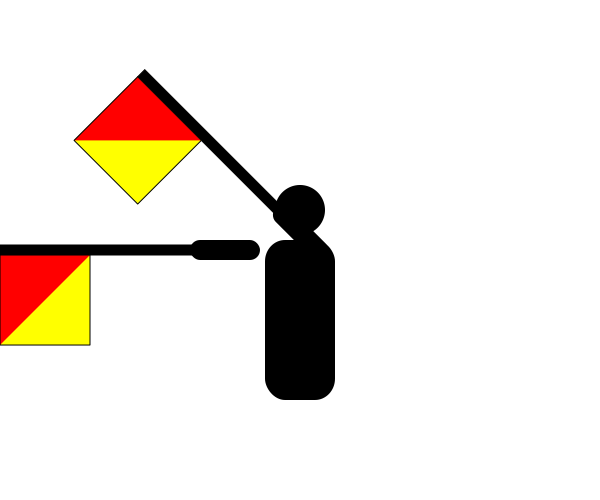
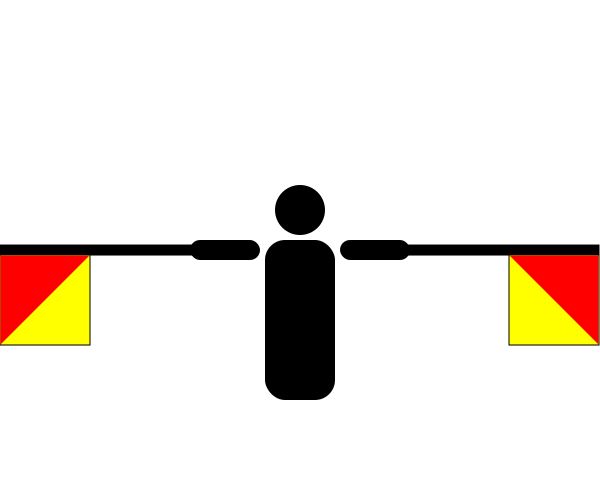
Semaphore



There are approximately 713 people named Paylor in the UK. That makes it roughly the 9,573rd most common surname in Britain. Around 11 in a million people in Britain are named Paylor.
Origin: English
Region of origin: British Isles
Country of origin: England
Religion of origin: Christian
Language of origin: English