OMAR
Omar is a surname of Arabic origin, initially derived from the personal name Omar which is generally understood to mean either *life* or *flourishing* in Arabic. The name is historically linked to the companion of the Islamic prophet Mohammad, Omar ibn al‑Khattab, who served as the second caliph of the Rashidun Caliphate. The surname conveys a connection to the Islamic faith and is often associated with attributes such as strength, wisdom and longevity, qualities traditionally attributed to the historical figure of Omar ibn al‑Khattab.
The surname is widespread across the Muslim world. It is common in Middle Eastern countries such as Saudi Arabia, Egypt and Iraq, and in African nations including Somalia, where the majority of the population are adherents of Islam. In Latin America it appears with significant frequency; it is the fourteenth most common family name in Puerto Rico, the fourth most common in Mexico and the eleventh in Colombia. In the Democratic Republic of Congo it is the most popular surname, and in the United Kingdom it ranks within the top four hundred most frequent surnames. The name is also found in European and North American countries, notably the United States, Canada, Germany, South Africa and Indonesia, often reflecting the histories of migration and diaspora.
The spelling of the surname varies widely. Popular variants include Omer, Oumarr, Umer, Omari, Omaree and Omaire. These differences arise from phonetic transcription in various languages, transliteration conventions, and the adaptation of the name to local orthographic practices. For example, in Spanish the name is usually rendered as Omar or Omaro, whereas in English it may appear as Omer or Umarr. Such variations are typical for surnames with Arabic roots that have been adopted into languages that use Latin script.
In socially diverse contexts, the surname often signifies respect for the heritage of Islam and the commemoration of respected historical figures. It has also come into common usage among non‑Muslim groups, including Christians, in some regions. While the popular image of the name has been amplified by public figures such as the Egyptian actor Omar Sharif, these instances do not alter the name’s fundamental cultural and linguistic origins. The continued use of the surname in contemporary societies reflects both its historical depth and the dynamic nature of cultural identity.
Overall, the surname Omar serves as a symbol of enduring faith, historical memory and cultural continuity. Its presence across continents, in multiple languages and communities, underscores the broad reach of Arabic on the world stage and the persistent significance attached to names that embody heritage and shared values.
Typical given names associated with the Omar surname
Male
- Abdi
- Abdul
- Ahmed
- Ali
- Hassan
- Mohamed
- Mohammad
- Mohammed
- Omar
- Osman
Female
- Aisha
- Amina
- Asha
- Fatima
- Halima
- Khadija
- Maryam
- Muna
- Radziah
- Sahra
- Yasmin
- Zubeda
Similar and related surnames
Related and similar names are generated algorithmically based on the spelling, and may not necessarily share an etymology.
How to communicate the surname Omar in...
Braille
⠕⠍⠁⠗
Morse
-----.-.-.
Semaphore
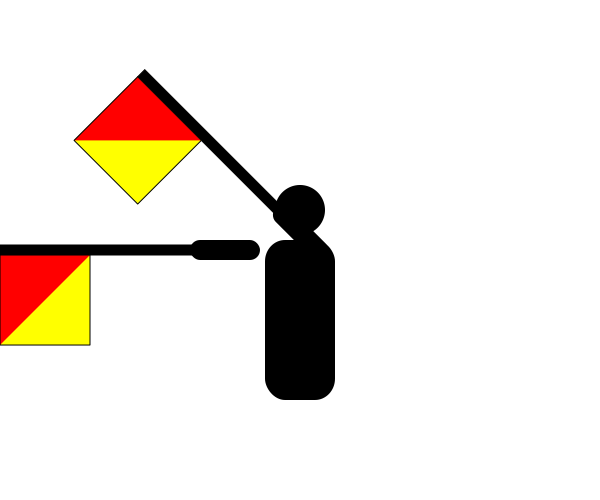
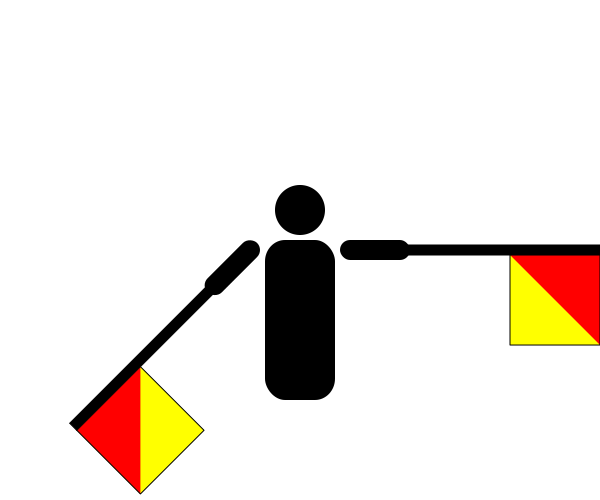

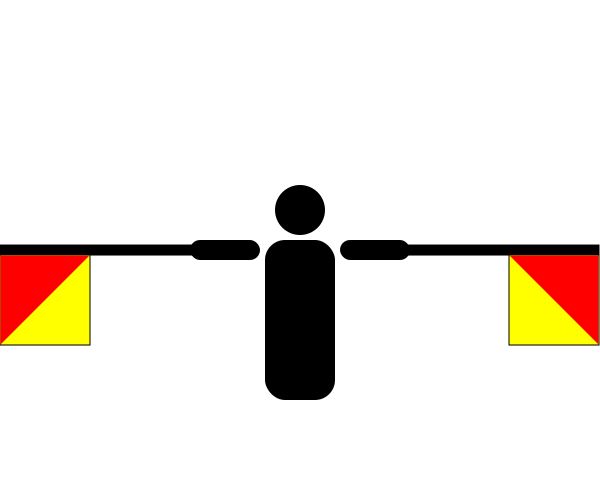
There are approximately 3,439 people named Omar in the UK. That makes it roughly the 2,658th most common surname in Britain. Around 53 in a million people in Britain are named Omar.
Region of origin: Africa
Country of origin: Somalia
Religion of origin: Muslim

Famous people named Omar
- Ilhan Omar - American politician from Minnesota
Names and descriptions courtesy of Wikipedia, and may contain errors. This is not intended to be an exhaustive list of every famous person with this name.