MUMBY
Mumby is a surname of English origin which derives from a locative place name in the county of Lincolnshire. The place name itself is recorded in the medieval Domesday Book of 1086 as Mundebi. The first element is thought to come from the Old Norse personal name Mundi – a name found also in the weekday morning when the sun rises – and the second element, by, is a common Norse suffix meaning “farm” or “settlement”. The combined meaning is therefore “Mundi’s farm” or “Mundi’s settlement”. The name points to a period of Danish–Viking settlement in the eastern part of England during the seventh century and earlier.
The surname appears in a number of medieval spellings. In contemporary records it is found as Mumby, Mumbey and Munby, reflecting the normal variation that would arise when a locational name is transferred to a family name by those who migrated away from the village and adopt the name of their former home. The first documented use of the name in the form of a surname was by Alan de Mumby in the Testa de Neville charter dated 1272, and a second early instance is Hered de Munby in the Hundred Rolls of 1273. The use of the definite article de suggests that the bearers of the name originally held the land as hereditary owners, a practice that was common for lords of manor estates.
A number of later genealogical records confirm the continued presence of the family in Lincolnshire and beyond, including the marriage of Elizabeth Mumbee to Robert Hodskines in 1669 at the church of St James in Clerkenwell, London. This record shows that members of the family were active members of the English gentry and that the spelling of the surname had become stabilised by the sixteenth century.
The family was also granted a heraldic device, although an exact date is not preserved. The blazon of the arms is described in heraldic terminology as a blue fretty on a gold field, with a canton. The addition of a canton is a rare honour in heraldry, often reserved for families who have performed a significant service or risen to prominence. The presence of a coat of arms indicates a family of some standing in the society of medieval England.
In summary, the surname Mumby is a locational name that points to an ancient Norse‑English settlement in Lincolnshire. Its early recorded forms and documented history demonstrate a family that attained a degree of local influence, had a granted coat of arms, and whose descendants took part in the wider social life of England during the Middle Ages and early modern period.
Typical given names associated with the Mumby surname
Male
- Alan
- Andrew
- Christopher
- David
- Graham
- John
- Michael
- Paul
- Peter
- Richard
- Simon
- Stephen
Female
- Carolyn
- Elizabeth
- Emma
- Helen
- Jane
- Julie
- Laura
- Linda
- Margaret
- Nicola
- Rachael
- Sarah
- Susan
Similar and related surnames
Related and similar names are generated algorithmically based on the spelling, and may not necessarily share an etymology.
How to communicate the surname Mumby in...
Braille
⠍⠥⠍⠃⠽
Morse
--..----...-.--
Semaphore
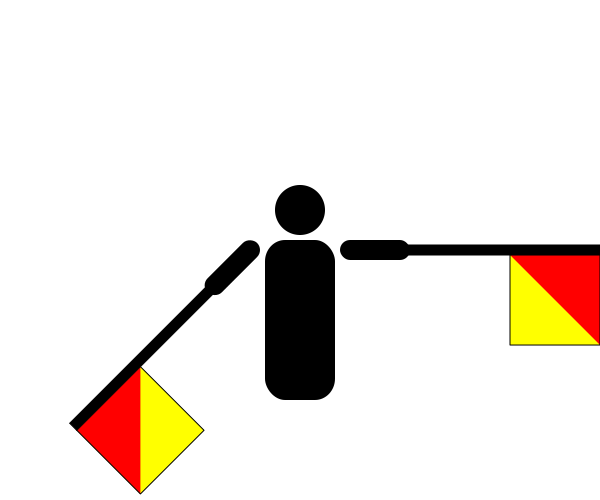

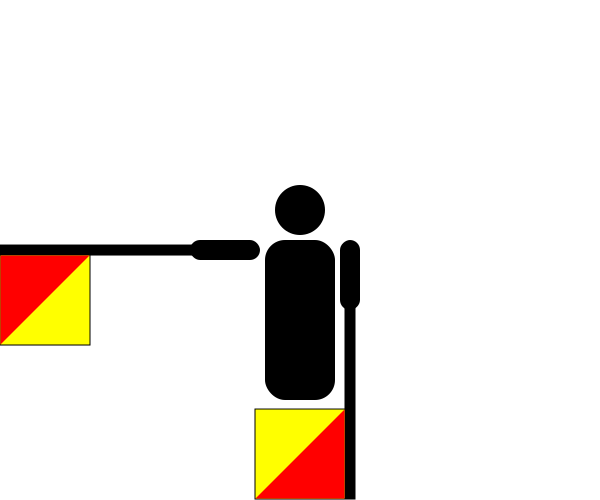
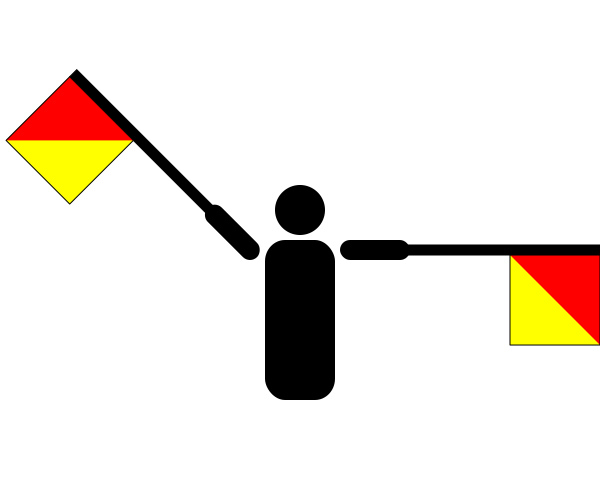
There are approximately 1,797 people named Mumby in the UK. That makes it roughly the 4,606th most common surname in Britain. Around 28 in a million people in Britain are named Mumby.
Surname type: Location or geographical feature
Origin: English
Region of origin: British Isles
Country of origin: England
Religion of origin: Christian
Language of origin: English

Famous people named Mumby
- Keith Mumby - Rugby league football player
- Peter Mumby - Football player
Names and descriptions courtesy of Wikipedia, and may contain errors. This is not intended to be an exhaustive list of every famous person with this name.