MILEHAM
Mileham is an English surname of locational origin, traditionally associated with the parish of Mileham in Norfolk, in the East of England.
The name is formed from two Old English elements. The first, mil, was used in medieval times to denote either a milestone, a mill, or, in some interpretations, the concept of mid or middle. The second element, ham, designates a village, homestead or settlement. Together, the components signify either “the village by the milestone”, “the mill homestead”, or “the middle village”. The precise meaning is debated, but all recognise a connection between the place and a physical landmark.
Historical evidence suggests that the place name Mileham was recorded as early as the Domesday Book, an inventory compiled in 1086. Subsequent medieval documents, such as notarial entries from the 16th and 17th centuries, reveal the use of the name in a range of spellings including Myleham, Millum and Millon. Examples include Thomas Myleham of North Walsham in Norfolk, who appeared in a 1593 record, and Alice Milham, recorded in Westminster in 1823.
The earliest forms of the surname point to a topographical origin rather than simply a place of residence: the namers were likely people living beside a prominent mill or milestone, or they had moved from that site and were identified by reference to their former home. In many parts of England, it was common for a person who relocated to be called by the name of the place from whence they came, a practice that helped differentiate individuals in local communities.
Over time, the spelling of the name varied considerably, reflecting regional accents and inconsistent orthography of the period. Frequently encountered variants are Milham, Milam, Millham, Mylham, Millam and Milholm. Each of these retains the core elements of the original Old English word, and all are recognised as belonging to the same family line in genealogical studies.
During the colonial era, members of the Mileham family migrated to the United States, with some settling in New England and others in the Midlands of the colonies. In the 19th century, a smaller wave of emigrants, motivated by the gold rush and agricultural opportunities, travelled to Australia. Today the surname remains uncommon, with the highest concentration still recorded in Norfolk, but it can also be found, in smaller numbers, in Canada, New Zealand, and the United Kingdom as a whole.
While the name is rare on a global scale, modern census data confirm its continued use in Britain. The distribution is largely reflective of its origin: the name clusters in eastern counties where the original parish was situated, and its prevalence diminishes in more distant regions. Genealogical records, however, indicate that the name has survived across multiple generations, maintaining its historical significance.
In contemporary times, the Mileham surname carries with it a legacy rooted in English geography and civil society. It evokes not only the rural landscapes of Norfolk but also the broader patterns of medieval surname establishment and the movements of families throughout the British Empire. The historical depth and linguistic clarity of the name make it a subject of interest for researchers of onomastics and local history alike.
Typical given names associated with the Mileham surname
Male
- Alan
- Andrew
- Anthony
- Christopher
- David
- John
- Kevin
- Paul
- Peter
- Philip
- Richard
- Steven
Female
- Angela
- Caroline
- Elizabeth
- Emma
- Jacqueline
- Janet
- Joan
- Julie
- Mary
- Nicola
- Sarah
- Susan
- Tamara
- Valerie
- Victoria
Similar and related surnames
Related and similar names are generated algorithmically based on the spelling, and may not necessarily share an etymology.
How to communicate the surname Mileham in...
Braille
⠍⠊⠇⠑⠓⠁⠍
Morse
--...-........---
Semaphore
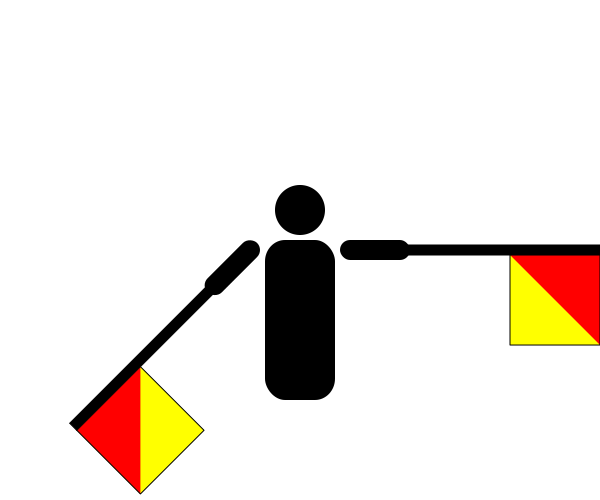
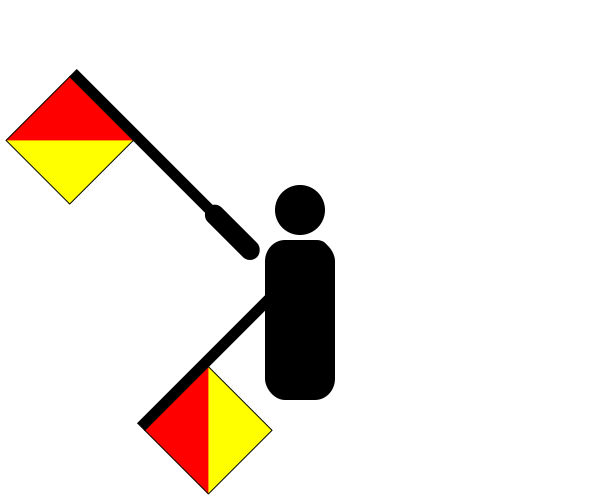


There are approximately 887 people named Mileham in the UK. That makes it roughly the 8,114th most common surname in Britain. Around 14 in a million people in Britain are named Mileham.
Surname type: Location or geographical feature
Origin: English
Region of origin: British Isles
Country of origin: England
Religion of origin: Christian
Language of origin: English
