MCKAIN
Recorded variant spellings include Mc Kain, Mckain
McKain is a surname that traces its roots to the Gaelic linguistic heritage of the Scottish Highlands and the western coasts of the British Isles. Its earliest documented use appears in the 12th and 13th centuries, when it was recorded as Mac Iain, meaning “son of John”.
The personal name Eáin, from which the surname is derived, is a Gaelicised form of John. The name John in turn comes from the Hebrew Yochanan, translating as “God is gracious”. Consequently, the epithet McKain can be interpreted as “descendant of the gracious one” or, more literally, “son of John.”
Alternative derivations also exist. In the north of Ireland and some parts of the Scottish Highlands, the surname appears as an anglicised form of the Gaelic Mac Catháin, which means “son of Cathán.” The element cath denotes “battle,” while the diminutive suffix -án gives Cathán the sense of “little battler.” This variant therefore imparts a martial dimension to the name, reflecting the martial culture of the clans from which it arose.
Throughout history the spelling of the surname has varied widely. In contemporary records it is seen as MacIan, MacAne, MacEan, MacCane, MacKean, MacKeand, MacKaine, MacKane, McCain, Mckane, McKean, McKane and other permutations. Occasional records do not employ the Mac or Mc prefix at all, leaving the name in its base form. The diversity of spellings reflects both regional pronunciation differences and the shift from Gaelic to English orthography.
Historical documents provide several notable instances of the name. In 1506 a Nigel McCane appears in the island of Islay. By 1661 a Robert McKeane is listed as a citizen of Edinburgh, and in 1682 a Robert M’Keand is recorded as the burgess of Kircudbright. During the reign of King James I and later the Interregnum Government of the 13th and 14th centuries, the MacIans of Arnamurchan are said to have derived from Eoin, the son of Angus Mor, lord of the Isles in the early 11th century. A Sir Donald MacIan is noted for paying homage to the Scottish authorities in 1296.
In the Scottish Highlands, especially on the Hebrides and in the region of Arnamurchan, the surname is most concentrated. Irish records show a significant presence as well, likely a result of the migration of Scottish families to Ireland during the medieval period. The name has remained comparatively more common in Scotland than elsewhere, even as emigration has spread it to North America, Australasia and other English-speaking countries.
The legacy of the McKain surname is one of linguistic continuity and geographic movement. Whether seen as a patronymic signifying a devotion to the Biblical John, or as a dynastic marker of a warrior lineage within the Mac Catháin tradition, the name carries with it a layered history of faith, martial ethos, and the enduring influence of Gaelic culture across the British Isles.
Typical given names associated with the McKain surname
Male
- Alan
- Andrew
- Callum
- David
- Douglas
- George
- Ian
- James
- John
- Mark
- Neil
- Peter
- Robert
- William
Female
- Anna
- Claire
- Elaine
- Elizabeth
- Fiona
- Jennifer
- Karen
- Kelly
- Laura
- Lynn
- Margaret
- Mary
- Nest
- Patrice
Similar and related surnames
- McCane
- McKane
- Macan
- Maccain
- Maccann
- Maccan
- Mckaine
- Macagno
- Macane
- Macani
- Macann
- Macanna
- Maccagni
- Maccagno
- Maccana
- Maccanna
- Maccoon
- Maccunn
- Macgoun
- Macgown
- Mackain
- Mackan
- Mackean
- Mackeen
- Macken
- Mackena
- Mackenie
- Mackenn
- Mackenna
- Mackennie
- Mackeon
- Mackeown
- Mackewn
- Mackian
- Mackin
- Mackine
- Mackinn
- Mackinne
- Mackion
- Mackne
- Macknee
- Mackon
- Mackown
- Mackuin
- Macnae
- Macnee
- Macnie
- Macoine
- Macon
- Macone
- Maconie
- Macoon
- Macoun
- Macquain
- Macqueen
- Macquien
- Macquin
- Macunn
- Maekin
- Magagna
- Magan
- Magana
- Magani
- Magann
- Maggan
- Maggane
- Maggen
- Maggin
- Maggini
- Maggioni
- Maghan
- Maghen
- Magon
- Magona
- Magone
- Magoni
- Magoon
- Magown
- Maguin
- Magun
- Magune
- Maican
- Makain
- Makan
- Makani
- Makein
- Maken
- Makena
- Makene
- Makenna
- Makin
- Makina
- Makino
- Makkan
- Makni
- Makon
- Makone
- Makoni
- Makono
- Makoon
- Maqueen
- Maquin
- Maugan
- Maughan
- Maughen
- Maughin
- Maughon
- Mawkin
- Maygone
- Maykin
- Mcainey
- Mcan
- Mcanea
- Mcanee
- Mcann
- Mcanna
- Mccaan
- Mccain
- Mccaine
- Mccan
- Mccann
- Mccanna
- Mccanne
- Mccanns
- Mccanny
- Mccoan
- Mccohn
- Mccon
- Mccone
- Mcconn
- Mccoon
- Mccoun
- Mccown
- Mccuan
- Mccuen
- Mccuin
- Mccune
- Mccunn
- Mccunnie
- Mcean
- Mcgaan
- Mcgahn
- Mcgain
- Mcgan
- Mcgann
- Mcgawn
- Mcghan
- Mcghin
- Mcgone
- Mcgoon
- Mcgoona
- Mcgoun
- Mcgown
- Mcgowne
- Mcguan
- Mcguane
- Mcguin
- Mcguine
- Mcguinn
- Mcguinne
- Mcgun
- Mcgunn
- Mcguone
- Mckaie
- Mckaig
- Mckail
- Mckand
- Mckann
- Mckanna
- Mckeagney
- Mckean
- Mckeana
- Mckeand
- Mckeane
- Mckeaney
- Mckeean
- Mckeen
- Mckeena
- Mckeene
- Mckein
- Mcken
- Mckenn
- Mckenna
- Mckennah
- Mckenne
- Mckennea
- Mckennie
- Mckenny
- Mckeny
- Mckeon
- Mckeone
- Mckeonn
- Mckeoun
- Mckeown
- Mckeowne
- Mckewn
- Mckim
- Mckin
- Mckine
- Mckinn
- Mckinna
- Mckinnia
- Mckinnie
- Mckno
- Mckoan
- Mckoen
- Mckone
- Mckoon
- Mckown
- Mckuin
- Mckune
- Mcnae
- Mcnea
- Mcnee
- Mcnie
- Mconie
- Mcquain
- Mcqueen
- Mcqueenie
- Mcquenie
- Mcquien
- Mcquin
- Mcquinn
- Mcquone
- Mcquown
- Meagan
- Meaghan
- Meaken
- Meakin
- Mecann
- Meckan
- Meckin
- Meconi
- Meeckan
- Meegan
- Meeghan
- Meekan
- Meeken
- Meekin
- Meekon
- Megan
- Megann
- Meghan
- Meghani
- Meghen
- Megone
- Megown
- Meighan
- Meighen
- Mekan
- Mekin
- Mekni
- Mguni
- Mican
- Mickan
- Micken
- Mickin
- Miconi
- Miekina
- Migan
- Migani
- Miggen
- Miggiani
- Miggiano
- Miggin
- Mighan
- Migon
- Migone
- Mikan
- Mocan
- Mocanu
- Mockin
- Mogan
- Mogano
- Moggan
- Moghan
- Mokina
- Mokoena
- Mokone
- Moogan
- Moquin
- Mougan
- Moughan
- Moughen
- Muckian
- Muckin
- Mugan
- Muggan
- Mughan
- Mukne
- Mycan
- Mccayna
- McKay
Related and similar names are generated algorithmically based on the spelling, and may not necessarily share an etymology.
How to communicate the surname McKain in...
Braille
⠍⠉⠅⠁⠊⠝
Morse
---.-.-.-.-..-.
Semaphore
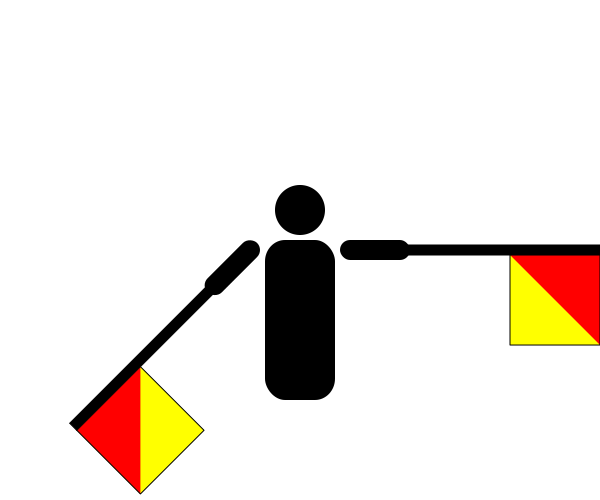

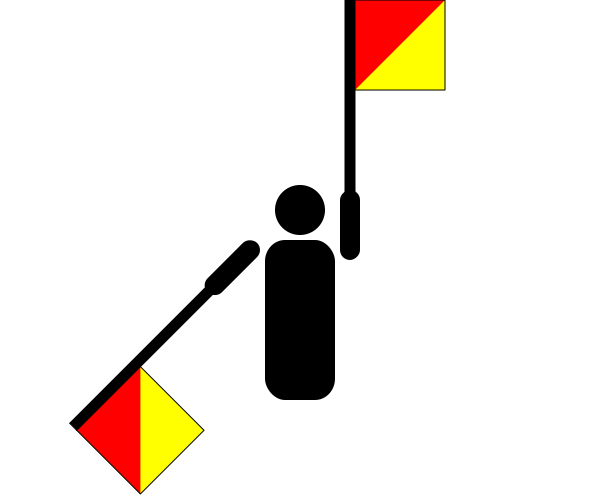

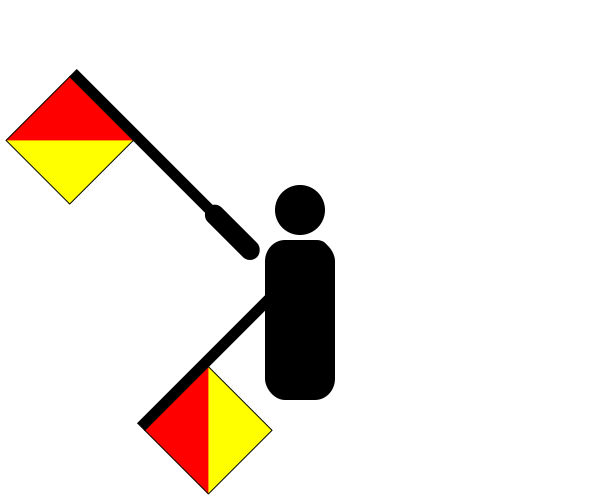
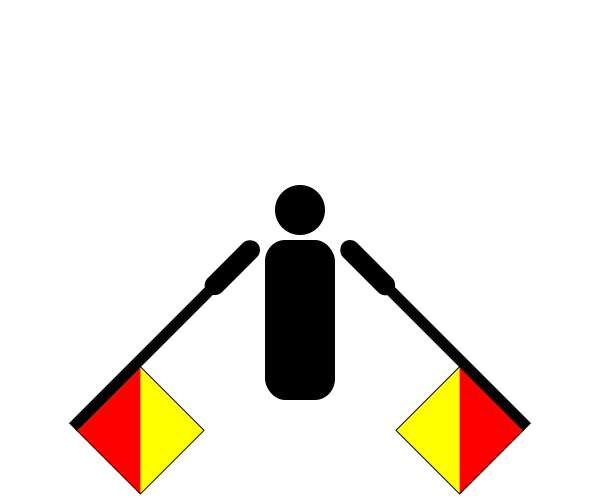
There are approximately 461 people named McKain in the UK. That makes it one of Britain's least common surnames. Only around seven in a million people in Britain are named McKain.
Surname type: From name of parent
Origin: Celtic
Region of origin: British Isles
Country of origin: Scotland
Religion of origin: Christian
Language of origin: Gaelic
