LOVERIDGE
Loveridge is an English surname of the British Isles, primarily recorded in England. It is one of the classic topographic names that arose in the medieval period, reflecting a particular landscape feature and, in some traditions, the esteem in which that feature was held by its inhabitants.
The earliest known derivation cites the Old English words lof meaning “praise” and hrycg meaning “ridge”. Consequently, the name has been interpreted as “praise‑ridge”, signalling an area known for either its celebrated beauty or its prominent position in the local topography. An alternative tradition links the name to the Anglo‑Saxon personal name Leofric, composed of leof “dear, beloved” and ric “power, rule”. This view emphasises the name’s origin in an earlier pre‑7th‑century phrasing rather than a strictly geographical one.
Over the centuries the spelling has varied widely. Historical records demonstrate versions such as Leverich, Levick, Lefridge, Leftridge, Lefwich, Liverock, Loveredge and even Leftbridge. These variants illustrate the fluid orthography of medieval and early modern England, where surnames were frequently adapted to the phonetic preferences of scribes and local dialects.
The Domesday Book of 1086 records a beginning form, William Leuric, in Oxford. By the late 12th and early 13th centuries further early appearances are documented: Willemus Lefrich in the Curia Regis Rolls for Leicester in 1196; Walter Lufrich in the Pipe Rolls of Wiltshire in 1206; and Robert Leffrich in Essex in 1240. A later example is William Loverich in the Hundred Rolls of Oxford in 1279. The name is also noted in a more famous historical context: Bernard Loveridge, aged 22 and listed as a “sope boyler”, was among the rebels in Monmouth’s Rebellion of 1685. He was transported to Barbados in December of that year, though further details of his fate are lost to history.
Throughout its history, the surname has remained firmly situated within England, with its bearers often appearing in parish, legal, and civil records. The persistence of the name from the Domesday survey through the 13th‑century surname expansion demonstrates its continuity and the enduring significance of the geographical and personal elements encapsulated in Loveridge. In contemporary times the name continues to be recognized for its Anglo‑Saxon heritage and the picturesque landscape it originally denoted.
Typical given names associated with the Loveridge surname
Male
- Anthony
- David
- James
- John
- Mark
- Michael
- Paul
- Robert
- Stephen
- Steven
- William
Female
- Carol
- Claire
- Elizabeth
- Emma
- Jacqueline
- Julie
- Linda
- Lisa
- Margaret
- Mary
- Sarah
- Susan
- Victoria
Similar and related surnames
Related and similar names are generated algorithmically based on the spelling, and may not necessarily share an etymology.
How to communicate the surname Loveridge in...
Braille
⠇⠕⠧⠑⠗⠊⠙⠛⠑
Morse
.-..---...-..-...-..--..
Semaphore

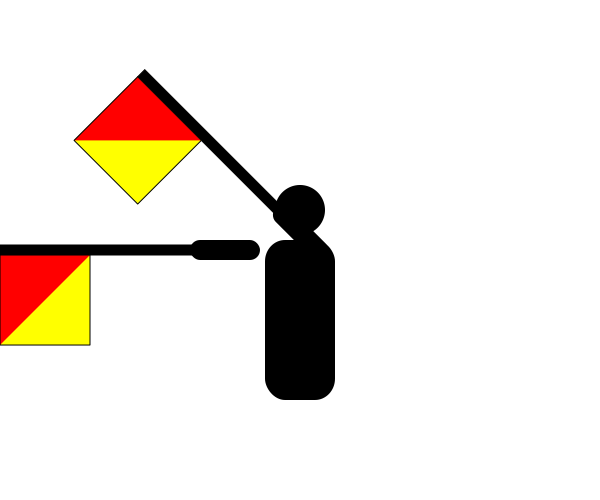
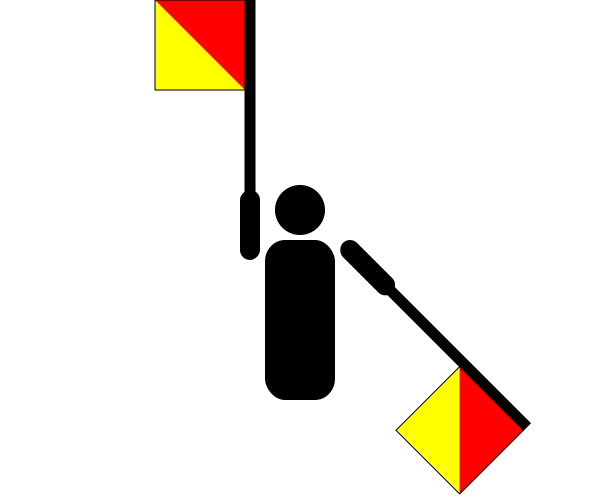

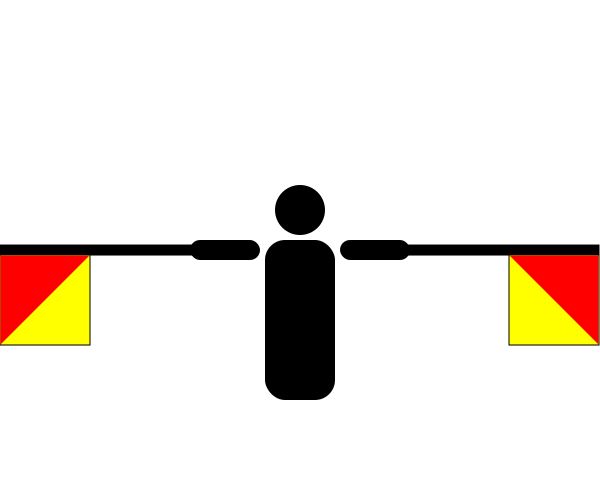
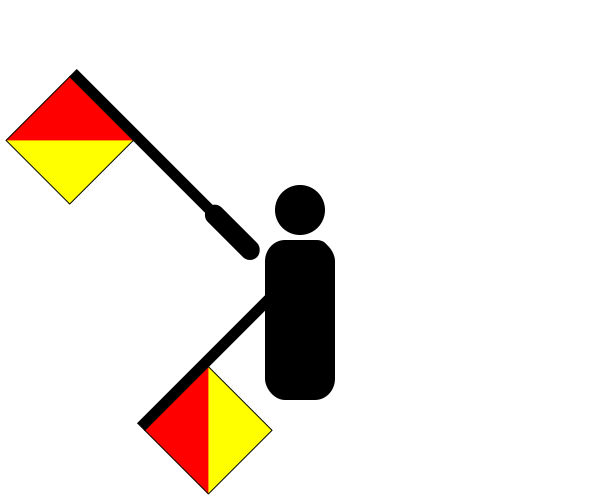


There are approximately 4,389 people named Loveridge in the UK. That makes it roughly the 2,137th most common surname in Britain. Around 67 in a million people in Britain are named Loveridge.
Surname type: Location or geographical feature
Origin: English
Region of origin: British Isles
Country of origin: England
Religion of origin: Christian
Language of origin: English

Famous people named Loveridge
- James Loveridge - Welsh football player
- John Loveridge - Politician (1925 to 2007)
- Arthur Loveridge - Zoologist (1891 to 1980)
Names and descriptions courtesy of Wikipedia, and may contain errors. This is not intended to be an exhaustive list of every famous person with this name.