LEINWEBER
Leinweber is a surname of German origin that is primarily occupational in nature. The name derives from the German words lein, meaning linen, and weber, meaning weaver. It was historically assigned to individuals involved in the production or trade of linen fabric during medieval times in Germany.
Evidence of the surname dates back to the fourteenth century. The earliest recorded spelling appears in a 1374 charter from the state of Hesse, German Empire, where a man named Johan dictus Lynenwebir is mentioned. Further early attestations include Diderick Lynenwevere of Oldenburg in 1472 and Johannes Leinweber of Wien in 1569. The name has undergone several orthographic variations over time, such as Leineweber, Leinweber, Leinenweber, and Linenewewer.
In England, the occupational surname has parallels in the forms Webber for males and Webster for females, reflecting Anglo‑Saxon influence on local naming practices. Early medieval records indicate that occupational surnames were seldom hereditary unless the offspring continued the father’s trade, which sometimes resulted in a person being known by both a paternal name and an occupational name.
While most historical sources emphasise the linen‑weaving origin, some contemporary accounts link the name to tavern or inn trade. These narratives suggest that early Leinwebers may have been tavern‑keepers or brewers who later adopted weaving. The material they weaved—linen and flax—was highly sought after for clothing and household items. Over time, the surname also came to be associated with related crafts such as beer brewing, baking, and candle making. Today, individuals bearing the name are found in a variety of professions including brewing, winemaking, hospitality, tailoring, and textile work.
The distribution of the surname has expanded beyond Germany. In the United States, the name is most common in states with substantial German‑descended populations, notably Pennsylvania, Ohio, Wisconsin, and Oregon. Census data from 2020 indicate significant concentrations in Florida, New Jersey, and Michigan. In German‑speaking countries, the name may occasionally appear with an umlaut as Leinöweber, though it is alphabetised identically to the non‑umlauted variant. In English‑speaking contexts, most individuals retain the spelling Leinweber.
Variations of the surname across other languages include Dutch Leijenwever, Danish Leinwiber, Swedish Leinweber, Polish Leyiwberger, and Czech Leinwiber. Double consonants or hyphenated forms – such as Lein-weber – have also been noted. These differences are largely the result of linguistic shifts and regional dialects rather than distinct lineages.
Although the precise origins of every variant remain uncertain, the collective evidence firmly places the surname Leinweber within the tradition of German craftsmanship and occupational nomenclature. Its enduring presence in diverse societies and professions reflects a lineage that values skill, enterprise, and the historical legacy of its Germanic roots.
Similar and related surnames
Related and similar names are generated algorithmically based on the spelling, and may not necessarily share an etymology.
How to communicate the surname Leinweber in...
Braille
⠇⠑⠊⠝⠺⠑⠃⠑⠗
Morse
.-.....-..--.-.....-.
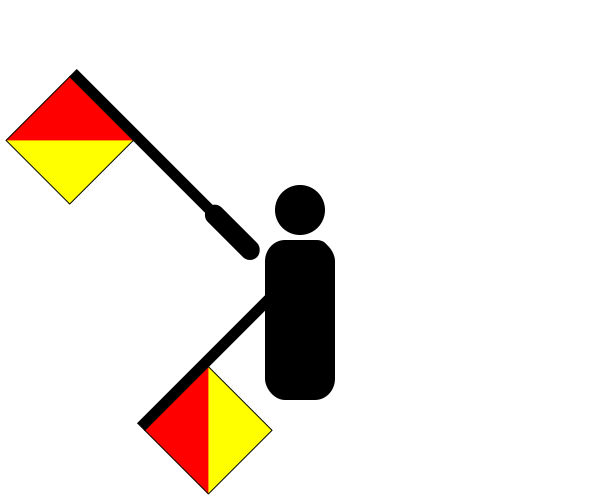
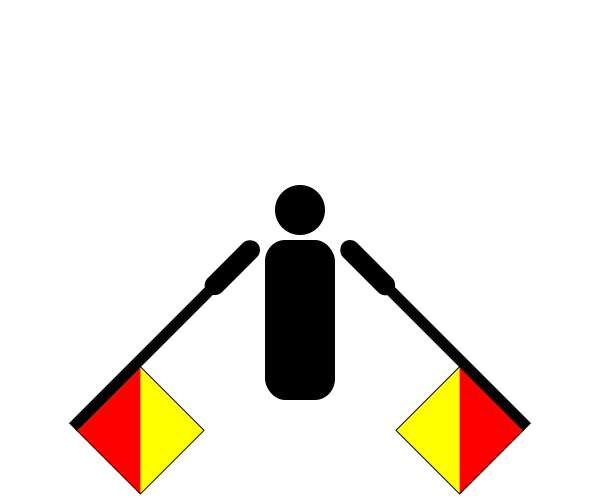
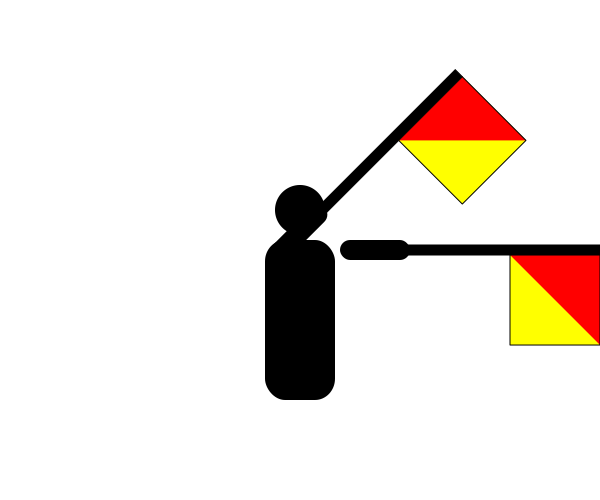
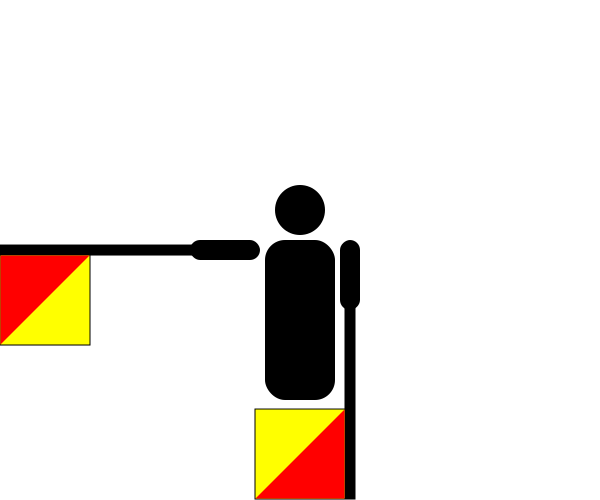
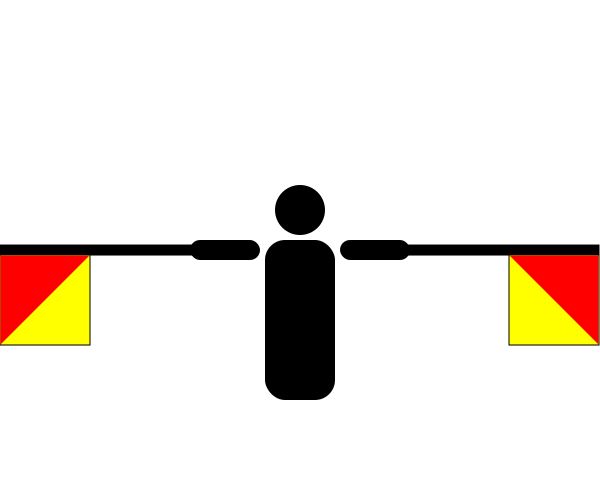
Semaphore


Sorry, we don't have any statistics on this name. That's probably because it's very uncommon in Britain.