LANGLAIS
Langlais is a surname of French origin. It is recorded in several spelling forms, including L'Anglois, Langlois and Langlyes. All these variations stem from a medieval word that meant “the Englishman”, describing an English speaker settled in France or a French person referring to an Englishman.
The name is traditionally regarded as an occupational surname. According to historical records, it was applied to those who were skilled in language, such as speakers, translators or interpreters. The word langue in French translates to “tongue” or “language” and is thought to be the root of the surname.
Evidence of the surname’s use in England dates back to the late sixteenth and early seventeenth centuries. The earliest known entry is that of Thomas Langlyes, recorded at St Benet’s church, Paul’s Wharf, London, on 22 January 1594, during the reign of Queen Elizabeth I. Subsequent persons with the name appear in London church registers, such as Nicholas Langlois, christened at the French church on Threadneedle Street on 20 January 1633, and Michell L'Anglois, a witness at the same church on 22 February 1685. These entries illustrate the presence of French-speaking communities in England, many of whom were members of the Huguenot diaspora that returned to Britain after persecution in the seventeenth century.
In France, the surname is associated with the region where the langue d'oïl, an Old French dialect, was historically spoken. The nickname langleis originally referred to people from the north of France and gradually became a hereditary surname. The name is most frequently found in northern French provinces and persists in contemporary French records.
During the colonisation of the New World, French settlers brought the surname to North America, especially to the province of Quebec. Quebec genealogical registers show a marked concentration of the name in the seventeenth and eighteenth centuries, coinciding with the period of French settlement. The surname is also present in French‑Canadian communities in the United States, primarily as a result of migration in the nineteenth and twentieth centuries.
Several variant forms of the surname exist, many of which can be traced back to the medieval period. These include: Langlaix, Langlai, Longlet, Langlas, Langlasier, Langloix, Longlois, Longloix, Lalanglais, Lalanglaix, Longle, and Longlai. According to source documents, some of these variants are derived from the Latin word Langallum, meaning “limb”, a term that was associated with physical strength and elongated limbs in the period when the surnames became popular. Other variants, such as Langlois and its relatives, are thought to stem from a word meaning “long hill”. The variant Longlet is recorded in the medieval era and is interpreted as “tall man” or “tall person”.
The enduring use of the surname >is testament to its long-standing presence across France, Canada and the United Kingdom. Its continued relevance among families in these countries reflects both a sense of heritage and the role of linguistic identity in the development of surnames. The name Langlais, in all its variants, remains in active use today and carries with it a legacy rooted in the linguistic and cultural history of the French‑speaking world.
Similar and related surnames
Related and similar names are generated algorithmically based on the spelling, and may not necessarily share an etymology.
How to communicate the surname Langlais in...
Braille
⠇⠁⠝⠛⠇⠁⠊⠎
Morse
.-...--.--..-...-.....
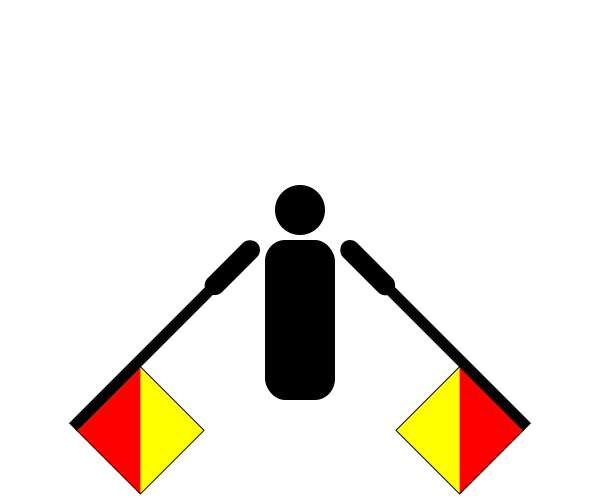
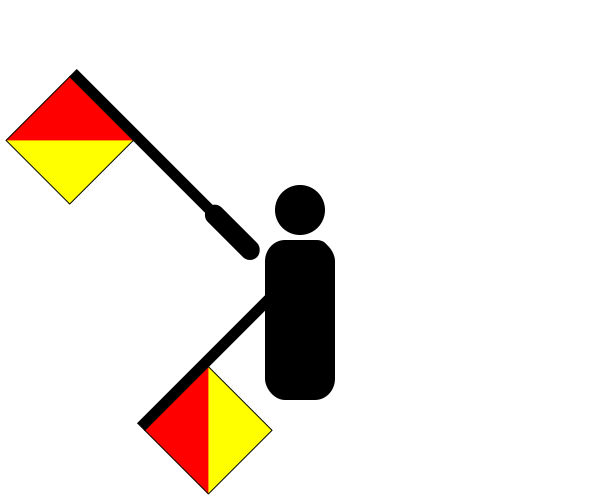
Semaphore




Sorry, we don't have any statistics on this name. That's probably because it's very uncommon in Britain.
