KINSMAN
Kinsman is a surname of English origin. It is recorded in the British Isles and has roots in the English language. The name is traditionally associated with Christian households and is primarily regarded as an occupational name derived from a Middle English term.
The earliest element of the name is the Old English word cynesmann, meaning “relative” or “kin‑man”. This term reflected a close familial relationship and was sometimes used as a nickname for a male relative or as a status indicator in medieval society. In Middle English, the word developed into kinsman, directly translating to “a male relative or a member of the same family.” The surname, therefore, signified a familial connection or relationship.
Alternate derivations from the Old English cyning (king) combined with the suffix -man have informed some interpretations of the name. In this view, Kinsman could denote “a man who serves the king” or “a servant or steward of royal property.” The suffix -man could mean friend, manager, or servant, suggesting an occupational role within the king’s household or a position of trust such as a reeve, estate‑keeper, or steward. These occupational interpretations appear in medieval records where the surname occurs as Kingman or Kingsman, which are believed to be earlier forms of the name.
Historical evidence for the surname dates back to the 12th and 13th centuries. The first known spelling is Godwin Kingesman in the Norfolk Pipe Rolls of 1166, recorded during the reign of King Henry XI (1154–1189). Subsequent entries include William Kingman in a Somerset inquiry in 1275 and Godwin Kingesreive in the Lincolnshire tax rolls known as the Feet of Fines in 1208. In 1198, a William Kinesman is listed in Norfolk. The name appears in various spellings over time: Kingman, Kingsman, Kynesman, Kynnesman, and Kinsman.
Migration of bearers of the surname to the New World is well documented. In March 1635, Henry Kingsman, his wife Joane, and their five children left Weymouth for New England, becoming early emigrants of the name. Their departure illustrates the spread of the surname beyond its English origins into the American colonies, where the spelling settled as Kinsman.
In the post‑Norman period, the use of relationship terms such as “kinsman” became less common, which reduced the frequency of the surname in England. Nevertheless, it survived through the names of individuals who carried it across borders. Today, the surname is primarily found within English‑speaking countries, with concentrations in the United Kingdom, the United States, Canada, and Australia, reflecting historical migration patterns.
Although originally denoting a close male relative or a servant of the king, Kinsman no longer implies any specific familial or noble connection. Present bearers of the surname share a common historical heritage, yet their relationships to one another are not determined by the name alone. The surname’s meaning has thus shifted from a medieval marker of kinship or occupation to a modern family name that is widely distributed across the globe.
Typical given names associated with the Kinsman surname
Male
- Alexander
- Andrew
- Brandon
- Christopher
- David
- James
- John
- Michael
- Peter
- Richard
- Robert
- Rodney
Female
- Anna
- Anne
- Elizabeth
- Emma
- Helen
- Karen
- Kate
- Linda
- Margaret
- Nicola
- Nikki
- Sarah
- Susan
- Victoria
Similar and related surnames
Related and similar names are generated algorithmically based on the spelling, and may not necessarily share an etymology.
How to communicate the surname Kinsman in...
Braille
⠅⠊⠝⠎⠍⠁⠝
Morse
-.-..-....--.--.
Semaphore
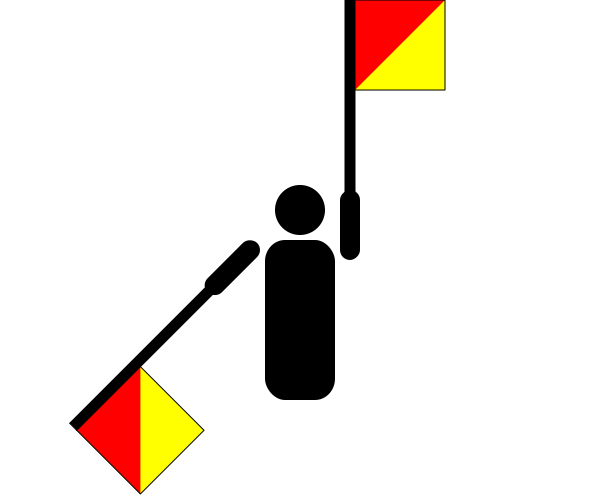
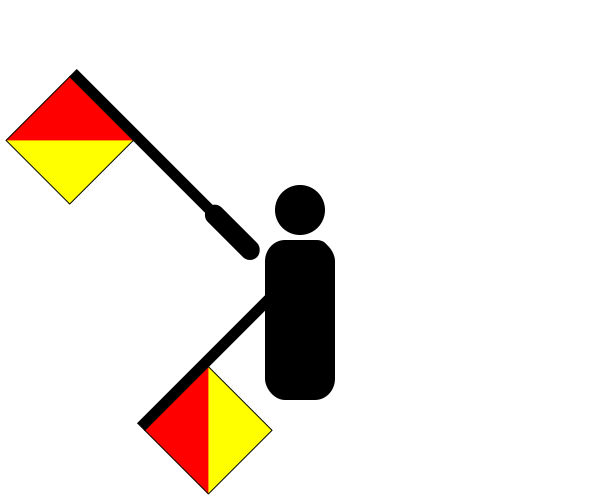
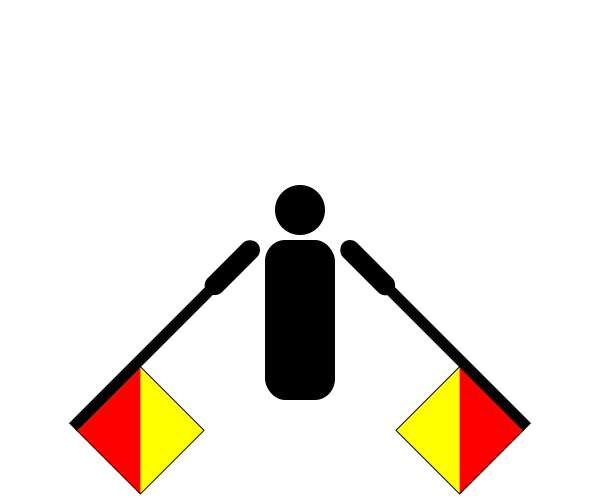

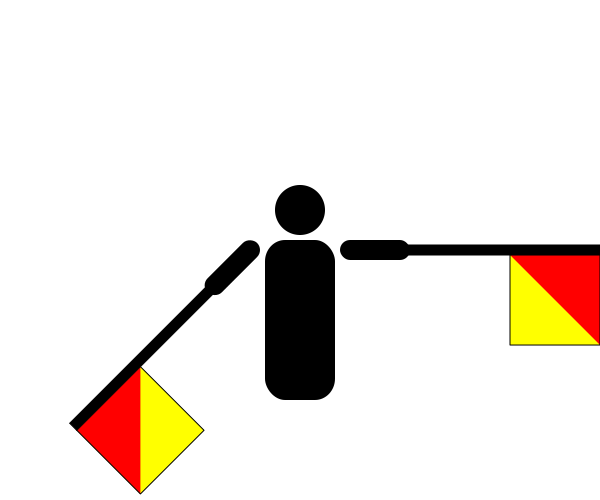

There are approximately 793 people named Kinsman in the UK. That makes it roughly the 8,835th most common surname in Britain. Around 12 in a million people in Britain are named Kinsman.
Surname type: Occupational name
Origin: English
Region of origin: British Isles
Country of origin: England
Religion of origin: Christian
Language of origin: English
